Flat Roof Repair and Maintenance
You're tasked with maintaining a flat roof, and it's essential to address issues promptly to prevent costly damage. You'll need to identify problems like drainage issues and membrane wear early on. Regular inspections are your first line of defense, spotting water stains and cracks before they escalate. Minor repairs, such as sealing cracks, can be DIY, but knowing when to bring in professionals is key. Curious about extending your roof's life affordably? Let's explore further.
Identifying Common Flat Roof Problems
When tackling flat roof repairs, understanding common issues is essential for effective maintenance. You’ll often encounter drainage issues, which can lead to water pooling and increased load on the structure. Confirming proper slope and clear drainage paths minimizes risks.
Additionally, membrane deterioration poses a significant threat. Over time, UV exposure and weather conditions can cause cracks or blisters in the roofing-installation-and-repair.html">roofing membrane, compromising its waterproofing capabilities. Regular inspections help you identify these vulnerabilities early.
Membrane deterioration from UV and weather exposure leads to cracks, compromising waterproofing—regular inspections are crucial.
Addressing these problems requires a systematic approach. Prioritize safety by using appropriate protective gear and confirming a stable work platform.
Utilize high-quality materials for repairs to enhance durability. By focusing on these critical aspects, you confirm that your flat roof remains functional and safe for years to come.
Spotting Early Signs of Damage
To maintain the integrity of your flat roof, you need to identify early signs of damage like water stains on ceilings, which indicate potential leaks.
Regularly inspect roof seals for any signs of cracking or deterioration, as these are critical in preventing water ingress.
Prioritizing these checks guarantees a safe and long-lasting roofing system.
Identifying Water Stains
Water stains on a flat roof can indicate early signs of damage that require immediate attention. Understanding water stain sources and stain color significance is vital for effective maintenance. Dark stains often suggest prolonged water exposure, while lighter stains might indicate recent leaks. Identifying these early can prevent structural damage and costly repairs.
Consider this table to understand the urgency:
| Stain Color | Possible Source |
|---|---|
| Dark Brown/Black | Long-term water exposure |
| Yellow/Light Brown | Recent leaks |
| Green/Algae Growth | Poor drainage |
Take action promptly to guarantee safety and integrity. If you notice any discoloration, it’s important to investigate further. Ignoring these signs can lead to compromised insulation and structural weakening. Always prioritize safety and consult professionals when necessary.
Inspecting Roof Seals
Spotting water stains is just one step in maintaining a flat roof’s integrity; inspecting roof seals is another critical aspect. You need to verify seal integrity by checking for cracks, splits, or gaps that compromise weather resistance.
Use a flashlight to examine every corner and joint thoroughly. It’s essential to inspect after severe weather events, as these can exacerbate existing issues. Pay special attention to areas around vents, chimneys, and skylights where seals are prone to failure.
Don’t ignore minor signs of wear; they can lead to significant damage if not addressed promptly. Always prioritize safety by using proper equipment and footwear.
If you’re uncertain about the roof’s condition, consult a professional to assess and maintain your roof’s seal integrity efficiently.
What to Do First When You Spot Damage
Upon discovering damage on your flat roof, promptly assess the situation to mitigate further issues.
Begin with an initial assessment by visually examining the affected area. Look for signs of water pooling, punctures, or membrane tears. Prioritize safety—ensure the roof's structure is stable before proceeding. Use binoculars if necessary to avoid unnecessary risk.
Visually assess the roof for water pooling or tears, ensuring stability and using binoculars for safety.
Once you've identified the scope of the damage, take immediate actions. Document the damage with photos for future reference and insurance purposes.
Clear any debris to prevent obstruction of drainage pathways. Temporarily cover exposed areas with a waterproof tarp to prevent water ingress. Avoid attempting repairs in unsafe weather conditions.
How to Fix Minor Cracks in Your Flat Roof
Addressing the damage promptly guarantees you’re ready to tackle minor cracks in your flat roof effectively.
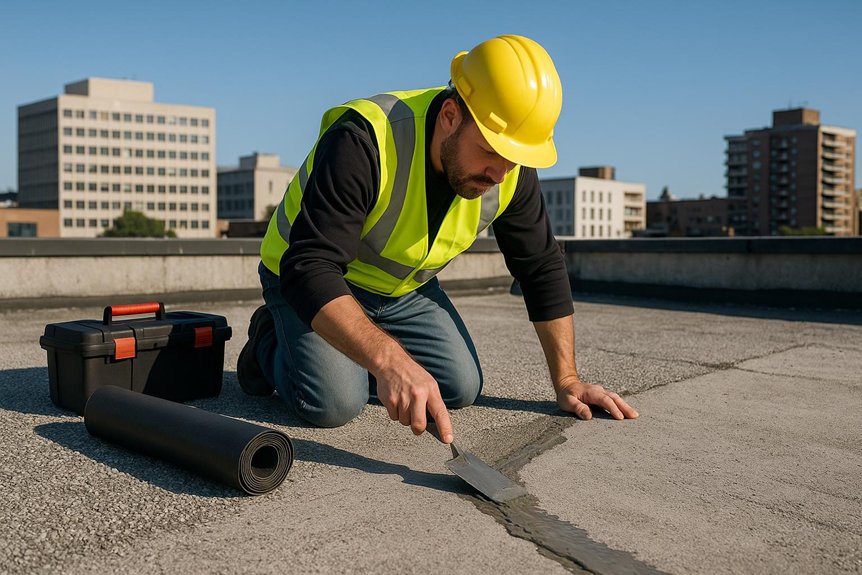
Begin by inspecting the surface to identify the extent of the cracking. Clean the area thoroughly, removing debris and guaranteeing a dry surface for ideal adhesion.
Apply a high-quality crack sealing product, specifically designed for roofing applications, to fill the gaps. Work the sealant into the crack using a putty knife to guarantee thorough coverage and bonding.
After sealing, apply a suitable roof coating. This protective layer not only enhances durability but also safeguards against future damage. Confirm you follow manufacturer guidelines for application and curing times.
Prioritize safety by wearing appropriate gear and working in dry conditions. This approach guarantees a robust, lasting repair.
Need a Roofing Contractor?
Find licensed, reviewed roofing professionals in your area. Get free estimates from verified contractors.
Find Local Roofers Call (866) 466-9085Gathering Essential Tools for Repair
Before you start repairing your flat roof, verify you’re equipped with essential tools like a utility knife, roofing adhesive, and a trowel.
Prioritize safety by wearing protective gear such as gloves, safety goggles, and a sturdy harness.
Proper preparation minimizes risks and enhances efficiency during the repair process.
Essential Repair Tools List
A successful flat roof repair starts with gathering the right tools, and a well-equipped toolbox can make all the difference. To guarantee efficiency, include a utility knife for precise cutting of repair materials and a caulking gun for seamless sealant application.
Keep a sturdy roofing hammer on hand to address any loose nails or fasteners. For accurate seasonal checks, a reliable ladder is essential, allowing safe access to the roof.
A heavy-duty broom will help clear debris, guaranteeing a clean surface for repairs. Don’t forget a moisture meter to detect hidden leaks that mightn't be visible.
Always use a tape measure for precise material sizing. With these tools, you're well-prepared to tackle any flat roof repair with confidence and safety.
Safety Gear Essentials
While preparing for flat roof repairs, prioritizing safety gear is vital to guarantee a secure working environment.
Start with a reliable safety harness to provide effective fall protection. You’ll need protective eyewear to shield against debris and UV exposure. Non-slip footwear is essential for maintaining traction, especially in wet conditions.
Always consider weather considerations—avoid working in rain or high winds to minimize risks. Equip yourself with a first aid kit for immediate response to minor injuries.
Inspect all gear before use, confirming it’s in peak condition. Remember, safety isn’t just a protocol; it’s a commitment to preventing accidents.
Knowing When to Call in the Pros
Recognizing the right moment to call in professional help for flat roof repair is essential to maintaining your building’s integrity and safety. When you notice persistent leaks, extensive ponding, or structural damage, it’s time for a professional assessment.
Experts can evaluate the situation thoroughly, ensuring no underlying issues are overlooked. They’ll provide a clear repair timeline, outlining each step necessary to restore your roof’s functionality.
Thorough evaluations and clear timelines ensure no issues are missed, restoring your roof’s functionality efficiently.
Attempting complex repairs on your own can lead to safety hazards and further damage. Professionals have the specialized equipment and expertise to handle intricate tasks safely and efficiently.
Don’t wait until minor issues escalate into costly problems. Prioritize your safety and the long-term health of your building by engaging skilled professionals when needed.
Maintenance Tips to Prevent Issues
To keep your flat roof in prime condition and prevent future issues, implement regular maintenance practices.
Begin with preventive care by scheduling seasonal checks. Inspect for debris accumulation; leaves and branches can obstruct drainage and cause water pooling.
Examine the membrane for any punctures or blisters, addressing them promptly to avoid leaks. Pay attention to flashing, guaranteeing it's secure and intact, as it's vital for waterproofing.
Safety is paramount, so utilize appropriate gear and consider professional assistance for complex tasks.
Regularly check seams and joints for potential deterioration. Evaluate the roof’s slope to confirm proper water runoff, reducing strain on the structure.
Affordable Ways to Extend Your Flat Roof's Life
Consider these affordable strategies:
- Seal small cracks and seams regularly to prevent water infiltration.
- Clear debris and leaves to maintain proper drainage.
- Apply reflective coatings to reduce heat absorption, minimizing thermal stress.
Frequently Asked Questions
How Often Should a Flat Roof Be Inspected?
You should inspect a flat roof at least twice a year to guarantee longevity and safety.
This inspection frequency helps you catch issues early. Focus on drainage systems, membrane integrity, and flashing.
Incorporate maintenance tips like clearing debris and checking for ponding water. Regular inspections prevent costly repairs and enhance safety.
Always prioritize professional assessments to address potential structural concerns efficiently and maintain peak roof performance.
What Materials Are Best for Flat Roof Repairs?
For flat roof repairs, use materials like EPDM rubber, TPO, or modified bitumen.
These options guarantee material durability and effective repair techniques. EPDM offers flexibility, while TPO provides energy efficiency. Modified bitumen is known for its strength.
Always prioritize safety by wearing proper gear and following manufacturer guidelines.
Choose high-quality materials to extend the roof's lifespan and guarantee a secure, watertight seal.
Can I Walk on My Flat Roof Safely?
Yes, you can walk on your flat roof safely, but exercise caution.
Prioritize roof safety by checking the roof's condition first. Avoid walking on wet or damaged areas. Wear non-slip shoes and distribute your weight evenly.
Regular maintenance tips include inspecting for leaks and debris.
Always consult a professional for uncertain situations to guarantee structural integrity and personal safety.
Proper precautions make roof navigation safer and more efficient.
Are Flat Roofs More Prone to Leaks Than Pitched Roofs?
Yes, flat roofs are more prone to leaks than pitched roofs due to their design.
However, using quality flat roof materials like EPDM or TPO can mitigate this.
One of the flat roof advantages is the ease of maintenance and repair accessibility, but you must regularly inspect for pooling water and damage.
Prioritize safety by ensuring proper drainage and hiring professionals for thorough evaluations and repairs to extend your roof's lifespan.
How Does Weather Affect Flat Roof Longevity?
Weather impacts flat roof longevity markedly.
You need to take into account seasonal changes, as temperature fluctuations cause expansion and contraction, leading to material stress.
UV rays can degrade roofing materials, while heavy rain or snow accumulation might cause water pooling, increasing leak risks.
Regular inspections and maintenance are essential to guarantee safety and extend your roof's lifespan.
Browse our national roofing directory to find licensed contractors near you. See pricing guides for Austin, Chicago, Denver, Cincinnati, Brooklyn, and more.