Does Homeowners Insurance Cover Roof Damage
You might wonder if your homeowners insurance covers roof-leak-detection-and-repair.html">roof-maintenance-tips-to-extend-your-roofs-lifespan.html">roof-repair-signs-your-roof-needs-professional-repair.html">roof-replacement-when-is-it-time-for-a-new-roof.html">roof-ventilation-and-insulation.html">roof damage, and it's vital to understand the specifics. Insurance typically covers damage from sudden events like storms or vandalism, yet normal wear and tear isn't included. Knowing your policy limits and exclusions is important. Documenting damage with photos and estimates strengthens your claim. Are you confident your coverage meets your needs and local risks? Explore the nuances to guarantee you're not caught off guard.
What Roof Damage Does Homeowners Insurance Cover?
When it comes to understanding what roof damage homeowners insurance covers, it's important to examine the specific terms of your policy. You'll want to carefully review your policy limits, as these define the maximum amount your insurer will pay for roof repairs or replacement.
Conducting a regular roof inspection is essential, as insurers often require proof of maintenance to approve claims. Policies typically cover sudden, accidental damage rather than wear and tear.
It's significant to distinguish between covered perils and exclusions, ensuring you know what's protected. A detailed roof inspection can help identify potential issues early, allowing you to address them within your policy's framework.
Common Causes of Roof Damage Covered by Insurance
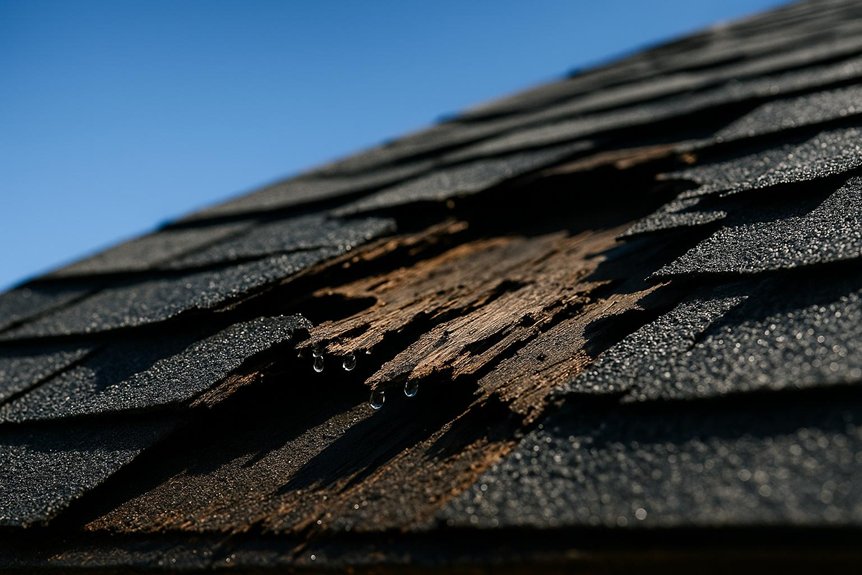
Understanding your policy's coverage is key to managing roof damage efficiently. Homeowners insurance typically covers storm damage, a frequent cause of roof issues. High winds, hail, and heavy rain can compromise roofing materials, leading to significant problems.
When a storm strikes, your policy is designed to mitigate repair costs. Similarly, fire damage is another peril often included in coverage. Whether caused by wildfires or accidental blazes, insurance aims to support you in restoring your home.
It's vital to document damages immediately and report them to your insurer. By doing so, you can guarantee a smoother claims process. Always review your policy details to understand the extent of protection offered against these common threats to your roof's integrity.
When Your Roof Damage Isn’t Covered
You might find that your homeowners insurance doesn’t cover roof damage resulting from wear and tear or poor maintenance.
Insurers often exclude perils like these, considering them preventable with regular upkeep.
It's essential to understand your policy's specifics to avoid unexpected expenses.
Wear and Tear
Although roofs endure the elements daily, insurance often doesn’t cover damage resulting from wear and tear. Understanding your roof’s lifespan is essential. Typically, asphalt shingles last 20-30 years, while metal roofs endure longer. Recognizing the aging process helps you anticipate when repairs or replacements are needed.
Regular inspections and maintenance tips can extend your roof’s life considerably. Simple actions like clearing debris, fixing minor leaks, and checking for damaged shingles can prevent costly future issues.
Here's a quick comparison:
| Aspect | Details |
|---|---|
| Roof Lifespan | Asphalt: 20-30 years, Metal: 40-70 years |
| Maintenance Tips | Clear debris, inspect regularly, fix leaks |
Poor Maintenance Issues
Neglecting regular roof maintenance often results in damage that insurance won’t cover.
Insurance policies typically exclude issues stemming from poor upkeep. To guarantee your roof remains protected, focus on preventive maintenance and routine inspections. These practices help identify potential problems before they escalate.
Here’s what you should do:
- Conduct Routine Inspections: Regular checks help spot loose shingles or leaks early.
- Schedule Preventive Maintenance: Address minor repairs promptly to prevent costly damage.
- Clean Gutters and Downspouts: Keeping them clear prevents water buildup and potential roof damage.
Excluded Perils Coverage
Sometimes, homeowners find themselves surprised when their insurance policy doesn’t cover roof damage. Understanding excluded perils is essential. Insurance exceptions often include damage from neglect, wear and tear, or specific natural disasters. If your roof suffers from these, your claim may be denied.
Consider this table illustrating common exclusions:
| Excluded Perils | Description | Impact on Coverage |
|---|---|---|
| Neglect | Lack of maintenance | Denied claims |
| Wear and Tear | Aging materials | Not covered |
| Certain Disasters | Earthquakes, floods | Requires separate policies |
Analyzing your policy helps identify these exceptions. You’ll want to review and understand what’s covered and what isn’t. Being informed prevents unexpected costs when damage occurs. Always consult with your insurance provider to clarify any doubts.
Need a Roofing Contractor?
Find licensed, reviewed roofing professionals in your area. Get free estimates from verified contractors.
Find Local Roofers Call (866) 466-9085Filing a Roof Damage Claim
When you're dealing with roof damage, filing an insurance claim can be a significant step in securing the necessary repairs. Understanding the claim process is imperative. Start by reviewing your policy to confirm coverage specifics.
Accurate documentation is essential for a successful claim. Here are some documentation tips to guide you:
- Photograph the Damage: Capture clear images of all affected areas. This visual proof can support your claim.
- Keep Repair Estimates: Obtain written estimates from licensed contractors. These will help substantiate the repair costs.
- Record Communication: Maintain a log of all interactions with your insurer. Document dates, times, and details of conversations.
Following these steps guarantees you provide thorough evidence, increasing the likelihood of a favorable outcome.
Ensuring Adequate Insurance Coverage
To guarantee adequate insurance coverage for your roof, it’s essential to regularly review your policy details and update them as needed.
Start by examining your insurance policy to understand what’s covered and identify any exclusions. Pay close attention to coverage limits, as these dictate the maximum payout for roof repairs or replacements. If your roof’s value exceeds these limits, consider increasing them to secure full protection.
Evaluate factors like roof age, materials, and local weather conditions, which can influence your policy’s effectiveness.
Communicate with your insurance agent to clarify any uncertainties and explore possible endorsements or additional coverage options.
Regular assessments and proactive adjustments can help you avoid unexpected expenses and ensure your roof remains adequately protected against potential damage.
Appealing Denied Roof Damage Claims
Although a denied roof damage claim can be frustrating, understanding the appeals process can greatly improve your chances of a successful outcome.
First, review your policy thoroughly to identify any overlooked details. This is essential for crafting effective claim appeal strategies.
Second, gather additional evidence such as photos or expert assessments to bolster your case.
Finally, engage in direct communication with your insurance adjuster, using clear insurance negotiation tips to articulate your position.
Here's a concise plan:
- Review Policy Details: Identify and utilize specific clauses that support your claim.
- Gather Evidence: Compile new documentation to strengthen your appeal.
- Communicate Effectively: Use negotiation strategies to address denial reasons.
These steps enhance your appeal's validity and improve negotiation outcomes.
Frequently Asked Questions
How Does Roof Age Affect Insurance Coverage?
Roof age considerably affects your insurance coverage. Insurers often consider older roofs a higher risk, so they might offer limited protection or increased premiums.
To mitigate this, prioritize regular roof maintenance, which can demonstrate responsibility and potentially improve terms.
Review your insurance policies carefully; some might only cover actual cash value for older roofs, reducing payouts.
Understanding these factors helps you navigate coverage effectively and make informed decisions.
Will My Premium Increase After a Roof Damage Claim?
Yes, your premium might increase after a roof damage claim.
Insurers often consider premium factors like claim frequency and the severity of the damage. If you've filed multiple claims, they may view you as a higher risk, leading to increased rates.
Analyze your policy and discuss with your insurer to understand how claims affect your premiums, ensuring you’re prepared for potential changes in your insurance costs.
Are Roof Inspections Required for Insurance Eligibility?
Yes, roof inspections are often required for insurance eligibility. They help identify potential issues, ensuring your roof's condition aligns with insurance policy requirements.
Regular inspections can reveal hidden damage, prolonging your roof's lifespan. By addressing problems early, you might avoid costly repairs and maintain coverage.
Insurers value these inspections, as they reduce risk and enhance safety. Ultimately, meeting these requirements can lead to better insurance terms and peace of mind.
How Do Deductibles Apply to Roof Damage Claims?
When you file a roof damage claim, deductibles apply by requiring you to pay a specific amount before your insurance covers the rest.
Different deductible types, like percentage or fixed-dollar, affect your out-of-pocket costs.
During the claim process, insurers assess the damage and calculate your responsibility based on the deductible.
Understanding these details helps you manage expectations and guarantee you’re prepared for any financial responsibilities involved.
Can I Choose Any Contractor for Repairs?
Yes, you can choose any contractor for repairs, but it’s essential to verify contractor qualifications to guarantee they’re licensed and insured.
Check their past work to confirm quality.
Consider repair timelines; a reputable contractor should provide a clear schedule.
Communicate with your insurance company to validate they’ll cover the contractor’s work.
This careful selection helps maintain the integrity of your home and facilitates a smooth claims process.
Browse our national roofing directory to find licensed contractors near you. See pricing guides for Atlanta, Philadelphia, Colorado Springs, Tucson, Jacksonville, and more.