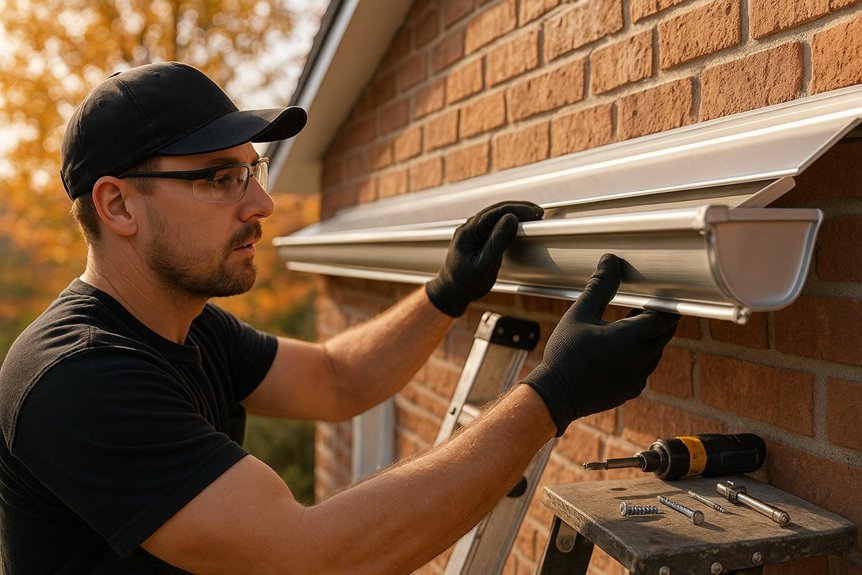
Gutter Installation and Repair
You might not think about gutters often, but they're essential for your home's protection. Installing them correctly involves choosing the right materials, ensuring proper slope, and securing hangers to avoid sagging. Regular maintenance, like inspections and debris removal, is key to catching issues early. While DIY efforts can handle minor repairs, knowing when to call a professional is important. Curious about how gutters prevent costly water damage and what steps to take next?
Why Gutters Are Essential for Your Home
Although often overlooked, gutters play an essential role in safeguarding your home from water damage. Historically, gutter systems date back to ancient civilizations, where they were crafted from stone and clay. Over time, gutter innovations have transformed these simple channels into sophisticated systems, effectively directing rainwater away from your foundation.
You’ll appreciate gutters for their ability to prevent soil erosion, basement flooding, and structural deterioration. Modern designs incorporate advanced materials and engineering, improving efficiency and durability.
Prevent soil erosion and flooding; modern gutters enhance efficiency and durability through advanced materials and engineering.
Seamless gutters, a notable innovation, reduce leak risks and require less maintenance. With these advancements, you’re equipped to manage water flow efficiently, protecting your home’s integrity.
Understanding gutter history and innovations is vital in appreciating their role in home preservation and modern engineering.
Explore Gutter Material Options
When selecting gutter materials, it’s crucial to evaluate factors like durability, cost, and aesthetic appeal. Aluminum gutters are lightweight and resist rust, while vinyl gutters offer affordability and ease of installation. Copper gutters provide a classic, decorative look but come at a higher price. Galvanized steel is strong and durable, ideal for areas with harsh weather. Seamless gutters reduce leaks and require fewer joints. Consider gutter guards to minimize maintenance and roof-repair-and-maintenance.html">roofing-contractor.html">choose eco-friendly materials to support sustainability.
| Material | Pros | Cons |
|---|---|---|
| Aluminum | Rust-resistant | Can dent easily |
| Vinyl | Cost-effective | Less durable |
| Copper | Decorative appeal | Expensive |
| Galvanized Steel | High strength | Prone to rust over time |
| Seamless | Minimal leakage | Higher installation cost |
Choose wisely to enhance your home's exterior.
Gather the Right Tools for Installation
To guarantee a successful gutter installation, gather a thorough set of tools designed for precision and efficiency. Start with a sturdy ladder, making sure you can access your roof safely.
To ensure a seamless gutter installation, begin with a sturdy ladder for safe roof access.
Use a tape measure for accurate measurements, essential for fitting gutter accessories precisely. A chalk line helps mark straight lines, a critical step in proper installation techniques.
Employ a miter saw to cut gutters to exact lengths and a drill with bits for securing brackets and fasteners.
Don’t forget tin snips for detailed cuts and a rivet gun to attach sections firmly. A level guarantees gutters are installed with the correct slope for ideal drainage.
Finally, gloves and safety goggles protect you during the process, ensuring both safety and precision.
Step-by-Step Gutter Installation Process
To start the gutter installation, make certain you've got all necessary tools and materials, including a ladder, measuring tape, and sealant.
Begin by measuring and marking the gutter slope for ideal water flow, maintaining a quarter-inch drop for every 10 feet.
Secure the hangers firmly, adhering to best practices for spacing and alignment, to guarantee a durable and efficient gutter system.
Tools and Materials Needed
Starting on a gutter installation project requires a well-stocked toolkit and precise materials to guarantee a seamless process.
Begin with essential tools like a sturdy ladder, tape measure, and level to verify accuracy. You'll need tin snips for cutting, along with a drill and rivet gun for securing sections.
Prioritize installation safety by wearing gloves and safety glasses. Gutter accessories, such as hangers, end caps, and downspouts, are vital for a complete setup.
Sealant and caulk are necessary to prevent leaks at joints. Opt for high-quality materials like aluminum or copper gutters for durability.
Keep screws, connectors, and brackets handy for secure attachment. With these tools and materials, you're well-equipped to tackle the installation with confidence.
Installation Best Practices
Launching your gutter installation journey requires meticulous attention to each step for ideal performance.
Begin by evaluating your home's gutter design to confirm it matches your roofline and drainage needs. Measure the roof's slope accurately to determine proper downspout placement. Use a chalk line to guide your installation, guaranteeing straight alignment.
Next, employ precise installation techniques by securely attaching hangers every two feet for stability. Cut gutter sections to fit, using a hacksaw for precision, and join them with connectors. Seal joints with waterproof sealant to prevent leaks.
Attach downspouts with brackets, making sure they're flush against the wall.
Finally, test your system by running water through it, checking for leaks or misalignments. Proper execution guarantees long-lasting performance.
Avoid These Common Installation Mistakes
When installing gutters, guarantee the slope alignment is precise to allow efficient water flow and prevent pooling.
Use the correct fasteners to securely attach gutters, as improper use can lead to sagging or detachment.
Don’t overlook the sealant application; inadequate sealing can result in leaks and long-term water damage.
Incorrect Slope Alignment
One critical aspect of gutter installation is guaranteeing the correct slope alignment, as even a slight miscalculation can lead to significant drainage issues.
The gutter pitch must be precise to prevent water pooling, which can result from installation errors. Regular alignment checks are essential to maintain effective rainwater management.
Start by evaluating the roof overhang and guarantee the gutters are sloped at about 1/4 inch per 10 feet toward the downspouts. This slope correction helps in minimizing debris accumulation, which can further obstruct water flow.
Implementing proactive maintenance tips, like clearing debris regularly, guarantees that your gutters function efficiently.
Proper attention to slope alignment prevents long-term damage, saving you from costly repairs and enhancing your property's drainage efficiency.
Improper Fastener Use
Even though fasteners might seem like a minor detail in gutter installation, using the wrong type can lead to significant problems. Selecting appropriate fastener types is essential for ensuring your gutters stay securely in place. You should consider the material of both the gutter and the fascia when choosing fasteners. For instance, aluminum gutters require different fasteners compared to steel ones.
Pay attention to installation techniques as well. Over-tightening fasteners can warp the gutter, while under-tightening may cause sagging. Use rust-resistant fasteners to withstand weather conditions.
Spacing is also important; fasteners should be placed every 24 to 36 inches for ideal support. By focusing on these details, you’ll prevent gutters from detaching, ensuring a durable installation.
Inadequate Sealant Application
Fasteners play a critical role in gutter stability, but sealant application is equally important for preventing leaks and guaranteeing longevity.
You need to choose the right sealant types—silicone, polyurethane, or butyl rubber—based on weather resistance and material compatibility. Silicone works well for metal gutters, while polyurethane is ideal for challenging weather conditions.
When applying sealant, verify surfaces are clean and dry. Use a caulking gun for precision, maintaining a steady hand to create a continuous bead along seams and joints.
Avoid air gaps by smoothing the sealant with a gloved finger or tool. Don’t rush the curing process; follow manufacturer guidelines to allow the sealant to set properly.
With the right application techniques, you’ll prevent water damage effectively.
Identify Gutter Damage Early
Spotting gutter damage early is essential for maintaining the integrity of your home.
Begin by examining your gutters for any discoloration signs. These can indicate water overflow or leaks, which mightn't be immediately visible. Look closely at the seams and joints where discoloration is most common.
Check gutters for discoloration at seams and joints to spot hidden leaks or water overflow.
Rust corrosion indicators are another critical sign. Rust not only weakens the gutter material but can also lead to holes and further deterioration. Pay attention to any rust spots or flaking, particularly on metal gutters.
Regular inspections help you catch these issues before they escalate. Make certain you also check for sagging or misalignment, as these can cause improper water drainage, leading to further structural damage.
Identifying these problems early can save you substantial repair costs later.
Need a Roofing Contractor?
Find licensed, reviewed roofing professionals in your area. Get free estimates from verified contractors.
Find Local Roofers Call (866) 466-9085Repair Minor Gutter Issues Yourself
When tackling minor gutter issues yourself, start by identifying common problems like leaks, sagging, or blockages.
You'll need essential tools such as a sturdy ladder, gutter sealant, and a pair of work gloves to address these effectively.
Identify Common Gutter Problems
Even if your gutters seem fine at first glance, a closer inspection often reveals common issues that can lead to costly repairs if ignored.
Look for clogged gutters where leaves and debris accumulate, causing overflow issues and improper drainage.
Check for rusted sections, as these weaken the structure, leading to sagging gutters.
Inspect for leaking joints that may cause water damage to your home's foundation.
Also, be aware of wildlife intrusion, as animals can nest and block flow.
Ice buildup during colder months can exacerbate these problems, leading to significant structural damage.
Regularly checking for these problems guarantees your gutter system operates efficiently, preventing expensive future repairs and maintaining your home’s integrity.
Essential DIY Repair Tools
While inspecting your gutters for common issues, it's clear that having the right tools on hand can make minor repairs quick and efficient.
Start with a sturdy ladder for safe access. A gutter scoop helps in removing debris effectively. For sealing leaks, a quality caulking gun and waterproof sealant are essential.
To guarantee proper alignment during gutter installation, a spirit level is indispensable. Use a hacksaw for trimming sections to fit precisely. A cordless drill with appropriate bits aids in securing loose brackets and screws.
Don’t forget protective gloves to handle sharp edges safely. Incorporating these tools into your repair techniques allows you to address minor gutter issues confidently, saving you time and extending the life of your gutter system.
Know When to Call a Pro for Gutter Repairs
If you notice persistent issues with your gutter system, it’s essential to recognize when professional intervention is necessary. Understanding the typical gutter lifespan helps in identifying when repairs surpass DIY efforts.
Look for repair signs such as sagging gutters, persistent leaks, or water pooling near your foundation. These indicate underlying issues that mightn't be easily visible.
Professionals have the tools and expertise to assess and address complex problems, ensuring your gutters function effectively and extend their lifespan.
They can spot issues like improper pitch or hidden blockages that could lead to significant water damage.
Don’t wait for minor problems to escalate; calling a pro can prevent costly repairs and maintain the integrity of your home’s drainage system.
DIY vs. Pro Gutter Costs
When considering gutter installation or repair, understanding the cost differences between DIY and hiring a professional is crucial.
DIY projects might seem budget-friendly at first, but they require careful cost comparison. You'll need to factor in materials, tools, and your time. Purchasing quality gutters and necessary equipment can quickly add up, impacting your budget planning.
DIY projects can seem cost-effective, but materials, tools, and time can quickly impact your budget.
On the other hand, hiring a professional often includes additional benefits like warranties and expert craftsmanship, which can save you money in the long run.
Pros come equipped with specialized tools and experience, reducing the risk of errors and potential future repairs. Weighing these options thoroughly guarantees you make an informed decision that aligns with your financial goals and project requirements.
Seasonal Gutter Maintenance for Longevity
Proper seasonal gutter maintenance is essential for guaranteeing your gutter system's longevity and peak performance.
To effectively manage this, follow these key steps:
- Spring Cleaning: Clear out debris like leaves and twigs. Use a sturdy ladder and gloves for safety. This prevents blockages and guarantees water flows smoothly.
- Summer Inspections: Check for leaks or sagging gutters. Tighten loose connections and replace any damaged sections to maintain structural integrity.
- Autumn Leaf Removal: As leaves fall, frequent cleaning is critical. Consider installing gutter guards to reduce buildup and simplify maintenance.
- Winter Prep: Inspect for ice dams or snow accumulation. Guarantee gutters are securely attached and downspouts are clear to prevent damage from freezing conditions.
These gutter cleaning tips and seasonal inspections will keep your gutters functioning efficiently year-round.
How Gutters Prevent Water Damage
While often overlooked, gutters play an essential role in protecting your home from water damage. By directing water flow away from your foundation, they prevent structural issues. Proper roof drainage guarantees that rainwater does-a-new-roof-cost.html">doesn’t pool, which can cause leaks and erosion. When gutters function efficiently, they channel water into downspouts, safeguarding your walls and basement from dampness.
Here’s how gutters help:
| Function | Benefit | Impact on Home |
|---|---|---|
| Water Flow | Directs water efficiently | Prevents foundation erosion |
| Roof Drainage | Manages excess rainwater | Avoids roof leaks |
| Downspouts | Channels water away | Protects basement |
In essence, maintaining your gutters guarantees they perform at their best, reducing potential repair costs. Understanding their importance helps you appreciate their critical function in home preservation.
Frequently Asked Questions
How Often Should Gutters Be Cleaned?
You should clean gutters at least twice a year, typically in spring and fall. This gutter cleaning frequency guarantees peak performance by preventing clogs from leaves and debris.
For effective seasonal maintenance, inspect gutters during heavy rain to spot leaks or blockages. In areas with more trees, increase cleaning frequency.
Regular checks and prompt clearing extend the gutter lifespan, protecting your home from water damage efficiently.
What Are the Signs of Clogged Gutters?
You’ll notice clogged gutters when water overflows, plants grow in the gutter, or paint peels on your home’s exterior.
These issues signal blockages, demanding immediate attention.
Implement gutter maintenance tips by scheduling seasonal inspections. Check for sagging gutters or water pooling around the foundation.
Regular cleaning and inspections help prevent costly damage, ensuring your gutters function efficiently throughout the year.
Stay proactive to keep your home safe and sound.
How Do Gutters Affect Home Resale Value?
Gutters considerably impact your home’s resale value. They enhance gutter aesthetics, making your property more appealing to potential buyers.
Properly maintained gutters signal to buyers that the home’s upkeep is a priority, increasing resale importance. They protect structural integrity by directing water away from the foundation, preventing costly damage.
Ensuring seamless installation and regular maintenance can boost your home’s market value and attract more interested buyers.
What Is the Lifespan of Different Gutter Materials?
Aluminum gutters last about 20 years, while vinyl ones typically last 10 years.
Copper gutters can endure up to 50 years, thanks to their durability.
Steel options last around 20 years but may rust.
Gutter longevity factors include climate, maintenance, and installation quality.
When doing a material comparison, consider these aspects to guarantee you’re choosing the best option for your needs and maximizing lifespan.
Can Gutter Guards Eliminate Maintenance Needs?
Gutter guards can greatly reduce maintenance frequency, but they won't completely eliminate the need. Their effectiveness varies based on design and debris types.
While they block larger debris, smaller particles may still accumulate, requiring occasional cleaning. You'll benefit from less frequent clogs and lower maintenance overall, but periodic checks guarantee peak performance.
Choosing high-quality guards tailored to your environment enhances their effectiveness in minimizing upkeep.
Browse our national roofing directory to find licensed contractors near you. See pricing guides for Chicago, Denver, Cincinnati, Brooklyn, Fort Worth, and more.


