How to Spot Roof Damage After a Storm
After a storm, it’s crucial to examine your roof-leak-detection-and-repair.html">roof-maintenance-tips-to-extend-your-roofs-lifespan.html">roof for damage to maintain your home's structural integrity. Begin by safely inspecting for missing or damaged shingles, dents in metal roofing, and potential sagging areas. Check for granule loss on asphalt shingles and signs of interior water damage like stains or mold. Don't overlook flashing and seals, as these are critical for preventing leaks. Discovering these issues early can save you from costly repairs.
Signs of Roof Damage After a Storm
After a storm, it’s crucial to promptly identify any roof damage to prevent further issues.
Begin by examining the storm aftermath for missing or damaged shingles. Roofing materials like asphalt can loosen or tear during high winds. Look for granules in gutters, indicating shingle wear.
Check for dents in metal roofing, which can result from hail. Also, inspect for cracked or displaced tiles, common with clay or concrete roofs.
Evaluate the roof's surface for signs of sagging or water pooling, which might indicate structural issues.
Pay attention to any visible punctures or splits, as these can compromise the roof's integrity. Identifying these signs early helps you address damage before it escalates, ensuring your roof remains durable and secure.
Inspect Your Roof for Damage Safely
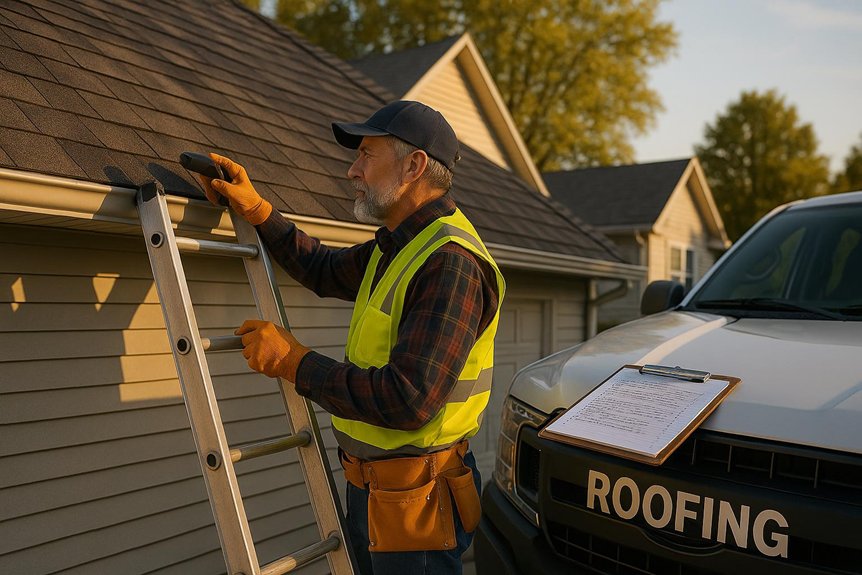
Identifying roof damage early is essential, but safety should always come first when inspecting your roof. Use a sturdy ladder and make sure it's on a flat surface for stability. Wear non-slip shoes and avoid inspecting the roof in wet conditions. Utilize inspection tools like binoculars for a ground view before climbing.
Here's a quick reference guide:
| Safety Measure | Importance |
|---|---|
| Sturdy Ladder | Guarantees stability |
| Flat Surface | Prevents tipping |
| Non-slip Shoes | Reduces slip risk |
| Binoculars | Ground-level inspection |
| Avoid Wet Conditions | Prevents accidents |
Inspect from a safe distance whenever possible, and consider professional help if you're unsure. Your priority should always be roof safety. Follow these guidelines to guarantee a secure and efficient inspection process.
Spot Missing or Damaged Shingles
When inspecting your roof, focus on spotting missing or damaged shingles, as these are common indicators of roof deterioration. Start by identifying gaps where shingles are absent.
Pay attention to different shingle types, such as asphalt, wood, or slate, since damage varies by material. Look for cracks, curling, or granule loss, especially in asphalt shingles, which are prone to such issues.
Assess the extent of damage to determine suitable repair options. For minor issues, you might replace individual shingles, while more extensive damage could require professional intervention or a full section replacement.
Make certain you choose repair options that align with your shingle type to maintain roof integrity. Prompt attention to these details helps prevent further structural issues.
Detect Interior Water Damage
To detect interior water damage, start by checking your ceilings for any stains that might indicate leaks.
Next, inspect the attic insulation for dampness or mold, as these can signal water intrusion.
Finally, examine your walls for any discoloration, which often points to underlying moisture issues.
Check Ceiling Stains
Why should you focus on ceiling stains when checking for roof damage? Ceiling inspection is essential because stains often indicate water intrusion, a common result of storm damage.
During a stain assessment, look for discoloration, ranging from yellow to brown. These marks suggest water has penetrated the roofing material, potentially leading to structural issues.
Examine the size and shape of the stains. Circular stains might indicate a specific leak point, while irregular patterns can suggest widespread damage.
Don’t overlook mold or mildew growth, as they’re signs of prolonged moisture exposure. Use a flashlight to enhance visibility and check for additional signs like peeling paint or sagging ceilings.
Promptly addressing these issues can prevent further interior damage and costly repairs.
Inspect Attic Insulation
Ceiling stains provide initial clues, but examining the attic insulation offers a deeper understanding of potential water damage.
Start by checking for dampness or mold on the insulation. Different insulation types, such as fiberglass or cellulose, may show damage differently. Look for any signs of compression or discoloration that indicate moisture intrusion.
Proper attic ventilation is essential, as it prevents excess humidity that could exacerbate water damage. Verify vents are unobstructed to maintain airflow.
If you notice any unusual odors, it could signify mold growth within the insulation. Use a flashlight to inspect dark corners thoroughly.
Document any findings with photos to assess the extent of the damage accurately and consider consulting a professional if issues persist.
Examine Wall Discoloration
Where do you begin when evaluating potential water damage inside your walls? Start by looking for visible signs like water stains and wall peeling. These can indicate that moisture has seeped in, possibly due to roof damage.
Here's how you can effectively assess the situation:
- Check for Water Stains: Look for brown or yellow discoloration on walls and ceilings.
- Inspect Wall Peeling: Notice any paint or wallpaper that’s bubbling or peeling away.
- Feel for Dampness: Run your hand along the surface to detect any unusual moisture.
- Smell for Musty Odors: A damp smell could signal hidden water damage.
- Listen for Dripping Sounds: Subtle sounds might indicate leaks behind walls.
Addressing these signs promptly can prevent further structural issues.
Check for Granule Loss on Shingles
When inspecting your roof, check for granule accumulation in gutters or downspouts as it often indicates wear.
Look for bald spots on shingles where granules are missing, which can compromise protection against UV rays and weather.
Granules play an essential role in shielding shingles from elements, so their loss may signal the need for repairs.
Identifying Granule Accumulation
To effectively identify granule accumulation on your roof, begin by examining your gutters and downspouts for granule buildup.
These granules serve essential functions, such as protecting shingles from UV rays and adding fire resistance. Different granule types may vary in color and texture, so note any significant changes.
Look for:
- Granule Types: Identify variations in shape and color.
- Clogged Gutters: Check for blockages caused by granules.
- Downspout Accumulation: Observe any granules collecting at the spout’s exit.
- Patio or Driveway Deposits: Notice granule presence in surrounding areas.
- Water Runoff Patterns: Changes in water flow may indicate granule loss.
Recognizing Bald Spots
Bald spots on shingles are a clear indicator of granule loss, which can compromise your roof's integrity.
Start your bald spot identification by visually inspecting your roof for discolored patches where granules are missing. These spots expose the asphalt layer beneath, making shingles more susceptible to UV rays and water damage.
Bald spot causes often include harsh weather conditions, hail impact, or aging materials. It’s essential to examine areas near gutters and downspouts where granules may accumulate after a storm.
To guarantee thorough identification, use binoculars for hard-to-reach areas and check for granule buildup in gutters.
Regular inspection helps maintain your roof’s life span, preventing more severe issues. Always prioritize safety by using proper equipment or consulting professionals.
Understanding Granule Function
Although often overlooked, granules play an essential role in the functionality and longevity of asphalt shingles. These tiny particles protect shingles from UV rays, enhance fire resistance, and provide color.
Understanding the granule purpose is vital in evaluating storm damage. Granule types vary, typically including ceramic-coated minerals, which contribute to different shingle colors and textures. After a storm, check for granule loss, as it can indicate potential shingle deterioration.
Here's what to look for:
- Accumulation in gutters: Excess granules in gutters signal possible damage.
- Discoloration: Color changes on shingles may point to granule loss.
- Bare spots: Exposed asphalt indicates missing granules.
- Texture changes: Rough or uneven surfaces suggest damage.
- Granule types: Different colors mixed in runoff might indicate varying granule loss.
Identify Hail Damage
Ever wondered how hail can impact your roof? Hail size greatly affects the extent of damage. Larger hailstones can dent or crack various roof materials, compromising the roof lifespan.
Conduct a visual inspection to identify round dents or missing shingles. Frequent storms in specific weather patterns increase the likelihood of damage, influencing repair costs and the need for hail insurance.
Evaluate the hail impact on different materials like asphalt or metal, as some are more vulnerable. Consistent maintenance tips include checking for damage after each storm to prevent further deterioration.
Understanding storm frequency in your area helps anticipate potential issues and manage costs effectively. Proper assessment guarantees your roof remains durable and reduces unexpected expenses.
Need a Roofing Contractor?
Find licensed, reviewed roofing professionals in your area. Get free estimates from verified contractors.
Find Local Roofers Call (866) 466-9085Assess Gutter and Downspout Issues
When evaluating gutter and downspout issues, start by confirming these systems are clear of debris, as clogs can lead to water overflow and roof damage. Regular gutter cleaning is vital for preventing these problems.
Clear gutters and downspouts prevent clogs, overflow, and roof damage; regular cleaning is essential.
Begin by examining the gutters for any blockages or obstructions. Pay attention to the downspouts, making sure they direct water away from the foundation.
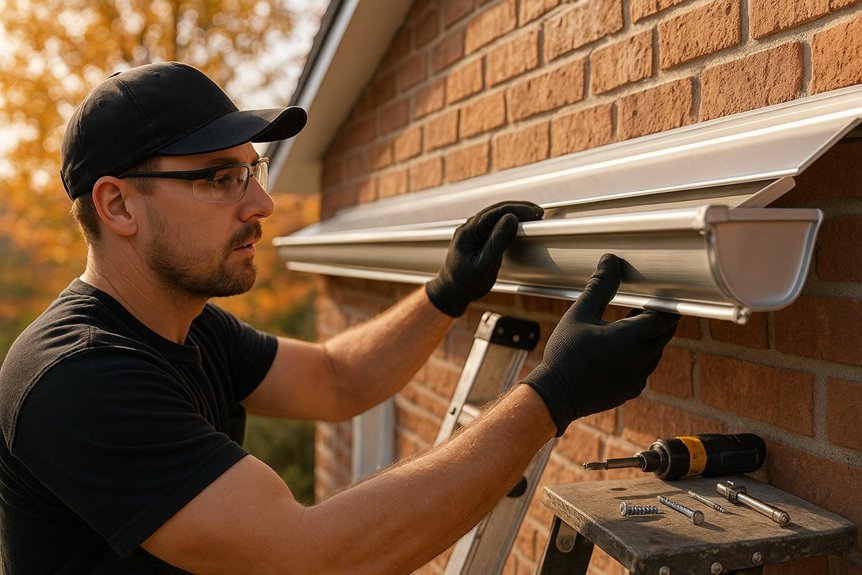
- Inspect gutters for sagging or pulling away from the fascia.
- Check for rust or corrosion, which can indicate aging materials.
- Look for leaks or holes that may require patching or replacement.
- Verify downspouts are securely fastened and not disconnected.
- Confirm that water flows freely through the gutters and downspouts.
Proper downspout maintenance guarantees effective water management, protecting your roof and home.
Check Your Flashing and Seals
To guarantee your roof's integrity, inspect the flashing and seals for cracks that could allow water intrusion.
Examine these areas for signs of rust, which can weaken the metal and lead to further damage.
Additionally, check for any loose seals that might compromise the roof's waterproofing capabilities.
Inspect for Cracks
Examining the condition of your roof involves a detailed inspection of its flashing and seals, which are vital for preventing water intrusion. Cracks in these areas can lead to significant damage, so identifying crack types and understanding repair options is essential.
Look for:
- Hairline Cracks: These are small but can expand over time.
- Stress Cracks: Often caused by structural shifts or pressure.
- Thermal Cracks: Result from temperature fluctuations.
- Impact Cracks: Caused by debris or hail.
- Sealant Cracks: Found in aged or poorly applied sealant.
Addressing these cracks promptly with appropriate repair options, such as sealing, patching, or replacing damaged flashing, guarantees the roof's integrity and longevity.
Regular maintenance can prevent costly repairs and sustain your roof's performance.
Examine for Rust
Identifying cracks is just one aspect of roof inspection; another essential element is checking for rust, especially on your flashing and seals.
Begin by examining the metal components closely. Look for any discoloration or pitting that indicates rust formation. Flashing, often made of galvanized steel, can corrode when protective coatings wear away, leading to leaks.
Use a wire brush to remove surface rust and assess the extent of the damage. Apply a rust prevention treatment to halt further corrosion.
Verify all seals around vents and chimneys are intact, as compromised seals can accelerate rust. Regular inspections and timely maintenance are fundamental for rust prevention, protecting your roof’s integrity and extending its lifespan.
Don’t overlook this important step in storm damage assessment.
Look for Loose Seals
A critical step in roof maintenance is checking for loose seals, particularly around your flashing and seals.
Loose seals can lead to leaks and structural damage if not addressed promptly. Inspecting these areas after a storm is essential for effective seal maintenance. Look for signs of wear or gaps that might compromise the roof's integrity.
- Check flashing: Verify it's tightly secured and free from bends or warping.
- Inspect sealant: Look for cracks or peeling in the sealant around joints.
- Examine roof edges: Confirm that seals are intact and not lifting.
- Review pipe boots: Verify they’re snugly fitted without visible deterioration.
- Assess chimney seals: Make certain they're firmly attached and not showing signs of wear.
Address any issues immediately to prevent further damage.
Look for Structural Damage
When evaluating your roof for structural damage, start by examining the integrity of key components such as rafters and trusses. Confirm these elements maintain their structural integrity and haven’t been compromised by the storm.
Look for signs like cracks, warping, or bowing, which may indicate a reduction in load bearing capacity. These issues can lead to further deterioration if not addressed promptly.
Next, inspect the decking beneath the shingles. Soft spots or sagging can suggest water infiltration or weakening of the material.
Check for any misalignments in the roofline, as these could signal underlying structural shifts. Pay attention to joints and connections, confirming they remain secure.
A thorough assessment helps you determine the extent of damage and plan necessary repairs.
Call a Professional Roofer When Needed
Sometimes, it's clear that calling a professional roofer is essential. After a storm, DIY inspections mightn't reveal hidden damage. A professional can assess weather impacts and recommend emergency repairs.
They’ll guide you through insurance claims, guaranteeing accurate documentation. Regular roof maintenance and seasonal inspections by a contractor can prevent small issues from becoming costly repairs.
Consider these factors when selecting a roofer:
- Experience with various roofing materials
- Understanding of storm preparedness measures
- Clear communication about repair costs
- Strong references and reviews
- Knowledgeable in contractor selection processes
A professional can guarantee your roof withstands future weather events and remains in top condition.
Don’t hesitate to seek expert help when the situation demands it.
Prevent Future Damage
Maintaining your roof’s integrity involves proactive measures to prevent future damage. Start with preventative maintenance by scheduling regular inspections. These allow you to identify potential issues early.
Implement weatherproofing techniques to protect against harsh conditions. Conduct seasonal checkups, focusing on roof cleaning and gutter upkeep to guarantee proper drainage.
Implement weatherproofing and conduct seasonal checkups to ensure proper roof and gutter maintenance.
Structural reinforcements are essential for strengthening vulnerable areas, particularly before storm seasons.
Prepare for emergencies by having a plan in place and reviewing your insurance coverage to confirm adequate protection.
Consider DIY repairs for minor issues, but don’t hesitate to call professionals for complex tasks. Regularly evaluate your roof’s condition and address any signs of wear promptly.
This approach minimizes risks and extends your roof’s lifespan, safeguarding your home effectively.
Frequently Asked Questions
How Soon Should I Inspect My Roof After a Storm?
You should perform a roof inspection as soon as it's safe after a storm. Prompt timing helps identify storm damage signs like missing shingles or leaks.
Start by checking for debris, dents, or water stains. Use binoculars for a detailed view from the ground if climbing isn’t possible.
Address issues quickly to prevent further damage. This proactive approach guarantees your roof's integrity and extends its lifespan.
Can Roof Damage Affect My Insurance Premiums?
Yes, roof damage can affect your insurance premiums.
When you file insurance claims for roof repairs, insurers may reassess your risk profile, leading to premium adjustments. They evaluate the frequency and severity of claims, which can result in increased costs.
To minimize changes, promptly address repairs and document all maintenance. Staying proactive helps maintain your insurance standing and potentially reduces the likelihood of higher premiums.
What Tools Are Needed for a Roof Inspection?
For a roof inspection, you’ll need essential tools like a sturdy ladder, flashlight, and binoculars for spotting distant damage.
Wear safety equipment, including a harness, helmet, and non-slip shoes, to guarantee safe navigation.
Bring a notepad or smartphone for documentation. A moisture meter can help detect water intrusion.
These roof inspection tools and safety equipment guarantee you thoroughly assess potential issues while keeping yourself protected.
How Does Wind Speed Relate to Roof Damage?
Wind speed directly impacts roof damage by exerting pressure on shingles and tiles.
During your damage assessment, observe wind effects like missing or lifted shingles. High winds can even cause structural issues.
Check for debris lodged in gutters or around the roof, as these signs indicate wind's force.
Document any changes in the roof’s appearance, noting shifts or breaks caused by wind to accurately gauge the extent of the damage.
Are There Temporary Fixes for Roof Leaks?
Yes, there are temporary fixes for roof leaks. You can use temporary patching methods to cover affected areas.
Apply roofing tar or a waterproof sealant directly over the leak for immediate protection. Use a tarp as an additional barrier against water entry.
These solutions provide short-term leak prevention and help minimize damage until professional repair is possible. Guarantee proper attachment to withstand wind and further weather exposure.
Browse our national roofing directory to find licensed contractors near you. See pricing guides for Dallas, Los Angeles, San Antonio, Tampa, Orlando, and more.