Emergency Roof Repair: Storm Damage and Leak Response
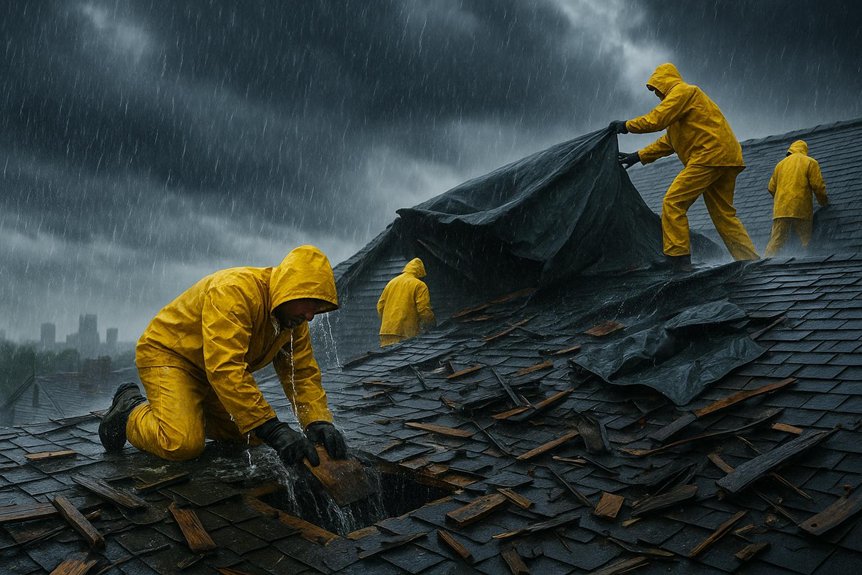
When a storm hits, your immediate response to roof-leak-detection-and-repair.html">roof-maintenance-tips-to-extend-your-roofs-lifespan.html">roof damage is critical. Start by safely evaluating and documenting the extent of the harm. Use tarps and sealants as temporary measures, prioritizing safety with proper gear. Visible leaks or significant issues warrant professional intervention. By acting swiftly, you minimize further deterioration and protect your home from water intrusion. But how can you be sure you're taking the right steps to safeguard your investment?
Immediate Steps to Protect Your Home
When facing a sudden roof emergency, your first priority is to minimize potential damage to your home.
Begin by evaluating the situation safely. If there’s structural damage, you should vacate the affected areas and seek temporary shelter. It’s essential to protect your family and valuables from further harm. Gather emergency supplies, including tarps, buckets, and flashlights. These supplies will help you manage immediate issues like leaks or falling debris.
Next, document the damage with photos for insurance purposes. Clear any debris that you can safely remove to prevent further strain on the roof.
Make sure to communicate with professionals for a thorough inspection as soon as possible. By taking these immediate steps, you’re safeguarding your home until permanent repairs are feasible.
Quick Fixes for Roof Leaks
Even if you're not a roofing expert, you can handle minor leaks with some quick fixes to prevent further damage. Start by using emergency tools for leak detection. Once identified, apply temporary patching with roof sealants. For more extensive coverage, waterproof tarping offers a reliable solution. It’s essential to have a storm preparedness kit with weatherproof materials for DIY repairs.
Here's a quick reference:
| Task | Tools Needed | Material Used |
|---|---|---|
| Leak Detection | Flashlight, Ladder | Safety Gear |
| Temporary Patching | Roof Sealants | Patch Kits |
| Waterproof Tarping | Tarp, Bungee Cords | Heavy-duty Tarps |
| Emergency Tools | Hammer, Nails | Basic Toolset |
| Storm Preparedness | First-aid Kit | Weatherproof Gear |
Act swiftly to minimize damage and maintain your roof’s integrity.
Identifying Roof Damage After a Storm
After a storm passes, it’s crucial to promptly assess your roof for damage to prevent future complications.
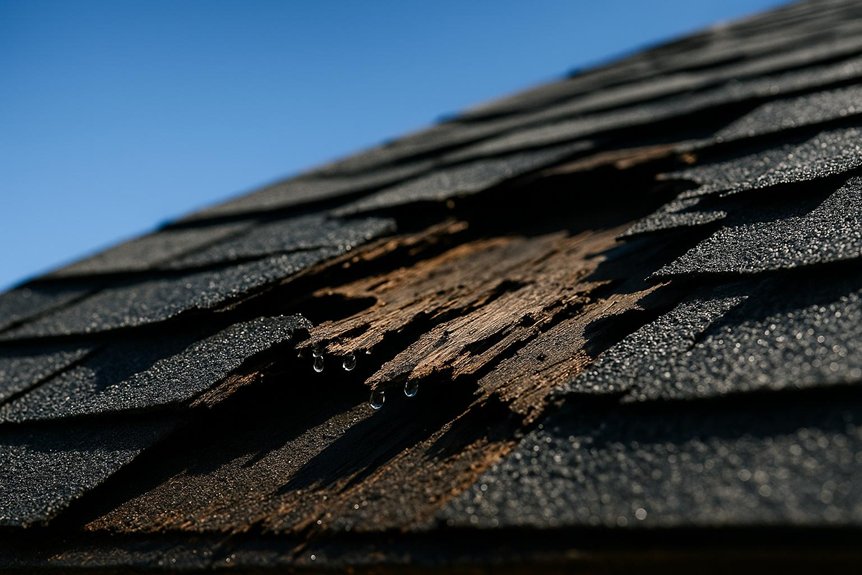
Begin your roof inspection by checking for missing or damaged shingles, which are common in the storm aftermath. Look for granule loss, as this can indicate wear.
Start by inspecting for missing or damaged shingles, and check for granule loss as a sign of wear.
Examine flashing around chimneys and vents for any dislodging or gaps. Inspect gutters and downspouts for blockages or dents, as these can affect drainage and lead to leaks.
Don’t forget to check for debris accumulation, which can cause water pooling. Use binoculars for a thorough inspection from the ground if access is unsafe.
Document any issues with photos for reference. Your swift action guarantees minor problems don’t escalate into severe structural damage.
Assessing the Extent of Roof Damage
To accurately assess roof damage, start by identifying visible issues like missing shingles or damaged flashing.
Next, inspect for underlying structural concerns that might compromise the roof’s integrity.
Finally, evaluate potential water intrusion risks that could lead to further complications.
Identifying Visible Roof Damage
How can you quickly determine the health of your roof? Start with a roof surface analysis. Look for damage indicators such as missing shingles, cracked tiles, or granule loss. These signs reveal potential vulnerabilities to water intrusion. Examine flashing around vents and chimneys for rust or separation. A quick walk around your property can also uncover sagging areas or debris accumulation, which might signal underlying issues.
Here's a quick reference table for visible damage indicators:
| Damage Type | Description | Action Needed |
|---|---|---|
| Missing Shingles | Gaps in roof coverage | Immediate repair |
| Cracked Tiles | Fractured or broken sections | Replace tiles |
| Granule Loss | Bare patches on shingles | Roof inspection |
Regular checks guarantee prompt responses to roof damage.
Inspecting Underlying Structural Issues
- Examine the insulation impact to see if it’s been compromised by leaks, reducing energy efficiency.
- Look for ventilation problems that could lead to trapped moisture and subsequent structural damage.
- Assess the overall load bearing capacity to guarantee safety and stability.
Evaluating Water Intrusion Risks
When evaluating water intrusion risks, begin by meticulously checking for signs of damage such as discolored spots or mold growth on ceilings and walls.
Identify potential water intrusion sources by inspecting the roof for missing shingles, damaged flashing, or clogged gutters.
Use moisture detection methods, such as infrared thermography or moisture meters, to pinpoint hidden leaks. These tools help you accurately assess the extent of roof damage without invasive procedures.
Pay attention to areas prone to leaks, like around chimneys and skylights.
Verify attic insulation for dampness, as moisture there can indicate roof issues.
Quick Ways to Prevent Water Damage
Water intrusion can cause significant damage, but you can take quick actions to minimize the impact. Start by implementing effective waterproofing techniques. These methods create a barrier that prevents water from penetrating vulnerable areas.
If you notice a leak, employ emergency tarping to cover the damaged sections immediately. This temporary measure stops further water ingress, buying you time for more permanent repairs.
Here are some steps you can take:
- Inspect and Clear Gutters: Verify gutters are free of debris to facilitate proper drainage.
- Seal Cracks and Holes: Use waterproof sealants on any visible gaps in the roof.
- Redirect Water Flow: Utilize tarps or barriers to guide water away from critical areas.
Taking these steps quickly helps protect your home and contents.
When to Call a Roofing Professional
Wondering if it's time to call a roofing professional? Assess the damage first. If there are visible leaks, missing shingles, or structural concerns, it's essential to act swiftly.
Don’t risk voiding roofing warranties by attempting repairs yourself. Instead, contact a professional who offers emergency services to guarantee immediate response and proper repair.
Leave repairs to professionals to ensure warranty protection and receive prompt, expert service when you need it most.
A professional will evaluate the extent of damage accurately and confirm compliance with warranty requirements. They've the expertise to address issues like underlayment damage or compromised flashing that you might overlook.
Timely intervention prevents further deterioration, preserving your roof’s integrity.
Choosing the Right Repair Service
When selecting a repair service, first verify the contractor's credentials to guarantee they're licensed and insured.
Next, compare repair costs by obtaining detailed quotes from multiple providers to balance quality and budget.
Finally, assess service availability to confirm they can respond promptly to your emergency needs.
Evaluating Contractor Credentials
While maneuvering through the complexities of emergency roof repair, selecting the right contractor is crucial to securing a successful outcome. You need to evaluate contractor credentials meticulously.
Begin with contractor qualifications, confirming they possess the necessary skills and experience for the job. License verification comes next; ensure that they're legally authorized to operate in your area. This step protects you from unqualified work.
Consider these key actions:
- Check References: Contact previous clients to gauge satisfaction and quality.
- Verify Insurance: Confirm they've adequate liability and worker’s compensation coverage.
- Assess Certifications: Look for industry-recognized certifications that indicate professionalism and expertise.
Comparing Repair Costs
After thoroughly evaluating contractor credentials, it's important to focus on comparing repair costs to select the right service. Start with a detailed repair cost breakdown from each contractor. This breakdown should include materials, labor, and any additional emergency fees.
Understanding these specifics helps you gauge whether a quote is reasonable or inflated. When you're budgeting for emergency repairs, make sure you've accounted for potential unexpected expenses, which can arise during storm damage repairs.
Consider obtaining multiple estimates to better understand market rates. Don’t just focus on the lowest bid—examine the value offered. Higher estimates might include premium materials or faster completion times, which could be essential in emergencies.
Ultimately, balancing cost with service quality guarantees your roof is repaired efficiently and effectively.
Assessing Service Availability
Securing a reliable repair service requires evaluating service availability with precision. First, identify local service providers who specialize in emergency roof repairs.
Assess their response times, guaranteeing they can address urgent needs swiftly. Verify that they offer 24/7 emergency contact options, as storms and leaks often occur unexpectedly.
Here’s how you can streamline your selection process:
- Research Reviews: Analyze feedback from past clients to gauge reliability and quality.
- Check Certifications: Confirm the team holds necessary licenses and certifications, affirming their expertise.
- Compare Response Times: Evaluate how quickly they promise to arrive on-site during emergencies.
Need a Roofing Contractor?
Find licensed, reviewed roofing professionals in your area. Get free estimates from verified contractors.
Find Local Roofers Call (866) 466-9085Insurance Coverage for Roof Damage
Understanding your insurance coverage for roof damage is essential when facing unexpected emergencies. First, review your roof insurance policy to understand the claim process. Check your policy limits and deductible amounts, as these determine out-of-pocket costs.
Be aware of coverage exclusions—certain damages mightn't be covered. Knowing the replacement cost provisions can guide your financial planning. Access to emergency funds may be necessary if immediate repairs exceed coverage.
Roof warranties often complement insurance but don't replace it. Conduct a thorough damage assessment to expedite claims and align with repair timelines. This guarantees you meet deadlines and utilize benefits efficiently.
Properly maneuvering these elements can make a significant difference in managing storm-induced roof repairs effectively.
How to Document Roof Damage for Claims
When documenting roof damage for claims, start by capturing clear, detailed photographs from multiple angles. These damage photos are essential for your claim forms. Include close-ups and wide shots to provide a complete view.
Next, compile a storm timeline to detail when the damage occurred. This assists the insurance adjuster in understanding the event’s context. Conduct thorough roof inspections and prepare precise damage reports. These reports should include repair estimates, which help illustrate the financial impact.
- Confirm your documentation is thorough and organized.
- Review your policy’s coverage limits to understand what’s included.
- Communicate promptly with the insurance adjuster to streamline the process.
Proper documentation supports your claim and maximizes your chance of receiving the necessary compensation for repairs.
Exploring Long-Term Roof Repair Options
When considering long-term roof repair, evaluate material longevity to guarantee durability under varying weather conditions.
You'll want to identify cost-effective solutions that don't compromise quality, balancing initial investment with maintenance needs.
Additionally, explore sustainable roofing options that not only enhance energy efficiency but also reduce environmental impact.
Material Longevity Considerations
Although roof repairs can seem intimidating, selecting materials with longevity in mind guarantees the durability of your investment. Understanding different material types is vital, as each offers unique lifespan factors and weather resistance. Proper installation techniques enhance longevity, reducing repair frequency.
Consider the following:
- Maintenance Practices: Regular upkeep can extend the roof's life, securing peak performance.
- Environmental Impact: Choose materials that balance durability with eco-friendliness.
- Cost Considerations: Weigh initial costs against long-term savings to make informed decisions.
Weather-resistant materials like metal or high-quality shingles are excellent for harsh climates. Proper installation and maintenance practices further reduce the need for frequent repairs.
Evaluate each option's environmental impact to guarantee a sustainable choice. Balancing cost considerations with these factors leads to a robust roofing solution.
Cost-Effective Solutions
Identifying cost-effective solutions for long-term roof repair involves evaluating both material and installation options that offer durability without breaking the bank.
Start by considering budget-friendly materials like asphalt shingles or metal panels, which balance cost and longevity. These materials provide effective protection against weather elements at a fraction of the cost of premium options.
When it comes to installation, DIY repair tips can greatly cut expenses. Make sure you have the right tools, such as a ladder, roofing nails, and sealant.
Focus on repairing minor leaks and securing loose shingles promptly. However, always prioritize safety and know when to consult a professional.
Sustainable Roofing Options
As you explore sustainable roofing options for long-term repair, consider materials that not only withstand environmental challenges but also minimize ecological impact. Incorporating eco-friendly materials like recycled shingles can enhance energy efficiency.
Solar integration transforms your roof into a power generator, reducing reliance on non-renewable energy sources. Additionally, living roofs offer natural insulation and improve air quality.
- Green roofing: Enhances thermal performance and supports biodiversity.
- Rainwater harvesting: Integrates systems to collect and reuse rainwater, promoting sustainable practices.
- Energy efficiency: Focus on materials that reduce heat absorption and improve climate control.
Preventative Measures for Future Storms
To safeguard your home from future storms, it’s vital to implement strategic preventative measures. Begin by choosing storm-resistant materials, such as impact-resistant shingles or metal roofing, to enhance your roof's durability. These materials are designed to withstand high winds and hail, reducing the risk of damage.
Regular maintenance is essential. Inspect your roof biannually for loose or damaged shingles, and clear debris from gutters to prevent water buildup. Trim overhanging branches that could break and cause damage during storms.
Additionally, guarantee proper attic ventilation to prevent moisture accumulation, which can weaken roofing materials over time.
Install a robust drainage system to direct water away from your foundation. By taking these steps, you'll greatly reduce the likelihood of storm-related roof issues.
Avoiding Common Emergency Repair Mistakes
When addressing emergency roof repairs, start with a quick damage assessment to prioritize tasks effectively.
Choose proper materials that match your roof's specifications to guarantee durability and compatibility.
Above all, prioritize safety precautions to protect yourself and others during the repair process.
Quick Damage Assessment
Although emergency roof repairs can be challenging, a quick and accurate damage assessment is crucial to avoid common pitfalls. Start by identifying storm impact areas and potential leak sources. Recognize roof vulnerabilities like missing shingles or damaged flashing.
Prioritize repair urgency based on these observations, while considering weather preparedness.
Use these steps to guide your assessment:
- Scan for damage indicators: Look for water stains, broken tiles, and debris.
- Evaluate repair timelines: Determine immediate actions versus those that can wait.
- Implement safety measures: Use proper gear and emergency supplies to guarantee safety.
As a homeowner, it’s your responsibility to act swiftly and efficiently.
Accurate assessments help coordinate repair efforts and optimize resources, leading to effective recovery.
Proper Material Selection
Choosing the right materials is critical in emergency roof repairs to avoid common mistakes that can escalate costs and damage. You need to evaluate material durability and climate factors to guarantee a long-lasting fix. Selecting inappropriate materials can lead to repeated repairs and increased expenses.
Assess these factors:
| Factor | Importance | Example Materials |
|---|---|---|
| Material Durability | High | Metal, Asphalt |
| Climate Considerations | Essential for longevity | Slate for cold areas |
| Cost Efficiency | Balancing quality & cost | Composite shingles |
Durability matters because it withstands harsh conditions, while climate factors guarantee materials perform well under local weather patterns. For instance, metal roofs resist wind and rain, making them ideal for storm-prone regions. By choosing wisely, you avoid unnecessary complications and guarantee a robust emergency repair.
Safety Precautions First
Even before you start any emergency roof repair, prioritizing safety precautions can prevent accidents and further damage.
Verify you're equipped with the right safety gear. A secure helmet, non-slip boots, and durable gloves are essential. Check your ladder stability before climbing. Place it on a firm, level surface, and make certain it extends at least three feet above the roof's edge for safe access.
Avoid rushing the process; haste often leads to mistakes.
- Wear appropriate safety gear: Helmets, non-slip boots, and gloves protect against falls and injuries.
- Verify ladder stability: Position the ladder on level ground, and secure it carefully.
- Avoid working in poor conditions: Wet, windy, or icy conditions increase the risk of accidents.
Signs of Roof Structural Damage
Spotting signs of roof structural damage early can save you significant time and money. Start by looking for roof sagging, a clear indicator of compromised support.
Check for ceiling stains, which often signal attic leaks or insulation damage. Mold growth can suggest prolonged moisture exposure, while shingle curling indicates deteriorating materials.
Inspect for structural cracks that might affect your home's integrity. Gutter debris, such as granules or broken shingles, can hint at underlying issues.
Don't overlook flashing problems around chimneys and vents, as they can lead to water intrusion. Foundation issues may also arise from prolonged roof neglect.
Regularly examining these elements helps maintain your roof's health, mitigating costly repairs and ensuring your home's safety and stability.
Creating Your Emergency Roof Repair Kit
To effectively handle unexpected roof issues, assembling a well-equipped emergency roof repair kit is crucial. Start with emergency supplies for immediate response. You’ll need critical repair tools and weatherproof materials to manage temporary solutions.
Prioritize safety by including safety gear for protection during repairs.
- Tarp installation essentials: Quick coverage for leaks and damage.
- Leak detection tools: Identify and assess damage precisely.
- Essential checklists and restoration techniques: Guarantee thorough and efficient repairs.
Conduct a detailed damage assessment to determine the necessary steps. Use these items to implement temporary solutions until permanent repairs can be made.
Evaluate damage thoroughly to guide immediate actions and implement stopgap solutions until permanent repairs are feasible.
This kit empowers you to respond swiftly and effectively, minimizing further damage and guaranteeing safety. Stay prepared to face any roofing emergency confidently.
Frequently Asked Questions
How Can I Tell if My Roof Warranty Covers Storm Damage?
Check your warranty specifics to see if storm damage is included.
Look for terms like “acts of nature” or “weather-related damage.”
Contact your provider to clarify details and guarantee coverage.
Start the claim process by documenting the damage with photos, and then fill out any necessary forms.
Submit these promptly to avoid delays.
Keep records of all communications to guarantee a smooth claim experience.
What Materials Are Best for Emergency Roof Patches?
For emergency roof patches, use materials like roofing tape, tarps, or peel-and-stick underlayment.
Roofing tape provides quick sealing for small leaks, while tarps cover larger areas effectively. Peel-and-stick underlayment offers a temporary waterproof barrier.
Employ emergency repair techniques by cleaning the damaged area and securely applying these materials. Guarantee they’re tightly adhered to prevent further water intrusion, providing a reliable temporary fix until professional repairs can be made.
Are There Temporary Solutions for Broken Roof Tiles?
Yes, you can use temporary patching to address broken roof tiles.
Start with a thorough roof inspection to identify all damaged areas. Use roofing tape or a waterproof tarp to cover the affected tiles securely.
Make certain the patch is tightly sealed to prevent water intrusion. These materials provide a temporary fix, giving you time to arrange for professional repairs.
Always prioritize safety when accessing your roof.
Can I Perform Emergency Repairs on Flat Roofs?
Yes, you can perform emergency repairs on flat roofs.
Start with a thorough inspection to identify leaks or damage. Use emergency repair techniques like applying a tarp or temporary patching with roofing cement.
Always prioritize flat roof maintenance to prevent future issues.
Make sure you clean the area before applying any patches, and consider professional help for significant damage to maintain safety and effectiveness.
How Does Roof Ventilation Affect Leak Prevention?
Roof ventilation plays an essential role in leak prevention by regulating moisture levels.
You should explore ventilation types like ridge, soffit, and gable vents. Proper ventilation reduces condensation, a common leak cause.
By making certain air flows effectively, you prevent moisture buildup that can lead to leaks. Maintain a balanced ventilation system to extend your roof's lifespan and enhance its resistance to water damage.
Regular inspection is vital to guarantee peak performance.
Browse our national roofing directory to find licensed contractors near you. See pricing guides for San Antonio, Tampa, Orlando, Houston, Miami, and more.