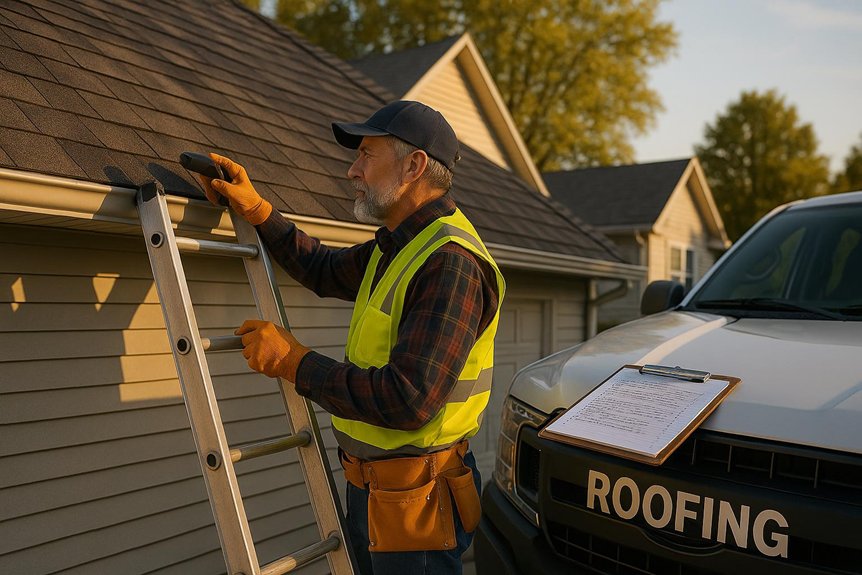
How to Choose a Roofing Contractor
When you're choosing a roof-maintenance-tips-to-extend-your-roofs-lifespan.html">roof-repair-signs-your-roof-needs-professional-repair.html">roof-replacement-when-is-it-time-for-a-new-roof.html">roof-ventilation-and-insulation.html">roofing-services.html">roofing contractor, it's essential to evaluate your specific needs first, focusing on budget and material preferences. Begin by researching local professionals, ensuring they have the proper licenses and insurance. Assess their experience through past projects and customer reviews. Get multiple quotes for transparent pricing, and clarify payment terms. Consider warranties and timelines to avoid miscommunication. With these insights, you're prepared to make an informed decision—but there's more to uncover.
Understanding Your Roofing Needs
When it comes to choosing the right roofing contractor, understanding your roofing needs is essential.
First, assess the roofing styles that suit your home’s architecture and climate. Do you prefer the durability of metal or the classic look of asphalt shingles? Each style impacts longevity and maintenance.
Next, consider budget planning. Determine how much you’re willing to invest upfront versus long-term costs. While some materials might be cheaper initially, they could require more frequent repairs.
Consider budget planning by balancing initial investment with potential long-term repair costs.
Analyze any specific requirements, like insulation or additional waterproofing, to guarantee they fit within your financial plan.
Researching Local Roofing Contractors
When researching local roofing contractors, make certain to verify their credentials and licenses to guarantee they meet industry standards and local regulations.
Compare service offerings by evaluating what each contractor provides, such as warranties and material options, to see which aligns best with your needs.
This approach will help you select a contractor with the right combination of expertise and services.
Verify Credentials and Licenses
Before hiring a roofing contractor, confirm you verify their credentials and licenses to protect your investment.
Start by checking contractor referrals from trusted sources. These can provide insights into the contractor’s reliability and workmanship.
Next, contact local licensing agencies to guarantee the contractor holds valid and current licenses. This step is vital because it confirms that they meet regional standards and regulations.
Licensed contractors are typically more accountable and knowledgeable about building codes and safety practices.
Don’t hesitate to ask for proof of insurance, as this safeguards you against potential liabilities.
Remember, a professional contractor will readily provide documentation.
Compare Service Offerings
After verifying credentials and licenses, the next step is to compare service offerings among local roofing contractors. Look for service differentiation that highlights unique package deals and exceptional customer service.
Evaluate their warranty options—comprehensive warranties can indicate confidence in their work. Check material sourcing for quality assurance and inquire about their installation techniques.
Effective project management is essential for timely completion, so ask about their strategies. Payment flexibility can ease financial strain, so explore their terms.
Service guarantees provide peace of mind, ensuring accountability. Also, consider post-installation support, as ongoing assistance can be invaluable.
Evaluating Contractor Experience and Expertise
Selecting a roofing contractor requires careful evaluation of their experience and expertise, as these factors greatly impact the quality of work. Start by reviewing the contractor portfolio to gauge the scope and style of previous projects. A well-documented portfolio showcases their ability to handle diverse roofing challenges. Industry certifications further validate their skills, guaranteeing adherence to the latest standards.
| Emotion | Description |
|---|---|
| Confidence | Contractor's portfolio shows extensive work |
| Trust | Certifications confirm expertise |
| Assurance | Proven track record in similar projects |
Look for contractors with a proven record in your specific roofing needs. Experience in handling similar materials or project sizes can greatly affect the outcome. By prioritizing these aspects, you guarantee a higher likelihood of success and satisfaction with your roofing project.
Checking Licenses and Insurance Requirements
To ascertain a roofing contractor is qualified, start by verifying their credentials to confirm they meet industry standards.
You'll need to understand their insurance coverage to protect yourself against potential liabilities.
Additionally, confirming the validity of their license guarantees compliance with local regulations.
Verify Contractor Credentials
When you're considering a roofing contractor, guaranteeing they possess the necessary credentials is essential. Start by verifying their licenses. A valid license reflects a contractor's compliance with local regulations and standards. Assess the contractor's reputation by examining client feedback. Positive reviews often indicate reliability and professionalism.
Here's a quick guide:
| Credential | Importance | How to Verify |
|---|---|---|
| License | Legal compliance | Check state database |
| Insurance | Risk protection | Request proof |
| Client Feedback | Contractor reputation | Read online reviews |
Guaranteeing these credentials are in place helps you make an informed decision. A licensed, well-reviewed contractor minimizes potential risks and enhances the likelihood of a successful roofing project. Always prioritize these checks to guarantee quality and peace of mind.
Understand Insurance Coverage
After confirming a contractor's credentials, it's equally important to understand their insurance coverage. An insurance policy should include liability protection and workers' compensation, guaranteeing you're not liable for accidents during a roof inspection.
Check the coverage limits to make sure they're adequate for potential claims. Be aware of exclusions details, which might leave you exposed to certain risks. Knowing the claim process helps you respond efficiently if issues arise.
Review the contractor's responsibilities under their policy, verifying they've met all documentation requirements. This could impact premium costs and your coverage.
It's essential to confirm they carry valid insurance before any work begins. Understanding these elements protects your investment and guarantees a smooth project with minimized risks and unexpected costs.
Confirm License Validity
Before hiring a roofing contractor, verify their license is valid and up-to-date, as this is essential for compliance with local regulations and standards.
Start the license verification process by contacting your state’s licensing board or visiting their website. This guarantees you’re working with qualified professionals and protects you from potential legal issues.
Unlicensed contractors may result in subpar work and expose you to liability for accidents or non-compliance fines.
Additionally, check if they carry adequate insurance, covering both liability and workers’ compensation. This safeguards you against potential financial burdens from on-site injuries or property damage.
Reading Customer Reviews and Testimonials
Evaluating customer reviews and testimonials is essential for selecting a reliable roofing contractor. Start with a thorough customer feedback analysis using online review platforms.
Look for testimonial authenticity verification to confirm reviews are genuine. Pay attention to response trend observation; consistent patterns in feedback can reveal underlying issues or strengths.
Social media insights also provide real-time information about customer interactions and satisfaction.
Consider reputation management strategies the contractor employs to address feedback. The star rating significance lies not just in the score, but in how the contractor responds to criticism.
Effective negative review handling can demonstrate professionalism and commitment to improvement. By focusing on these aspects, you’ll make an informed decision, guaranteeing quality and reliability in your roofing contractor choice.
Comparing Quotes and Pricing Options
When comparing roofing quotes, confirm you evaluate the cost breakdown to understand material, labor, and contingency expenses.
Assess payment terms to clarify the schedule and any required deposits, as these can impact your cash flow.
This approach helps you make a well-informed decision that balances quality and budget.
Evaluate Cost Breakdown
Understanding the cost breakdown of roofing quotes is essential for making an informed decision. You need to guarantee cost transparency to avoid unexpected expenses.
Examine detailed estimates from contractors closely. Here’s how:
- Material Costs: Verify if the quote includes all necessary materials. High-quality materials may cost more but offer better longevity.
- Labor Charges: Labor can vary considerably. Make sure the quote details the scope of work and the number of workers involved.
- Additional Fees: Check for any hidden charges like waste disposal or permit fees. These should be clearly outlined.
Assess Payment Terms
Managing payment terms is essential when choosing a roofing contractor. Examine payment flexibility to guarantee terms align with your financial situation.
Evaluate upfront costs and understand deposit requirements—typically, a 10-20% deposit is standard. Review payment schedules to confirm they’re fair and manageable, allowing for incremental payments tied to project milestones.
Explore financing options if available, which could ease financial strain. Be clear on the final payment timing and conditions to avoid disputes.
Late fees can add unexpected costs, so check these terms carefully. Consider various payment methods, making sure they’re convenient and secure for you.
Exploring Roofing Warranties
Although often overlooked, roofing warranties play a critical role in protecting your investment. Understanding them guarantees you’re covered if issues arise. Here’s what you need to know:
1. Warranty Types: Differentiate between manufacturer warranties, which cover materials, and workmanship guarantees, focusing on installation errors.
Both have distinct claim processes and warranty coverage.
2. Key Details: Assess warranty duration and transferability options. Some warranties extend for decades, while others might be limited.
Transferability can add value if you sell your home.
3. Common Exclusions: Be aware of exclusions like weather damage or improper maintenance.
Confirm you follow all maintenance requirements to keep the warranty valid. Always review warranty documentation thoroughly to avoid surprises later on.
Need a Roofing Contractor?
Find licensed, reviewed roofing professionals in your area. Get free estimates from verified contractors.
Find Local Roofers Call (866) 466-9085How to Evaluate Communication Skills
To evaluate a contractor's communication skills, focus on how clearly they outline project details and their efficiency in response time.
You should expect precise explanations regarding timelines, materials, and costs.
Quick, informative replies to your inquiries indicate reliability and professionalism.
Clarity in Project Details
How effectively can a roofing contractor convey project details? This is critical in guaranteeing a smooth, successful project.
Look for clarity in the contractor's communication by focusing on these elements:
- Project Scope: They should outline the entire project scope clearly, detailing each phase and what it entails. This helps avoid misunderstandings.
- Detailed Proposals: Evaluate their proposals. A good contractor provides thorough, detailed proposals that specify materials, timelines, and costs, giving you a complete picture.
- Transparent Communication: They must communicate potential challenges and solutions transparently. This guarantees you're always in the loop and prepared for any issues.
Response Time Efficiency
When selecting a roofing contractor, evaluating their response time efficiency is essential for gauging their communication skills. Quick response times often indicate a contractor’s commitment to client service and project management. Establish clear response time expectations upfront, and observe how promptly they address your inquiries. This responsiveness reflects their professionalism and reliability.
| Evaluation Metric | Poor | Excellent |
|---|---|---|
| Response Time (Hours) | >24 | <4 |
| Follow-up Consistency | Inconsistent | Consistent |
| Clarity of Responses | Vague | Detailed |
| Availability for Meetings | Limited | Flexible |
| Problem Resolution | Delayed | Prompt |
Prioritize contractors who demonstrate strong communication responsiveness. Their ability to engage effectively can greatly impact project outcomes, ensuring your roofing needs are met efficiently and professionally.
Reviewing Past Projects and References
Why is it essential to examine a roofing contractor's past projects and references? Doing so provides insight into their reliability and craftsmanship.
Start by conducting past project evaluations to assess the quality and scope of their work. This guarantees you’re hiring someone with proven expertise.
Next, perform reference checks to gather firsthand accounts of the contractor’s professionalism and punctuality. These steps help you make an informed decision.
Here are three key actions to take:
- Request a Portfolio: Examine completed projects to gauge design and durability.
- Contact Previous Clients: Ask specific questions about their satisfaction and any issues.
- Evaluate Consistency: Look for patterns in feedback to identify strengths and weaknesses.
Taking these steps guarantees a well-rounded view of the contractor’s capabilities.
Discussing Project Timelines
Establishing clear project timelines is vital for the successful completion of your roofing project. Begin by discussing the distinct project phases with your contractor, including preparation, installation, and cleanup. Each phase should have a specific duration, guaranteeing everyone knows what to expect. Don’t hesitate to ask about potential delays and how they’ll handle them.
Timeline flexibility is important, as weather or unforeseen issues can impact progress. A reliable contractor will outline contingency plans, providing a buffer for unexpected events.
Make certain the timeline aligns with your schedule, especially if you’ve planned around specific dates. Frequent communication is key—regular updates help keep the project on track.
Which Roofing Materials Should You Consider?
Focus on these key aspects:
- Aesthetic Preferences: Choose materials that complement your home's design.
- Maintenance Requirements: Determine how often you'll need upkeep.
- Energy Efficiency & Insulation Benefits: Materials like clay tiles offer excellent insulation, reducing energy costs.
Understanding Payment Terms and Conditions
How can you guarantee a smooth financial transaction when hiring a roofing contractor? Start by securing contract clarity. Clearly outline payment methods and schedules.
Determine deposit requirements upfront—typically 10-20%—to avoid surprises. If financing options are available, evaluate the terms carefully. A detailed payment schedule helps manage cash flow and prevent misunderstandings.
Watch for retainage policies, which may hold a percentage until project completion to guarantee quality work.
Address potential late payment penalties to prevent extra costs. Establish a procedure for handling payment disputes, keeping communication open and documented.
Identifying Warning Signs in Contractors
When hiring a roofing contractor, vigilance is key to identifying potential red flags that could indicate future problems. Keep an eye out for these contractor red flags:
- Unrealistic Estimates: If a contractor provides estimates that seem too good to be true, they probably are. This can lead to hidden fees later on.
- Poor Reviews: Consistently negative feedback from previous clients signals potential issues with quality or professionalism. Always check reviews to gauge reliability.
- Communication Breakdown: Lack of transparency and unprofessional behavior during initial interactions can indicate future communication challenges.
Watch for these warning signs to protect your investment and guarantee a smooth roofing project.
Ensure a seamless roofing project by staying alert to these warning signs.
Identifying and avoiding these issues early can save you time, money, and stress in the long run.
Making Your Final Contractor Choice
Selecting the right roofing contractor involves evaluating several critical factors to secure a successful outcome.
Start by examining contractor red flags such as vague estimates or poor reviews. Align client expectations with clear communication preferences, making sure that the contractor can accommodate your preferred methods of contact.
Evaluate project flexibility by discussing how changes to the project scope will be handled. Confirm contractor availability to ensure they can begin and complete the work on your timeline.
Discuss payment milestones to establish a fair and structured payment schedule, minimizing financial risk. Employ effective negotiation strategies to agree on terms that satisfy both parties.
Frequently Asked Questions
How Do I Handle Unexpected Roofing Issues During the Project?
When unexpected repairs arise, address them promptly.
Use clear communication strategies with your contractor to assess the situation. Request a detailed explanation and revised estimate.
Guarantee open dialogue to understand the implications on time and budget. Document everything for clarity.
This proactive approach helps manage changes efficiently, guaranteeing the project stays on track and within budget while maintaining quality.
Always prioritize transparency and collaboration to navigate surprises smoothly.
What Should I Do if a Contractor Misses a Scheduled Appointment?
If a contractor misses a scheduled appointment, contact them promptly for clarification.
Communicate effectively to understand the reason and assess their reliability. Discuss rescheduling options that fit your timeline.
This proactive contractor communication guarantees the project stays on track.
Evaluate their response; a professional contractor should offer solutions and apologize.
If issues persist, consider exploring other contractors to maintain project integrity and meet your roofing needs efficiently.
How Can I Ensure Minimal Disruption to My Daily Routine?
To guarantee minimal disruption to your daily routine, establish clear communication expectations with your contractor.
Discuss the project timeline in detail, specifying daily start and end times. Make sure they outline each phase of the work, so you can plan accordingly.
Regular updates will help you stay informed and adjust if needed. This proactive approach guarantees the project aligns smoothly with your schedule, minimizing any unexpected inconveniences.
What Safety Measures Should Contractors Follow on My Property?
Contractors should adhere to strict safety protocols on your property. Guarantee they follow OSHA guidelines, use safety harnesses, and wear protective gear.
Verify their contractor training includes fall prevention and proper equipment handling. It's vital they set up barriers to restrict access to work areas, minimizing risks.
Insist on clear communication about safety measures, and guarantee they conduct daily safety briefings to keep everyone informed and secure.
How Do I Verify the Contractor's Financial Stability?
To verify the contractor's financial stability, request financial documents like balance sheets and income statements.
Conduct credit checks to assess their creditworthiness. You should also ask for references from suppliers to confirm timely payments.
These steps guarantee they’re financially reliable and capable of handling the project without interruptions.
Analyzing these documents provides objective insights into their fiscal health, reducing the risk of unexpected complications during your roofing project.
Browse our national roofing directory to find licensed contractors near you. See pricing guides for Orlando, Houston, Miami, Fort Myers, Indianapolis, and more.