Roof Ventilation and Insulation
You’ll want to guarantee your roof-leak-detection-and-repair.html">roof-maintenance-tips-to-extend-your-roofs-lifespan.html">roof-repair-signs-your-roof-needs-professional-repair.html">roof-replacement-when-is-it-time-for-a-new-roof.html">roof’s ventilation and insulation are up to par to maintain energy efficiency and comfort. Poor ventilation can lead to moisture buildup, structural issues, and mold growth, while inadequate insulation increases energy costs. By regularly inspecting for airflow obstructions and insulation weaknesses, you enhance your home’s performance. Discover how integrating effective ventilation strategies with the right insulation materials can transform your living space. Curious about optimizing these elements together?
How Poor Ventilation and Insulation Affect Your Home
When your home lacks proper ventilation and insulation, it can lead to a host of issues that affect both comfort and energy efficiency.
Ventilation issues, such as inadequate airflow, can cause moisture buildup, leading to mold and structural damage. Without proper ventilation, your attic can trap heat, increasing cooling costs and reducing HVAC efficiency.
Inadequate airflow can lead to moisture buildup, mold, structural damage, and increased cooling costs.
On the other hand, the insulation benefits are vital for maintaining a stable indoor temperature. Good insulation acts as a barrier, preventing heat loss in winter and keeping your home cool in summer.
This not only enhances comfort but also lowers energy bills. Invest in quality materials and guarantee proper installation to maximize these benefits.
Addressing these issues promptly assures your home remains efficient and comfortable year-round.
Signs Your Roof Ventilation Needs Improvement
A few critical signs indicate your roof ventilation needs improvement, and addressing them promptly can prevent costly repairs.
If you notice temperature fluctuations inside your home, it could be a sign of ineffective ventilation systems. Airflow obstructions often lead to uneven heating or cooling, affecting insulation performance and causing energy loss.
Check for increased attic humidity, which can damage materials and promote mold growth. High humidity levels compromise insulation efficiency and increase your energy bills.
Regular inspections can reveal these issues early, reducing installation costs and maintenance frequency.
Prioritize checking for blocked vents or damaged components to guarantee ideal airflow and prevent long-term damage.
Boosting Energy Efficiency With Proper Insulation
Proper insulation is vital for boosting your home's energy efficiency, as it minimizes heat transfer and maintains a stable indoor climate. By reducing thermal bridging, you can achieve significant energy savings, lowering your utility bills.
Proper insulation minimizes heat transfer, enhances energy efficiency, and reduces utility bills by maintaining a stable indoor climate.
Focus on insulation upgrades in areas like attics, walls, and floors to guarantee thorough coverage. Use high R-value materials to effectively resist heat flow. Seal gaps and cracks to prevent air leakage, enhancing your insulation's performance.
Consider batt, blown-in, or spray foam options based on your specific needs. Installing a vapor barrier can also protect against moisture intrusion, which could compromise insulation integrity.
Regularly inspect and maintain your insulation to make sure it performs at its best, keeping your home comfortable and efficient year-round.
Choosing the Right Insulation Material for Your Home
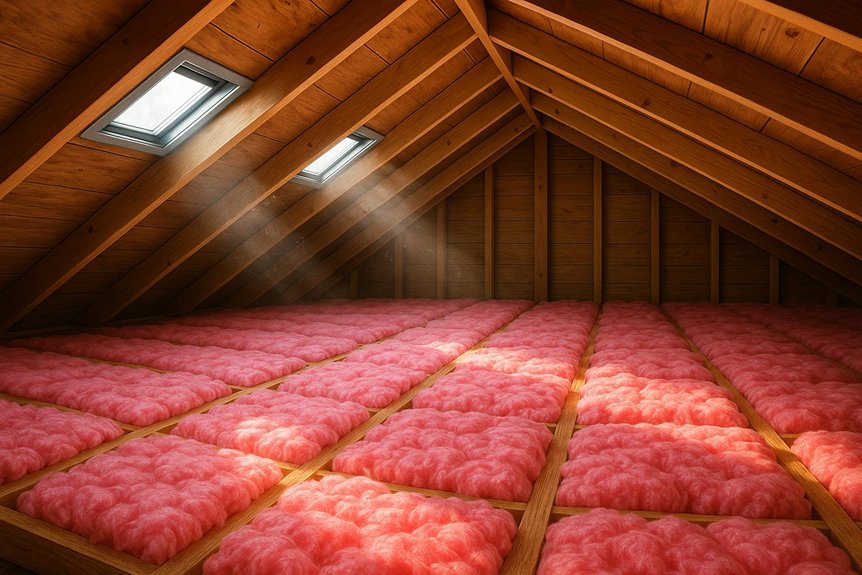
When choosing insulation for your home, consider materials like fiberglass, cellulose, or spray foam for their R-value and thermal resistance.
Evaluate each option’s energy efficiency to reduce heating and cooling costs effectively.
Don’t overlook environmental impact—opt for materials with recycled content and low VOC emissions to enhance sustainability.
Types of Insulation Materials
Selecting the right insulation material for your home involves understanding several key options, each with distinct properties.
Spray foam offers excellent thermal performance and air sealing, ideal for tight spaces.
Cellulose insulation, made from recycled paper, is an eco-friendly option providing soundproofing benefits.
Fiberglass batts are cost-effective and easy to install, though they require precise fitting.
Radiant barriers and reflective insulation are perfect for reducing heat gain in hot climates.
Mineral wool provides fire resistance and sound absorption, making it versatile for various applications.
Consider installation techniques: spray foam requires professional application, while fiberglass batts can be a DIY project.
Evaluate your needs—whether it’s thermal efficiency or soundproofing materials—to choose the best fit.
Energy Efficiency Considerations
Understanding energy efficiency is crucial when choosing the right insulation material for your home. Start by conducting energy audits to identify areas of heat loss and gain. These audits will help you pinpoint where insulation improvements are needed.
When selecting insulation, consider materials that minimize thermal bridging, as this can greatly affect your home’s energy performance. Opt for materials with high R-values, which indicate better thermal resistance, keeping your home comfortable year-round.
Spray foam, rigid foam boards, and fiberglass batt are popular options, each offering distinct advantages in reducing energy consumption. Prioritize proper installation to guarantee there are no gaps or compression, which can compromise efficiency.
Environmental Impact Factors
While considering insulation materials for your home, it’s essential to evaluate their environmental impact. Opting for eco-friendly materials not only benefits the planet but also enhances indoor air quality.
To make informed decisions, consider these factors:
- Recycled Content: Prioritize materials with high recycled content, reducing waste and energy consumption.
- Sustainability Practices: Choose manufacturers committed to sustainable practices, ensuring minimal ecological disruption.
- Biodegradability: Select materials that decompose naturally, leaving a smaller footprint.
- Energy Efficiency: Look for insulation that provides superior thermal performance, reducing your home’s energy demand.
Get to Know Your Attic Ventilation Options
Evaluating your attic ventilation options can greatly influence your home's energy efficiency and roof longevity.
Start with an energy audit to identify heat buildup and moisture control needs. Consider installing attic fans to boost air circulation.
Begin with an energy audit to assess heat and moisture, then use attic fans to improve circulation.
Passive vents, like ridge and soffit vents, work together to maintain airflow, reducing temperature extremes. Ridge vents run along the roof peak, while soffit vents sit under the eaves, allowing cooler air to enter.
Gable vents, positioned at the roof’s ends, enhance natural ventilation systems. Each option offers unique benefits, so tailor your choices to your specific climate and roof structure.
Proper ventilation minimizes damage risks and can greatly extend your roof's lifespan, ensuring comfort and efficiency year-round.
Year-Round Benefits of Roof Insulation
Optimizing your attic's ventilation sets the stage for harnessing the year-round benefits of roof insulation.
Proper insulation offers significant energy savings, enhancing both temperature regulation and moisture control. You’ll notice improved comfort and air quality, with your home maintaining ideal conditions regardless of the season.
Consider these compelling benefits:
- Energy Savings: Lower heating and cooling costs, resulting in substantial cost efficiency.
- Comfort Enhancement: Consistent indoor temperatures provide a cozy living environment.
- Long Term Durability: Insulation protects structural components, extending your roof's lifespan.
- Investment Value: Enhanced property value and reduced utility bills increase your home’s appeal.
Need a Roofing Contractor?
Find licensed, reviewed roofing-services.html">roofing professionals in your area. Get free estimates from verified contractors.
Find Local Roofers Call (866) 466-9085Preventing Mold With Effective Ventilation
Even with high-quality insulation, effective ventilation is vital to prevent mold growth in your attic. Mold thrives in environments with excess moisture and poor airflow. By implementing proper mold prevention strategies, you guarantee your attic remains dry and healthy.
Choose ventilation systems that promote continuous air exchange. Ridge vents, soffit vents, and gable vents are significant components that facilitate airflow. Verify these systems are unblocked, allowing warm, moist air to escape while drawing in cooler, drier air.
Also, consider mechanical ventilation if natural airflow is inadequate.
Regularly inspect your attic for signs of moisture or blockages in your ventilation systems. Quick identification and correction of issues will maintain an ideal environment, safeguarding your home against mold-related damage.
Tips for Installing Roof Insulation Successfully
When installing roof insulation, guaranteeing a snug fit is essential to maximize thermal efficiency and minimize energy loss. Use effective insulation techniques and proper installation tools to achieve ideal results. Here’s how you can guarantee success:
- Measure Accurately: Precision is key. Use a tape measure to guarantee materials fit perfectly, avoiding gaps that can lead to thermal bridging.
- Choose the Right Material: Consider R-values and material types. Select insulation that suits your climate and roof structure for maximum effectiveness.
- Seal Gaps: Use caulking or spray foam to seal any gaps or penetrations, preventing air leaks and moisture entry.
- Wear Safety Gear: Protect yourself with gloves and goggles. Insulation fibers can irritate skin and eyes, so safety is non-negotiable.
Avoiding Common Roof Ventilation Mistakes
When optimizing roof ventilation, guarantee proper vent placement to prevent moisture buildup and maintain structural integrity.
You should also balance intake and exhaust airflow for efficient temperature regulation.
Ignoring these factors can lead to energy inefficiency and costly repairs.
Proper Vent Placement
While ensuring your roof's longevity, proper vent placement is essential to avoid common ventilation mistakes. Effective vent placement strategies enhance attic airflow, preventing moisture buildup and extending roof life. Here’s how to get it right:
- Assess Roof Design: Evaluate your roof's design to determine ideal vent locations. Improper placement disrupts airflow and can lead to costly damage.
- Utilize Ridge Vents: Install ridge vents along the roof peak, ensuring even distribution of airflow across the attic.
- Balance Intake and Exhaust: Align intake vents, like soffit vents, with exhaust systems to maintain consistent airflow and prevent hot air accumulation.
- Consider Climate Impact: Tailor vent placement to your local climate, as varying temperatures and humidity levels affect ventilation needs.
Proper planning prevents future headaches.
Sufficient Airflow Balance
Achieving sufficient airflow balance is crucial in preventing common roof ventilation mistakes. Start by understanding airflow dynamics and implementing effective ventilation strategies.
Confirm your attic design facilitates proper airflow, reducing airflow obstructions that can hinder ventilation efficiency. Consider the climate effects specific to your region; they can influence insulation layers and humidity control needs.
Regularly take airflow measurements to identify any imbalances. Proper temperature regulation is critical—too much heat or moisture can compromise insulation performance.
Integrate balanced intake and exhaust systems to optimize ventilation efficiency. Don’t overlook the importance of sealing gaps that might disrupt airflow.
Optimizing Ventilation and Insulation Together
To maximize energy efficiency and comfort, integrating roof ventilation and insulation requires a strategic approach.
Integrating roof ventilation and insulation strategically boosts energy efficiency and enhances comfort.
Begin by evaluating your home's specific needs, considering both ventilation strategies and insulation techniques. Proper alignment guarantees optimal performance and reduces energy costs.
Here's a guide to get you started:
- Evaluate Current Systems: Identify existing ventilation and insulation conditions. This determines what upgrades are necessary.
- Select Appropriate Materials: Choose insulation with high R-values and install ridge or soffit vents to enhance airflow.
- Seal Gaps: Prevent air leaks by sealing gaps around ducts and vents, maintaining consistent indoor temperatures.
- Monitor and Adjust: Regularly check systems for efficiency and make adjustments as needed to guarantee peak performance.
Seasonal Roof Maintenance Tips
When tackling seasonal roof maintenance, start by inspecting for debris accumulation that could obstruct drainage and ventilation.
Check for damaged shingles to prevent leaks and guarantee your roof's integrity.
Confirm proper ventilation to avoid moisture build-up, which can lead to costly structural issues.
Inspect for Debris Accumulation
A essential step in seasonal roof maintenance is inspecting for debris accumulation.
Debris removal is critical for ensuring ventilation efficiency and insulation upkeep. Conduct seasonal inspections to assess airflow and prevent moisture control issues.
Here's what you should do:
- Gutter Cleaning: Clear leaves and twigs to maintain proper water drainage and prevent moisture buildup that can damage insulation.
- Wildlife Prevention: Check for nests or animal activity that can obstruct vents and affect airflow, leading to costly repairs.
- Energy Audits: Regularly evaluate your roof's condition to identify insulation weaknesses and optimize energy efficiency.
- Roof Surface Inspection: Remove debris from the roof surface to prevent mold growth and structural damage.
Check for Damaged Shingles
Spot damaged shingles promptly to maintain your roof's integrity and prevent costly repairs. Begin by inspecting your roofing materials for missing, cracked, or curling shingles. These issues can lead to leaks and structural damage if not addressed. Regular checks allow you to plan for shingle replacement, ensuring your roof remains durable and weather-resistant.
Here's a quick guide to identifying shingle issues:
| Problem | Solution |
|---|---|
| Missing Shingles | Replace promptly |
| Cracked Shingles | Consider patching |
| Curling Shingles | Evaluate for full replacement |
Ensure you use quality roofing materials for replacements to extend your roof's lifespan. Don't overlook minor issues, as they can escalate. By staying vigilant, you’ll avoid expensive repairs and keep your home protected year-round.
Ensure Proper Ventilation
Effective roof ventilation is essential for maintaining energy efficiency and preventing moisture buildup. Proper attic airflow supports ventilation systems, enhancing thermal dynamics and improving air quality.
Neglecting it can lead to energy loss and compromised roof design. To guarantee proper ventilation, consider the following:
- Assess Airflow Patterns: Inspect ventilation systems to guarantee balanced intake and exhaust, promoting effective humidity control.
- Evaluate Climate Considerations: Adjust ventilation strategies based on regional climate to prevent moisture management issues.
- Monitor Energy Loss: Check for unintentional heat escape, which affects thermal dynamics and increases energy costs.
- Enhance Roof Design: Ensure vents and openings align with structural needs to improve airflow patterns.
These steps will help safeguard your roof and maintain peak performance year-round.
DIY or Pro: Making the Right Choice
When deciding between a DIY approach or hiring a professional for roof ventilation and insulation, consider the complexity of the task and your own skill level. DIY strategies can be cost-effective if you're familiar with installation techniques and have the necessary tools. However, improper installation might lead to inefficiencies and increased energy costs.
| Aspect | DIY Strategies | Professional Expertise |
|---|---|---|
| Cost | Lower upfront costs | Higher initial investment |
| Skill Requirement | High for complex tasks | Extensive industry knowledge |
| Time | Longer if inexperienced | Faster completion |
| Quality Assurance | Variable | Guaranteed workmanship |
Professional expertise guarantees adherence to building codes and peak performance. If you're unsure, it's wise to consult a professional to avoid costly mistakes. Balancing these factors will help you make the right choice for your home.
Frequently Asked Questions
How Does Roof Color Affect Ventilation and Insulation?
Roof color directly impacts roof temperature. Light-colored roofs reflect more sunlight, reducing roof temperature, while dark colors absorb heat, increasing it.
This color effect influences your home's energy efficiency. A cooler roof enhances ventilation efficiency, minimizing heat transfer into the attic.
Conversely, a hotter roof may compromise insulation performance by increasing thermal load.
Choose lighter colors for ideal temperature control and energy savings, ensuring effective ventilation and insulation in your home.
Can Smart Home Technology Improve Roof Ventilation?
Yes, smart home technology can improve roof ventilation.
By integrating smart sensors and automated systems, you can optimize airflow and regulate temperature efficiently. These systems monitor environmental conditions in real-time, adjusting vents and fans automatically.
You'll maintain ideal indoor climates while conserving energy. Implementing smart controls allows you to tailor settings to specific needs, enhancing overall comfort and reducing utility costs with precision and ease.
What Are the Costs of Upgrading Roof Ventilation Systems?
Upgrading roof ventilation systems can vary in cost based on the ventilation types and installation costs.
If you choose ridge vents, expect to spend $2-$3 per linear foot for materials, plus labor.
Soffit vents might cost $1-$2 each, with additional installation fees.
It's vital to assess your roof's specific needs to determine the most efficient system.
Consulting a professional guarantees you make informed decisions and optimize your investment.
Are There Eco-Friendly Insulation Options for Roofs?
Yes, you’ve got several eco-friendly insulation options.
Consider using recycled materials like cellulose, which is made from recycled paper. It's effective and sustainable.
Natural fibers, such as sheep’s wool and cotton, also provide excellent insulation. They’re breathable and regulate humidity.
Both options not only reduce your environmental footprint but also enhance your home's energy efficiency.
Make certain to consult with professionals to guarantee proper installation and peak performance.
How Does Roof Design Influence Ventilation Efficiency?
Your roof design greatly impacts ventilation efficiency. By incorporating ridge vents, you enhance air circulation, essential for maintaining ideal attic space conditions.
Carefully designed slopes and angles promote effective thermal dynamics, ensuring heat escapes efficiently. Select materials that support airflow and consider the roof's pitch, as steeper designs often boost ventilation.
Prioritize these elements to enhance energy efficiency and prolong the lifespan of your roofing system.
Browse our national roofing directory to find licensed contractors near you. See pricing guides for Tampa, Orlando, Houston, Miami, Fort Myers, and more.