Roof Repair: Signs Your Roof Needs Professional Repair
You might not think about your roof-repair-and-maintenance.html">roof-inspection-services-what-to-expect.html">roof often, but ignoring its warning signs can lead to costly repairs. Notice any water stains on your ceilings? That's a telltale sign your roof needs attention. Missing shingles or granules in the gutters? These can signal serious issues. Rising energy bills and strange roof sounds shouldn't be ignored either. Understanding these signs is key to maintaining your home's integrity. Curious about what these symptoms mean for your roof?
How Old Is Your Roof?
How often do you think about the age of your roof? It’s easy to overlook, but understanding your roof’s lifespan is essential. Most roofs last 20-30 years, but this can vary based on materials and weather exposure. Regular maintenance can extend this lifespan considerably.
You should inspect your roof annually, checking for missing shingles, damaged flashing, and debris buildup. Cleaning gutters and trimming overhanging branches are simple maintenance tips that prevent premature wear.
If your roof is nearing its expected lifespan, consider a professional inspection. They’ll provide expert advice and spot issues you might miss. Investing in regular upkeep not only preserves your roof but also saves money long-term by avoiding costly repairs.
Don’t wait—prioritize your roof’s health today.
Water Damage Warning Signs on Ceilings
Water stains on your ceiling can be a telltale sign of underlying roof problems. These ceiling stains often indicate that water has penetrated your roof’s protective barriers, leading to potential structural damage.
Effective leak detection is vital to prevent further issues. You’ll want to inspect your ceiling regularly for discolorations or damp spots, as these are common indicators of leaks. Don’t ignore even small marks; they can quickly escalate into costly repairs if left unaddressed.
If you spot any signs, it’s essential to contact a professional to assess the situation promptly. By addressing these issues early, you’ll protect your home’s integrity and avoid extensive future damage.
Trust in expert assessment for peace of mind and a well-maintained roof.
Spot Missing or Damaged Shingles
To effectively spot missing or damaged shingles, start by identifying any discoloration that may indicate underlying issues.
Examine the edges for curling, as this can compromise the roof’s integrity.
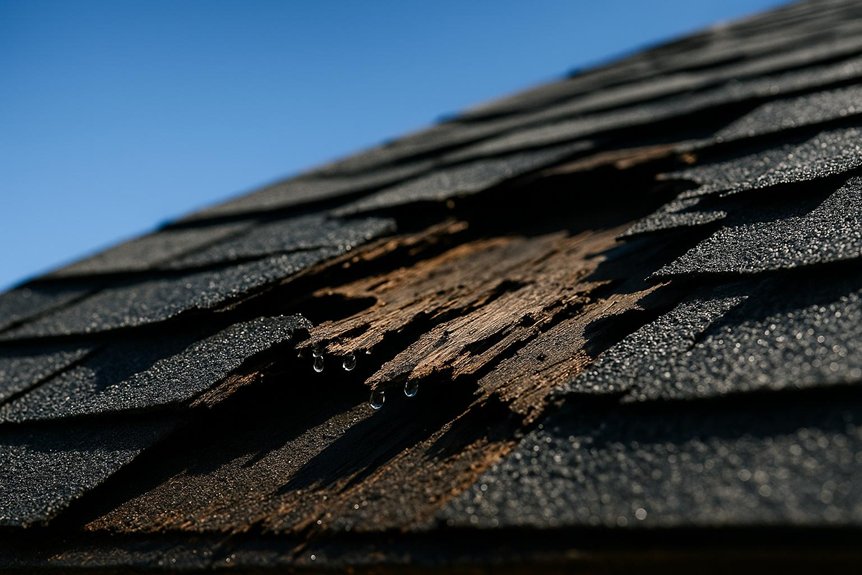
Don’t overlook granule loss, which is a clear sign that your shingles might need replacement.
Identify Shingle Discoloration
Discoloration on shingles is a telltale sign of potential roof problems that shouldn't be ignored. Different shingle types, such as asphalt or wood, may show color fading due to weather exposure or age. These changes can indicate underlying issues like water damage or mold growth. It's essential to recognize these signs early to prevent further deterioration.
Here's a guide to common discoloration causes:
| Discoloration Type | Possible Cause | Action Needed |
|---|---|---|
| Black Streaks | Algae Growth | Professional Cleaning |
| Brown Spots | Water Damage | Roof Inspection |
| Faded Colors | UV Exposure | Shingle Replacement |
| Green Tinge | Moss Development | Moss Removal |
Addressing shingle discoloration promptly can extend your roof's life and maintain your home's value. Always consult a professional for accurate assessment and repair.
Examine Curling Edges
Curled edges on shingles are a clear indicator of potential roof issues that you shouldn't overlook. When you notice curling shingles, it's a sign that your roof may be nearing the end of its lifespan.
These shingles are vulnerable to wind and water, potentially leading to leaks and further damage. Ignoring this problem could result in costly repairs down the line.
Examine your roof closely for any curling shingles. If you spot them, it’s essential to act quickly.
Professional intervention can help extend your roof's lifespan and maintain its integrity. By addressing the issue early, you prevent more severe problems and preserve your home's structural health.
Don’t wait until it’s too late—consult a roofing expert to evaluate and repair your roof efficiently.
Check for Granule Loss
Granule loss on your roof is a significant warning sign that shouldn’t be ignored. Granules serve essential functions, like protecting your shingles from UV rays and improving water runoff.
You’ll want to look closely for missing or damaged shingles, as these issues often lead to granule loss. Different granule types provide varying levels of protection, so understanding what’s on your roof helps you assess any damage.
When granules start disappearing, shingles become more vulnerable to the elements, accelerating wear and tear. This compromises the integrity of your roof, leading to costly repairs or even a full replacement.
Take action by inspecting your gutters and downspouts for granule buildup. If you notice signs of loss, contacting a professional guarantees your roof’s longevity and performance.
Is Mold or Moss Taking Over?
Have you noticed patches of green or black creeping across your roof? It’s time to act. Mold and moss aren’t just unsightly; they can lead to severe damage if left unchecked.
Mold removal is essential because it can degrade roofing materials, leading to leaks and structural issues. Moss, on the other hand, traps moisture against your shingles, accelerating wear and tear.
To tackle these problems, start with professional mold removal. Experts can safely remove mold without damaging your roof.
For moss prevention, consider trimming overhanging branches to increase sunlight and improve airflow. Regular maintenance and professional inspections can help keep these invaders at bay.
Don't wait until it's too late—ensure your roof's longevity by addressing mold and moss promptly.
What Makes a Roof Sag?
When you notice your roof starting to sag, it’s vital to understand the underlying causes before things get worse. A sagging roof often indicates issues with roof weight and structural integrity. Excessive weight from snow, water, or even multiple roofing layers can strain the support system.
A sagging roof signals potential structural issues—address weight and integrity concerns promptly to ensure safety.
Over time, this added pressure compromises beams and trusses, leading to dangerous sags. Another culprit could be poor construction or damage from pests like termites, which weakens support structures.
Sometimes, natural settling of the building can also cause shifts that affect the roof's alignment. It's important to address these issues promptly. By doing so, you’ll prevent further structural damage and guarantee your home remains safe and sturdy.
Don’t wait—consult a professional to assess and fix the problem.
Need a Roofing Contractor?
Find licensed, reviewed roofing professionals in your area. Get free estimates from verified contractors.
Find Local Roofers Call (866) 466-9085Why Granules in Gutters Mean Trouble?
Finding granules in your gutters can signal significant roofing issues that shouldn't be ignored. Granules protect shingles from UV rays and weather damage. When you notice different granule types accumulating, it's a sign your shingles are deteriorating. This loss can lead to leaks and structural damage. Regular gutter maintenance is essential to identify this early. Granule buildup might seem minor, but it's often a precursor to costly repairs.
| Granule Type | Potential Issue |
|---|---|
| Asphalt | Shingle Aging |
| Ceramic | Weather Wear |
| Mineral | UV Damage |
| Composite | Poor Shingle Quality |
| Metal | Corrosion Concerns |
Don't wait for problems to escalate. Act swiftly by consulting a roofing expert to assess the situation and prevent further damage. Your roof’s longevity depends on it.
Energy Bills Rising? Check Your Roof
If your energy bills are climbing, it’s essential to assess your roof’s condition.
Poor insulation and air leaks can lead to significant heat loss, while inadequate roof ventilation might trap heat, forcing your HVAC system to work overtime.
Addressing these issues not only enhances comfort but also reduces costs, making it a smart investment in your home’s efficiency.
Insulation and Air Leaks
An unnoticed factor in rising energy bills might be your roof's insulation and air leaks. You need to evaluate your insulation types—whether it's fiberglass, cellulose, or spray foam—to guarantee they’re effectively sealing your home.
Poor insulation can cause heat loss in winter and unwanted heat gain in summer, straining your HVAC system.
Additionally, air leak detection is vital. Small gaps or cracks in your roof can let conditioned air escape, further driving up costs.
Use tools like thermal imaging to spot these leaks, or hire a professional for a thorough inspection.
By addressing these issues, you’ll enhance your home’s energy efficiency, reduce bills, and maintain a comfortable indoor environment.
Don’t let your hard-earned money slip through the cracks.
Roof Ventilation Issues
Although often overlooked, proper roof ventilation plays an essential role in managing your home's energy efficiency. Without adequate roof airflow, heat and moisture can accumulate, leading to rising energy bills. You'll notice your air conditioning system working harder, and that's a clear sign you need to check your ventilation.
Ensuring regular ventilation maintenance can prevent costly repairs and improve your home's comfort. Here's a quick comparison of effects:
| Issue | Impact on Home |
|---|---|
| Poor Roof Airflow | Increased Energy Bills |
| Proper Ventilation | Enhanced Efficiency |
| Moisture Buildup | Structural Damage |
| Regular Maintenance | Long-Term Savings |
| Heat Accumulation | Reduced Comfort |
Don’t wait until your bills climb higher. Addressing ventilation issues now can save you money and extend your roof's lifespan.
Strange Roof Sounds: When to Worry
Ever wonder what those strange sounds coming from your roof mean? Roof echoes and creaky shingles can signal underlying issues that need professional attention. Ignoring these sounds isn't wise.
Here’s when to worry:
- Persistent Creaking: If you hear constant creaky shingles, it might indicate structural issues.
- Loud Banging: Sudden loud noises can suggest loose materials or expansion and contraction issues.
- Rustling Sounds: This might point to animal intrusions, which can cause further damage.
- Whistling or Hissing: Air escaping through gaps may indicate ventilation problems.
- Popping Noises: These can be a sign of temperature-induced stress on your roof.
Don’t wait until minor issues become major problems. Consult a roofing professional to assess and address these concerns promptly.
Understanding Roof Damage: Common Issues to Watch For
When it comes to maintaining your home, understanding roof damage is essential for preventing costly repairs. One of the most critical issues to watch for is flashing problems. Flashing, the material that seals joints and edges, can deteriorate over time, leading to leaks and structural damage. If you notice rust or gaps, it’s time to act.
Drainage issues are another common culprit. Poor drainage can cause water to pool, resulting in leaks and mold growth. Verify gutters are clear and sloped correctly to avoid these pitfalls.
Regular inspections can help you spot early signs of trouble, saving you from extensive damage later. Don’t wait until it's too late; address these issues promptly to safeguard your home’s integrity and value.
Frequently Asked Questions
How Do Weather Conditions Affect Roof Longevity?
Weather impacts your roof's longevity considerably.
Climate variations like heavy rain, snow, and intense sun can cause wear and tear. Moisture leads to leaks, while UV rays weaken materials.
In colder climates, freeze-thaw cycles create cracks. In windy areas, shingles might loosen.
Regular maintenance and inspections can mitigate these effects. By addressing weather-related damage promptly, you can prolong your roof's lifespan and avoid costly repairs.
What Are the Costs of Professional Roof Repair?
Professional roof repair costs can vary widely.
You’ll typically consider cost factors like roof size, material, and damage extent. Simple repairs might run a few hundred dollars, while extensive fixes could reach thousands. Labor costs and local rates also play a role.
Investing in professional roof repair guarantees quality and longevity, saving you money in the long run.
Don’t skimp on this essential home maintenance task.
Can Small Roof Leaks Be Fixed Without Professional Help?
Yes, you can tackle small roof leaks yourself with DIY solutions.
Start by applying temporary fixes like roofing tape or sealant to stop the leak. Make sure you clean the area thoroughly before applying any materials.
While these solutions can work short-term, they're not permanent. Regularly inspect for further damage, and consider consulting a professional for a lasting repair.
It’s essential to act quickly to prevent more extensive issues.
How Often Should Roof Maintenance Be Scheduled?
Schedule roof maintenance at least twice a year to guarantee ideal condition.
Regular roof inspection frequency helps you catch issues early.
Focus on seasonal maintenance tips like clearing debris in fall and checking for ice dams in winter.
By staying proactive, you’ll extend your roof’s lifespan and avoid costly repairs.
Trusting professionals for inspections ensures thorough checks and peace of mind.
Don’t wait for problems; maintain your roof consistently.
What Materials Are Best for Roof Durability?
For the best roof durability, consider metal roofing and asphalt shingles.
Metal roofing benefits include long lifespan, resistance to harsh weather, and low maintenance. It’s an excellent choice if you want something resilient.
Asphalt shingle durability is impressive too, offering cost-effectiveness and ease of installation. They withstand various climates and provide solid protection.
Choose wisely based on your specific needs and enjoy a roof that stands the test of time.
Browse our national roofing directory to find licensed contractors near you. See pricing guides for Atlanta, Philadelphia, Colorado Springs, Tucson, Jacksonville, and more.