Garbage Disposal Repair and Replacement
When tackling garbage disposal issues, you’ll want to first assess common symptoms like clogs, odd noises, or smells. Start with simple fixes: try a plunger or grind ice with citrus peels to clear minor blockages and freshen odors. If problems persist, consider whether repairs cost over half the price of a new unit or if your disposal is over 15 years old. Choosing the right path can guarantee efficiency, but what’s your next step?
Key Takeaways
- Check for clogs using a plunger or plumber's snake to resolve drainage issues.
- Unusual noises might indicate jammed blades; inspect safely after turning off power.
- Evaluate if repair costs exceed half the price of a new unit for replacement decisions.
- Consider motor power and noise insulation when selecting a new disposal for efficiency.
- Regular maintenance includes grinding ice and using citrus peels to prevent odors.
Quick Solutions for Common Garbage Disposal Issues
When your garbage disposal acts up, it's often due to common issues that you can fix yourself. Start by addressing a clogged signs-you-need-professional-drain-cleaning.html">drain. Use a plunger or a plumber's snake to clear blockages.
If you hear unusual noises, check for blade problems by turning off power and inspecting for obstructions. A foul odor often indicates trapped food; use a mixture of ice and vinegar to clean it.
For frequent jams, press the reset button located at the bottom of the unit. Power issues might require checking the circuit breaker.
If you notice a leaking disposal, tighten any loose connections. Always verify the unit is unplugged before troubleshooting. These quick fixes can save you from costly repairs and keep your disposal running smoothly.
Maintaining Your Garbage Disposal for Longevity
Extend the life of your garbage disposal with regular maintenance. Start with preventive maintenance by running cold water-line-repair-and-replacement.html">water during operation to solidify any grease. Avoid fibrous foods and bones. For effective disposal cleaning, grind ice cubes and citrus peels weekly; this sharpens blades and keeps odors at bay.
Here’s a quick maintenance checklist:
| Task | Frequency |
|---|---|
| Run cold water | Every use |
| Grind ice cubes | Weekly |
| Use citrus peels | Weekly |
Regularly inspect for leaks and tighten connections as needed. If the disposal jams, reset it using the reset button under the unit. Keep tools handy for minor adjustments. By following these steps, you’ll guarantee your disposal remains efficient and long-lasting.
Need a Plumber Now?
Find licensed, reviewed plumbers in your area. Browse our nationwide directory of verified professionals.
Find Local Plumbers Call (866) 466-7190Deciding Between Repairing or Replacing Your Disposal
How do you decide whether to repair or replace your garbage disposal? Start with a cost comparison. If repairs are over half the price of a new unit, replacement might be better.
Consider repair costs: if they're over half the price of new, replacement might be the smarter choice.
Consider the disposal lifespan—most last 8-15 years. If yours is near the end, replacement's the wiser choice.
Here's how to make your decision:
- Cost Comparison: Get an estimate for repairs and compare it to the cost of a new disposal. If they're similar, think replacement.
- Disposal Lifespan: Check the age of your unit. If it’s approaching 10 years, investing in a new one can save future hassles.
- Performance Issues: Frequent clogs or reduced grinding efficiency suggest it’s time to replace rather than repair.
Make the choice that best suits your kitchen’s needs.
Select the Best Replacement Disposal for Your Kitchen
Why settle for less when choosing the best replacement disposal for your kitchen?
First, consider disposal features like motor power—aim for at least 1/2 horsepower for efficiency. Check for noise insulation if you prefer a quieter unit. Corrosion-resistant materials will increase longevity.
Next, think about installation tips. Measure the space under your sink to guarantee a snug fit. If you're upgrading, verify compatibility with existing plumbing and electrical connections.
Choose a model with easy-to-follow installation guides and consider models with quick-mount systems.
Finally, consider your household's needs. Large families might benefit from disposals with larger capacities.
Spotting and Fixing Common Disposal Problems
Once you've selected the perfect disposal unit for your kitchen, understanding how to spot and fix common issues is equally important.
Here's how to tackle frequent problems:
- Clogged Drain: Use a plunger or plumber’s snake to clear blockages. Avoid harsh chemicals that can damage pipes.
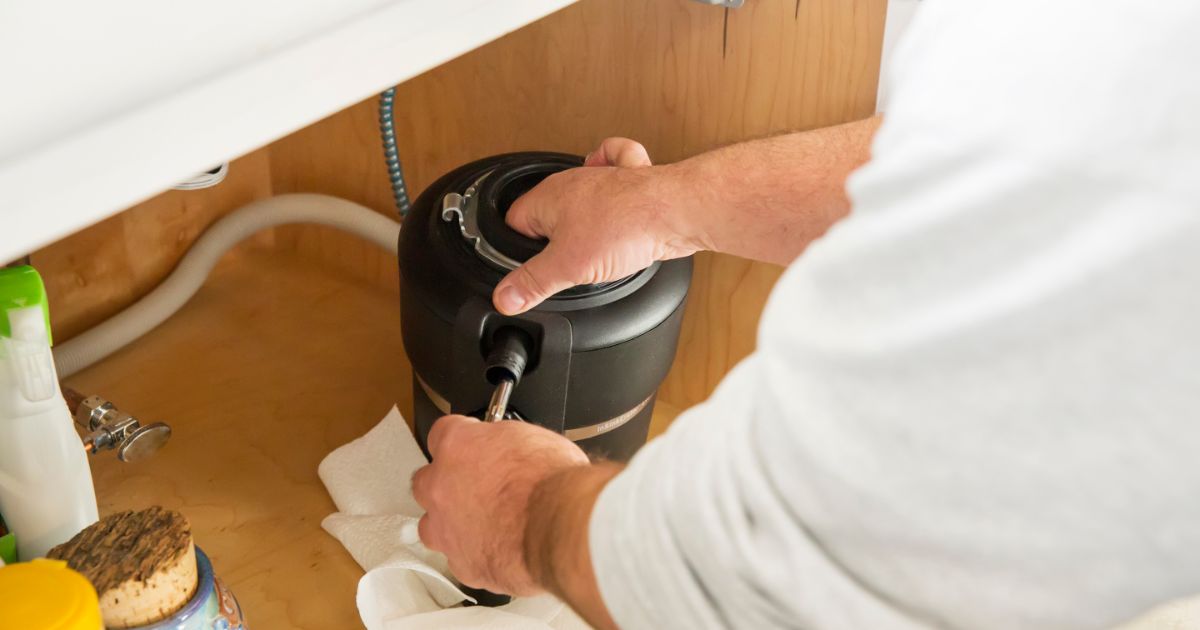
- Noisy Operation: Noises often mean jammed blades. Turn off the power and use a hex key under the unit to manually turn the blades and free any obstructions.
- Foul Odor: Clean the disposal by grinding ice cubes and citrus peels. For persistent smells, use baking soda and vinegar.
For power issues, check the reset button or circuit breaker.
If leaks detection is necessary, inspect connections and seals promptly for any signs of moisture.
Frequently Asked Questions
How Do I Safely Remove a Jammed Item From the Disposal?
First, guarantee safety by turning off the power at the breaker.
Use a flashlight to identify the jammed item.
With tongs or pliers, carefully apply jam removal techniques to extract it. Avoid using your hands inside the disposal.
If necessary, use a hex key to manually turn the disposal’s motor from below. This might help dislodge the item.
Always prioritize safety precautions to prevent accidents during the process.
What Tools Are Needed to Uninstall a Garbage Disposal?
To uninstall a garbage disposal, you’ll need a screwdriver, pliers, and a wrench.
First, disconnect the power for safety. Use the wrench to loosen the mounting ring. Support the disposal with one hand while unscrewing. Pliers help detach any connected pipes.
Disposal maintenance tips include checking for common disposal issues like leaks or clogs regularly. Always make certain you’re following safety protocols during these steps.
Are There Eco-Friendly Disposal Options Available?
Yes, there are eco-friendly disposal options available.
Start by exploring composting options for biodegradable waste. First, set up a compost bin in your backyard or use a kitchen compost container.
Next, separate organic waste like fruit peels and vegetable scraps. Regularly turn the compost to promote decomposition.
Finally, use the nutrient-rich compost in your garden, reducing landfill waste and enriching your soil naturally.
How Do I Troubleshoot a Disposal With a Burning Smell?
First, turn off the disposal and unplug it. A burning smell often means overheating or jammed parts.
Check for obstructions using a flashlight. If clear, reset the unit by pressing the red button underneath.
Verify you’re not overloading it to prevent future issues. Regularly clean with vinegar and baking soda for maintenance.
If the smell persists, consider professional help to address potential motor problems.
Can I Install a Garbage Disposal Without Professional Help?
Yes, you can install a garbage disposal without professional help. Start by turning off the power for safety.
Follow disposal installation tips, like removing the old unit and attaching the new mounting bracket. Connect the disposal to the sink and align it properly.
Hook up the electrical wiring and secure the plumbing. Confirm DIY disposal safety by checking for leaks and testing the unit.
Always refer to the manual for specific instructions.
Browse our national plumbing directory to find licensed plumbers near you.