Signs You Need to Call an Appliance Repair Technician
You might overlook the subtle signs that your appliance-repair-services.html">repair-vs-replacement-when-is-it-time-to-buy-new.html">appliances need attention, but recognizing them early can save you time and money. If your energy bills spike unexpectedly or you hear strange noises, it’s time to investigate. Persistent electrical issues, overheating, or water damage are red flags that shouldn’t be ignored. Tackling these problems with professional help guarantees your appliances run smoothly and efficiently. Wondering what else you might be missing?
When Appliance Efficiency Drops
When your appliances start consuming more energy or taking longer to complete tasks, it's a clear sign that efficiency has dropped. You’ll notice your energy bills creeping up, which indicates a decline in energy efficiency. This not only impacts your wallet but also shortens the appliance lifespan due to increased wear and tear.
Check for common culprits like clogged filters, faulty thermostats, or worn-out seals. These issues force your appliances to work harder, using more energy than necessary.
Regular maintenance can prevent these problems by ensuring components are clean and functioning correctly. If you detect any inefficiencies, it’s wise to contact a repair technician. They can diagnose the problem, optimize performance, and extend the lifespan of your appliance.
Strange Sounds? Here's What They Mean
Noticing unusual noises from your appliances can be as telling as a spike in energy consumption. Rattling or clanking often indicates loose parts or debris, especially in older machines.
If you hear unusual vibrations, it might mean components are misaligned or worn out. Grinding noises in your refrigerator could point to fan motor issues, while a thumping washing machine suggests an unbalanced load or drum problems.
Appliance age plays a significant role; older units are more prone to wear and tear, leading to strange sounds. Regular maintenance can prevent these noises, but persistent sounds signal it’s time to call a technician.
Addressing these issues early can prevent further damage and guarantee your appliances run smoothly.
Frequent Power Outages or Fluctuations
If you notice repeated circuit breaker trips or unexplained appliance shutdowns, it’s essential to address these issues promptly.
These signs often indicate underlying electrical problems that require a professional appliance repair technician to guarantee safety and prevent further damage.
Inconsistent Appliance Performance
If your appliances are experiencing power outages or fluctuations, it might be a sign of inconsistent performance that shouldn't be ignored. Performance fluctuations can lead to inefficiencies and potential damage. Start by checking connections and ensuring outlets are secure. Here are some practical troubleshooting tips:
| Problem | Action Needed |
|---|---|
| Frequent Power Fluctuations | Inspect power cords and connections |
| Sudden Appliance Shutdowns | Test outlet voltage stability |
| Irregular Operation | Check for firmware updates |
Regularly inspect cords for wear and confirm outlets deliver consistent voltage. Firmware updates can also resolve unexpected behavior. If these steps don't fix the issue, it's wise to contact a professional appliance repair technician. They can diagnose and address underlying electrical problems efficiently.
Repeated Circuit Breaker Trips
When your circuit breaker trips repeatedly, it's often a sign of underlying electrical issues that require immediate attention. Frequent trips indicate circuit issues that could stem from overloaded circuits, faulty wiring, or malfunctioning appliances.
These problems not only cause inconvenience but also present serious safety concerns, like electrical fires or damage to your appliances.
First, check if multiple appliances are on the same circuit, leading to overload. If that's the case, try redistributing the load.
However, if the problem persists, you may have a deeper wiring issue or a defective appliance causing fluctuations.
Don’t attempt complex electrical repairs yourself. Contact a qualified appliance repair technician to assess and address these circuit issues, ensuring your home’s safety and efficiency.
Unexplained Appliance Shutdowns
Experiencing unexplained appliance shutdowns can be frustrating and indicative of deeper electrical problems. These issues might stem from faulty wiring or power fluctuations that reduce your appliance lifespan.
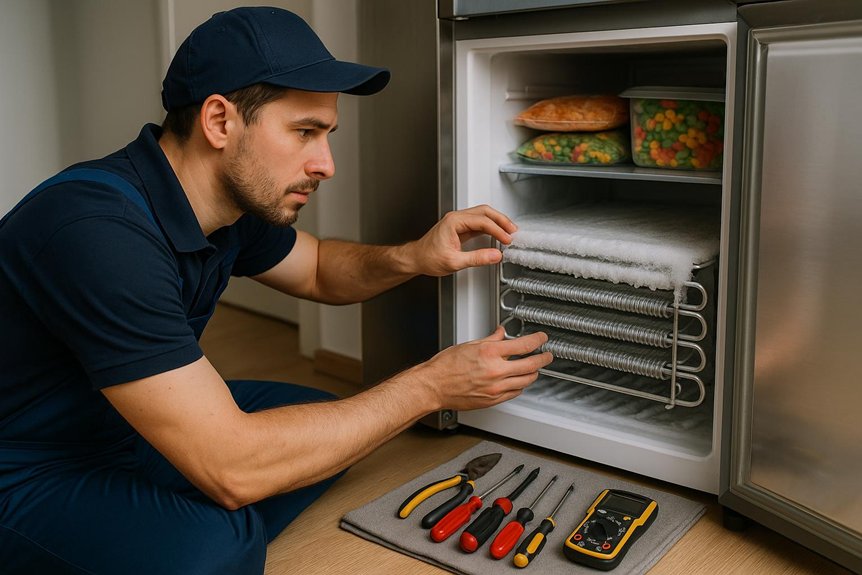
Start by checking if your outlet is overloaded, as this can cause frequent outages. Use a multimeter to test the voltage and verify it's within the appliance's required range.
Look for any visible damage to power cords or plugs, which may indicate a need for replacement. If your appliance has a reset button, try using it as a basic troubleshooting tip.
Persistent problems suggest it's time to call a technician. They can diagnose electrical issues accurately, guaranteeing your appliance operates safely and efficiently, thereby extending its lifespan.
Spotting Leaks and Water Damage Early
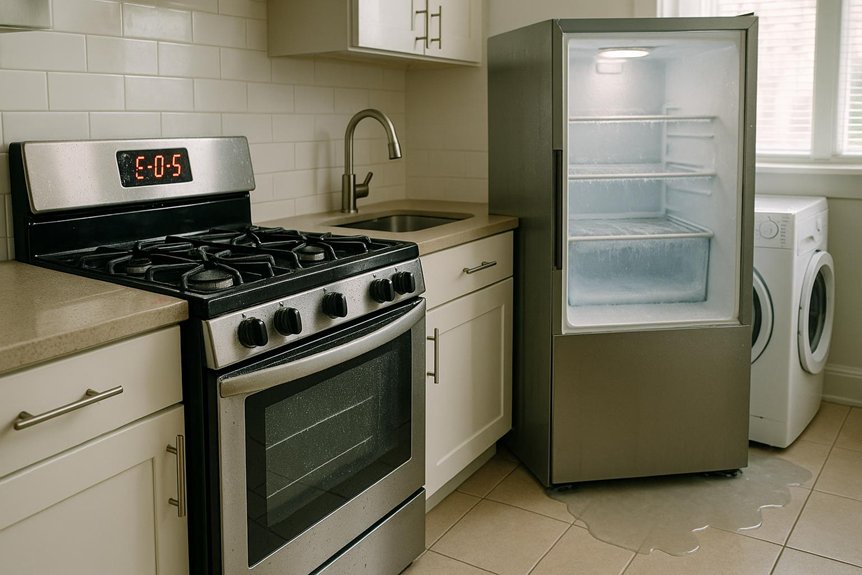
A vigilant eye is essential for spotting leaks and water damage in your appliances. Start by conducting a moisture assessment around your appliances to identify leak sources and water stains.
Check for mold growth, which indicates persistent dampness detection. Pay attention to plumbing issues that could lead to foundation concerns if not addressed. Proper appliance placement and regular maintenance are key to preventing leaks.
Mold growth signals ongoing dampness; addressing plumbing issues is crucial to prevent foundation problems and ensure proper appliance maintenance.
- Water stains: Look for discoloration or spotting near appliances.
- Mold growth: Inspect for any musty odors or visible mold.
- Dampness detection: Feel for wet spots or unusual humidity.
- Plumbing issues: Listen for dripping sounds or hissing.
Need Appliance Repair Now?
Find trusted appliance repair technicians in your area. Browse our nationwide directory of verified professionals.
Find Local Repair Pros Call (866) 466-5715How to Handle Faulty Controls
When you encounter faulty controls, first verify the appliance is properly plugged into a functioning power source and check for any tripped circuit breakers.
Next, reset the control settings by turning off the appliance, waiting a few minutes, and then powering it back on.
If these steps don't resolve the issue, it's time to call a technician for a thorough inspection.
Check Power Source
If your appliance isn't responding, start by checking the power source to verify it's properly connected and powered.
First, inspect for any power issues by confirming the appliance is plugged into a working outlet. Check that the electrical connections are secure and not loose.
If the appliance still isn't working, consider these steps:
- Examine the circuit breaker: Make sure it hasn’t tripped, cutting off power.
- Test another device: Plug a different device into the same outlet to confirm the outlet's functionality.
- Inspect the power cord: Look for visible damage or fraying that could indicate a fault.
- Use a multimeter: Check for voltage at the outlet to confirm it's delivering the correct power level.
Taking these actions can help identify potential electrical issues.
Reset Control Settings
Even though your appliance seems unresponsive, resetting the control settings can often resolve issues with faulty controls. Start by consulting the user manual for specific resetting methods tailored to your model. Unplug the appliance for a few minutes, allowing it to reset. Reconnect and test the controls. If issues persist, perform control diagnostics to identify deeper problems.
Here's a quick reference table:
| Appliance Type | Resetting Method | Control Diagnostics |
|---|---|---|
| Washing Machine | Unplug for 5 minutes | Check error codes |
| Refrigerator | Press reset button | Inspect control board |
| Oven | Turn off circuit breaker | Analyze display panel |
| Dishwasher | Hold start button | Evaluate keypad response |
These steps could save you time and money before calling a technician.
Overheating Appliances and What to Do
Although appliances are designed for efficiency, overheating is a common issue that shouldn't be ignored. Overheating causes can range from clogged vents to faulty wiring, impacting performance and safety.
Regular appliance maintenance is essential to prevent these problems. You should inspect air vents and make sure they’re unobstructed. Check the wiring for any visible damage or wear. If you notice unusual heat or smells, unplug the appliance immediately.
Here's what you can do:
- Inspect and clean vents: Ensure airflow isn't restricted.
- Check wiring: Look for frays or exposed wires.
- Monitor temperature: Use a thermometer to verify normal operating levels.
- Schedule regular maintenance: Keep appliances in top condition with professional checks.
Act promptly to avoid costly repairs or replacements.
Why Frequent Breakdowns Demand Professional Help
Experiencing frequent appliance breakdowns can be a sign that it’s time to call in a professional. Consistent malfunctions often indicate underlying issues that require technical expertise.
A technician can perform preventive maintenance to address these problems before they escalate, saving you time and frustration. Ignoring frequent breakdowns could lead to more significant damage, resulting in higher repair costs or even the need for a complete replacement.
Consider the cost implications carefully. While it might seem economical to delay repairs, the cumulative expense of ongoing issues can surpass the price of professional intervention.
Technicians will assess the appliance thoroughly, ensuring that it operates efficiently and extends its lifespan. Investing in expert help not only mitigates immediate concerns but also optimizes long-term value.
Frequently Asked Questions
How Can I Find a Reliable Appliance Repair Technician?
To find a reliable appliance repair technician, start by checking appliance repair reviews online.
Look for consistent positive feedback about the technician's experience and professionalism.
Ask friends or family for recommendations, and verify credentials or certifications.
Contact potential technicians to discuss their experience with your specific appliance issues.
Make certain they offer a warranty on repairs, and confirm they're insured.
This thorough approach will help you choose a dependable professional.
What Should I Check Before Calling a Repair Service?
Before calling a repair service, check for common appliance issues. Verify it’s plugged in and the circuit breaker hasn’t tripped.
Examine basic troubleshooting basics, like resetting the appliance or checking for blockages. Listen for unusual noises and look for leaks or strange odors.
If these steps don’t resolve the problem, it’s time to contact a technician for a more detailed diagnosis and repair.
Are There Any Preventative Maintenance Tips for Appliances?
Absolutely, you can extend the life of your appliances with regular upkeep.
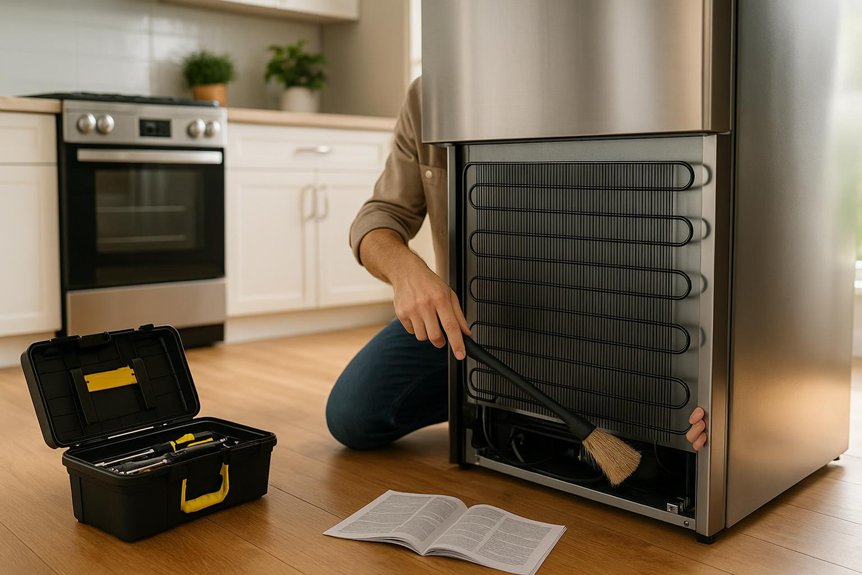
Create a maintenance checklist: clean refrigerator coils, inspect washing machine hoses for leaks, and clear dryer vents to prevent overheating.
Regularly check seals on doors for a tight fit.
For dishwashers, run a cleaning cycle with vinegar monthly.
This proactive approach to appliance upkeep guarantees efficiency, reduces breakdowns, and keeps everything running smoothly.
How Do I Determine if an Appliance Is Under Warranty?
Check your appliance’s warranty status by locating the warranty documents and purchase receipts.
Review the receipt for the purchase date and compare it with the warranty duration stated in the documents.
If you’ve registered the appliance online, log in to the manufacturer’s site for warranty details.
Make certain to note any specific conditions or exclusions.
This practical approach guarantees you’re informed about your appliance’s coverage.
What Certifications Should a Professional Technician Have?
Look for a technician with certifications like NASTeC or EPA Section 608, ensuring appliance safety and technician qualifications.
They should have training in handling refrigerants and electrical components. Verify their familiarity with your appliance brand and model.
Check for state or local licenses, which indicate compliance with safety regulations.
Ensuring these qualifications helps maintain your appliance's efficiency and safety, giving you peace of mind during repairs.
Browse our national appliance repair directory to find technicians near you.