Refrigerator Repair: Common Problems and When to Call a Pro
You're likely familiar with the frustration of a malfunctioning refrigerator. It’s essential to pinpoint issues like cooling failures or faulty seals quickly. Simple DIY tasks, like adjusting the thermostat or cleaning coils, can often resolve minor problems. However, persistent noise or erratic temperatures might signal a need for professional intervention. Wondering if you should tackle it yourself or call in the pros? Let's explore the complexities of refrigerator repair-services.html">repair.
Identifying Common Refrigerator Problems
When your refrigerator isn't working as expected, understanding common issues can save you time and money. One primary concern is cooling failure, which usually stems from malfunctioning components like the thermostat or condenser coils.
Cooling failure often arises from issues with the thermostat or condenser coils.
You should first check if the thermostat is set correctly. Dirty coils can affect efficiency, so make sure they're clean.
Another frequent issue is a faulty door seal. If the seal does-appliance-repair-cost.html">doesn't close tightly, warm air enters, causing the refrigerator to overwork and compromise cooling. Inspect the door seal for gaps or cracks.
Use a simple test: close the door on a piece of paper. If it slips out easily, the seal might need replacement.
Identifying these problems early can help maintain your refrigerator's performance.
Quick DIY Fixes for Refrigerator Issues
Identifying common refrigerator problems sets the stage for effective DIY solutions. You can tackle minor issues with precision and save money.
Check the door seal: a compromised seal can cause inefficiency. Test it by closing the door on a piece of paper; if it slips out easily, replace the seal.
Ice buildup in the freezer? Defrost by unplugging the unit, removing food, and letting it thaw naturally.
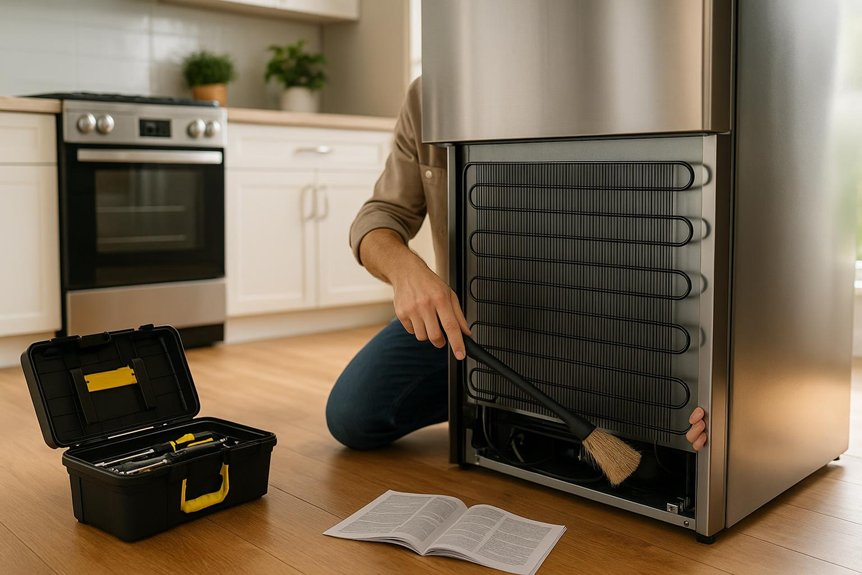
Guarantee proper airflow by cleaning condenser coils using a vacuum or brush.
- Door Seal Test: Close the door on a piece of paper; replace the seal if it slides out.
- Ice Buildup: Unplug and defrost naturally to clear excessive ice.
- Clean Coils: Vacuum or brush coils to maintain efficiency.
These simple steps can extend your refrigerator's life.
Understanding Refrigerator Noises
Although refrigerator noises can be unsettling, understanding their sources helps you address them efficiently.
Compressor clicks are normal when your fridge starts or stops a cooling cycle. If these clicks become frequent or loud, it might indicate compressor issues needing professional attention.
Fan vibrations are another common noise, often caused by obstructions or misalignment. Check for debris around the fan blades and verify they’re securely attached. If vibrations persist, the motor might be failing.
Fan vibrations often result from obstructions or misalignment; ensure blades are clear and securely attached.
You should also listen for rattling sounds, which can stem from a loose part or an unbalanced fridge. Tighten any visible screws or adjust the unit’s leveling.
While some noises are normal, persistent or unusual sounds warrant a professional inspection to prevent further damage.
Need Appliance Repair Now?
Find trusted appliance repair technicians in your area. Browse our nationwide directory of verified professionals.
Find Local Repair Pros Call (866) 466-5715Maintaining Optimal Refrigerator Temperature
Addressing refrigerator noises guarantees smooth operation, but maintaining the right temperature is key to preserving food quality.
Setting the correct temperature guarantees food safety and extends the lifespan of your groceries. Aim for a temperature setting of 37°F (3°C) for the refrigerator and 0°F (-18°C) for the freezer. These settings prevent bacterial growth, keeping your food fresh.
To maintain ideal temperature:
- Regularly check seals: Confirm door gaskets are tight to prevent cold air from escaping.
- Avoid overloading: Overfilled shelves block airflow, causing uneven cooling.
- Monitor with a thermometer: Place one inside to verify internal temperatures match settings.
When to Call a Pro
When you encounter persistent unusual noises, ongoing electrical issues, or continuous temperature fluctuations, it’s time to call a professional.
These problems often indicate underlying issues that require specialized tools and expertise.
Attempting to fix them yourself can lead to further damage or safety hazards.
Unusual Noises Persist
If your refrigerator starts making strange noises that persist, it might be time to contemplate professional help. Unusual sounds can indicate problems with cooling efficiency or compressor issues. A noisy compressor may struggle, affecting the overall performance and lifespan of your appliance.
Consider calling a technician if you notice:
- Loud buzzing: This could signal compressor problems, reducing cooling efficiency.
- Rattling or banging: Often linked to loose components or fan issues, which might need expert adjustment.
- Humming that doesn’t stop: Persistent humming might indicate a malfunctioning motor or compressor, requiring specialized attention.
Ignoring these noises can lead to more significant failures. A professional can diagnose and resolve these issues, ensuring your refrigerator operates smoothly and efficiently, saving you from higher costs down the line.
Electrical Issues Arise
Encountering electrical issues with your refrigerator can be intimidating, but knowing when to call a professional is vital. Wiring problems often manifest as flickering lights or a non-responsive control panel. If you notice these signs-your-dryer-needs-professional-help.html">signs, don’t attempt a DIY fix. Handling electrical components requires expertise to avoid further damage or safety hazards.
Power surges can also affect your refrigerator’s performance. If a surge occurs, your appliance might shut down or fail to restart, indicating potential circuit board damage. In such cases, it’s important to contact a professional who can assess and repair the intricate electrical systems.
Always prioritize safety. Incorrectly addressing these issues can lead to more extensive repairs or even void your warranty, making professional intervention the smartest choice.
Temperature Fluctuations Continue
Temperature inconsistencies in your refrigerator can signal deeper issues requiring professional attention. If you’ve tried troubleshooting and the problem persists, it’s time to call a pro.
They’ll assess critical components like temperature sensors and thermostat calibration. Incorrect readings from faulty sensors can disrupt your fridge’s cooling ability. Similarly, a miscalibrated thermostat can prevent the unit from maintaining consistent temperatures, risking food spoilage.
Look for these signs that it’s time to consult an expert:
- Inconsistent Cooling: The fridge can’t keep a stable temperature despite adjustments.
- Unusual Noises: Strange sounds may indicate sensor or thermostat issues.
- Frequent Cycling: The compressor turns on and off more often than usual, signaling control problems.
Don’t hesitate to reach out for professional help to guarantee your appliance functions at peak performance.
How to Choose the Right Refrigerator Technician
How do you confirm you’re choosing the right refrigerator technician? Start by checking their certification credentials to verify they’re qualified.
Read customer reviews to gauge reliability and satisfaction. Ask about service warranties to see if they stand by their work.
Get detailed repair estimates upfront to avoid surprises. Evaluate their experience levels with various appliance brands; a seasoned technician can handle diverse models.
Consider availability options, especially if you need urgent repairs. Inquire about their diagnostic tools, as advanced equipment can lead to quicker, more accurate repairs.
Frequently Asked Questions
How Often Should I Clean My Refrigerator Coils?
You should clean your refrigerator coils every six months for peak performance.
Coil maintenance guarantees efficient cooling and prevents overheating. Use a coil brush or vacuum to remove dust and debris.
This cleaning frequency keeps your fridge running smoothly and extends its lifespan. If you notice the coils getting dirty faster, adjust the schedule accordingly.
Regular maintenance is essential for preventing energy waste and costly repairs.
What Are the Signs of a Refrigerant Leak?
You’ll notice refrigerant symptoms like a warm fridge, hissing sounds, or oil spots.
Leak detection involves checking for frost buildup or an unexplained increase in energy bills.
If you detect these signs, it's essential to address them promptly. A refrigerant leak can lead to inefficient cooling and higher costs.
Consider using a professional for accurate diagnosis and repair, as handling refrigerants requires specific expertise and equipment.
Can a Faulty Door Seal Affect My Refrigerator's Efficiency?
Yes, a faulty door seal can greatly affect your refrigerator's energy efficiency.
When the seal doesn't close properly, warm air seeps in, making the compressor work harder to maintain the desired temperature.
This increased workload not only raises your energy bills but can also shorten the appliance's lifespan.
Inspect the door seal regularly for cracks or gaps, and replace it promptly to guarantee peak performance and energy efficiency.
How Long Should a New Refrigerator Last?
A new refrigerator should last about 10 to 15 years. Lifespan factors include energy efficiency, usage patterns, and maintenance.
Choose a model with high energy efficiency to potentially extend its life and reduce operational costs. Regular maintenance, like cleaning coils and checking seals, improves longevity.
If you’re experiencing issues before this timeframe, assess usage habits or consult a professional to guarantee peak performance throughout its expected lifespan.
Is It Safe to Repair a Refrigerator Myself?
It’s generally safe to repair a refrigerator yourself if you’re experienced with DIY safety and have the right repair tools.
You should disconnect the power before starting any work. Make sure you understand the appliance’s components and follow precise instructions.
However, if you’re dealing with complex issues or lack confidence, it’s best to call a professional to guarantee both your safety and the fridge’s functionality.
Browse our national appliance repair directory to find technicians near you.