Appliance Maintenance Tips to Prevent Costly Repairs
You’ve invested in your repair.html">home repair-vs-replacement-when-is-it-time-to-buy-new.html">appliances, so keeping them in top shape makes sense. Regular maintenance isn't just a chore; it’s a smart strategy to avoid expensive repairs. By cleaning components like refrigerator coils and dryer lint traps, you guarantee efficient operation. Inspecting cords and listening for odd noises can catch issues early. Follow specific guidelines, and you’ll not only save money but also preserve warranties. Ready to explore more?
Why Regular Maintenance Saves Money
When you prioritize regular maintenance for your appliances, you’re directly investing in long-term savings. By adhering to a maintenance schedule, you enhance appliance lifespan and boost energy efficiency, leading to substantial cost savings.
Preventive care reduces the likelihood of unexpected repair costs, allowing for better household budgeting. Service frequency should match manufacturer recommendations, ensuring peak performance and preserving warranty benefits.
Simple DIY tips, like checking seals and cleaning filters, can make a significant difference. Regular upkeep not only cuts expenses but also keeps appliances running efficiently, minimizing energy waste.
With a strategic approach to maintenance, you’ll extend the life of your appliances and avoid costly repairs, ensuring your home operates smoothly and economically.
Begin Your Appliance Maintenance With Cleaning
Start your appliance maintenance routine by cleaning key components to boost efficiency and longevity.
Regularly clean your refrigerator coils to prevent overheating, clear lint from your dryer to reduce fire risks, and descale your coffee maker monthly to maintain performance.
These actions guarantee your appliances run smoothly and save on energy costs.
Clean Refrigerator Coils Regularly
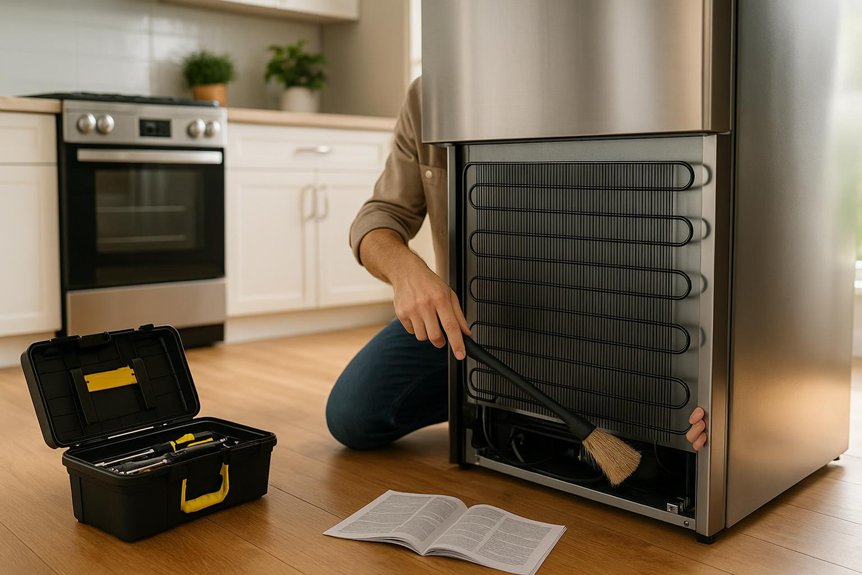
Kick off your appliance maintenance by tackling the often-overlooked task of cleaning your refrigerator coils. These coils play a vital role in cooling efficiency and reducing energy consumption. Dirty coils force the refrigerator to work harder, increasing energy use and potentially shortening its lifespan.
To clean them, unplug the refrigerator and locate the coils, usually at the back or underneath. Use a vacuum with a brush attachment or a coil cleaning brush to remove dust and debris.
| Task | Frequency |
|---|---|
| Unplug the fridge | Every time |
| Locate coils | Every time |
| Vacuum coils | Monthly |
| Use coil brush | Monthly |
Regular cleaning guarantees your fridge runs efficiently, saving money and energy. Don’t skip this essential task!
Remove Lint From Dryer
After tackling your refrigerator coils, shift your focus to another critical task: removing lint from your dryer. Proper lint removal techniques are essential for dryer safety and efficiency.
Begin by cleaning the lint trap after every load to prevent buildup. Verify you also inspect the dryer vent regularly. Use a vacuum attachment or lint brush to clear out any accumulated lint, which can become a fire hazard.
Key steps include:
- Clean the lint trap after each drying cycle.
- Inspect the dryer vent monthly for blockages.
- Use a vacuum or brush to remove hidden lint inside the dryer.
- Check the exterior vent cap to verify air flows freely.
These dryer safety tips not only prevent fires but also enhance performance and energy efficiency.
Descale Coffee Maker Monthly
A crucial step in maintaining your appliances is to descale your coffee maker monthly.
Mineral deposits from hard water can affect coffee acidity, leading to a bitter taste. Start by mixing equal parts water and white vinegar, filling the reservoir. Run a brewing cycle without coffee grounds to dissolve buildup.
This guarantees peak brewing efficiency by allowing water to flow freely. After descaling, rinse by running two more cycles with fresh water to eliminate any vinegar residue.
Regular descaling prevents clogs, extends the machine's lifespan, and maintains consistent coffee quality.
Check Appliance Cords for Any Damage
To guarantee your appliances function safely, start by inspecting cords for frayed wires that could pose a hazard.
Check plug connections to confirm they're secure and free from corrosion.
Also, look for any exposed insulation, as this indicates potential electrical risks that need immediate attention.
Inspect for Frayed Wires
Regular inspection of appliance cords is essential to maintaining a safe and efficient home. Frayed wires can pose significant electrical hazards, risking both wire safety and potential damage to your appliances.
To prevent costly repairs, follow these practical steps:
- Examine insulation: Look for cracks or wear on the cord's outer layer.
- Check for exposed wires: Any visible copper indicates a serious issue.
- Flexibility test: Bend the cord gently; stiffness can indicate internal damage.
- Smell test: A burnt odor may signal overheating or short circuits.
Check Plug Connections
Begin by confirming your appliance plug connections are secure and intact to maintain efficient operation and safety.
First, unplug the appliance and inspect the plug for any visible damage or wear. A damaged plug can compromise plug safety and connection stability, leading to potential hazards.
Next, examine the prongs to verify they're straight and free from corrosion, as bent or corroded prongs can cause poor connectivity.
Make sure the plug fits snugly into the outlet; a loose fit can indicate potential issues with the outlet itself.
If you notice any irregularities, don’t hesitate to replace the plug or consult a professional.
Regularly checking these components helps prevent electrical problems and prolongs the life of your appliances, keeping your home safe and efficient.
Look for Exposed Insulation
Inspecting your appliance cords for exposed insulation is essential for maintaining safety and functionality. Damaged insulation can lead to electrical hazards and appliance failure. Regularly check the insulation integrity of your cords to prevent issues.
- Inspect visually: Look closely for cracks, frays, or exposed wires.
- Feel for damage: Run your fingers along the cord to detect any inconsistencies or weak spots.
- Test flexibility: Bend the cord gently; if the insulation cracks, it needs attention.
- Perform insulation repair: Use electrical tape or a heat-shrink sleeve to cover small damages temporarily, but replace the cord if it’s severely compromised.
Listen for Unusual Noises
When maintaining your appliances, listening for unusual noises can be essential. These sounds often indicate potential issues that might need immediate attention. A rattling washing machine or a buzzing refrigerator shouldn't be ignored. By identifying these unusual sounds early, you can prevent minor problems from becoming costly repairs. Here's a quick guide to common appliance noises and their potential implications:
| Appliance | Unusual Sound | Potential Issue |
|---|---|---|
| Refrigerator | Buzzing | Compressor malfunction |
| Washing Machine | Rattling | Loose drum or motor |
| Dishwasher | Grinding | Obstructed spray arms |
Regularly inspect your appliances and act promptly when you hear something off. This proactive approach guarantees longevity and efficiency, saving you time and money in the long run.
Track Energy Usage to Spot Inefficiencies
Tracking your appliances' energy usage is essential for identifying inefficiencies and reducing costs. Start with energy monitoring tools to gather data on consumption patterns.
Perform a detailed usage analysis to uncover areas of waste. Efficiency tracking helps pinpoint appliances that aren’t performing at their best.
- Usage analysis: Compare daily and monthly consumption patterns for each appliance.
- Utility comparisons: Assess your usage against utility benchmarks for cost forecasting.
- Appliance benchmarking: Evaluate performance metrics to identify underperforming units.
- Efficiency tracking: Regularly check appliances against energy efficiency standards.
Maintain Your Refrigerator's Performance
To keep your refrigerator running efficiently, start by ensuring the coils are clean and dust-free, as dirty coils can hinder cooling performance.
Check temperature settings regularly to maintain ideal refrigerator efficiency and prevent cooling issues. Adjust the settings to around 37°F for the fridge and 0°F for the freezer.
Inspect door seals for gaps or wear, as faulty seals increase energy consumption by letting cold air escape.
Prevent frost buildup by defrosting regularly, especially if you notice excessive ice.
Organize the interior to allow proper airflow, avoiding overcrowding.
Utilize sound alerts if your model has them to catch issues early.
Need Appliance Repair Now?
Find trusted appliance repair technicians in your area. Browse our nationwide directory of verified professionals.
Find Local Repair Pros Call (866) 466-5715Avoid Overloading Washers and Dryers
While maintaining your refrigerator guarantees efficiency in your kitchen, taking care of your laundry appliances is just as important.
Overloading your washer and dryer can lead to costly repairs. Confirm you’re not exceeding the washer capacity to promote proper drum balance and load distribution. This prevents unnecessary strain on the motor and enhances fabric care.
For dryers, maintaining dryer efficiency is vital. Overloading hampers moisture control, leading to longer drying times and potential overheating.
Here’s how to avoid issues:
- Follow manufacturer’s guidelines for washer capacity and dryer loads.
- Distribute clothes evenly to maintain drum balance.
- Use appropriate cycle settings for fabric care and efficiency.
- Check and clean lint filters regularly to support moisture control.
Keep Oven and Stove Tops Clean
A clean oven and stove top can greatly enhance both the efficiency and safety of your kitchen.
Begin by using effective oven cleaning techniques like a baking soda and vinegar mixture. Apply it to the interior surfaces, let it sit, then wipe clean. For stubborn grime, a specialized oven cleaner can be used—just follow the manufacturer's instructions closely.
For stove maintenance tips, regularly remove and clean burner grates with warm soapy water. Check gas burners for clogs by clearing ports with a needle or pin.
If you have an electric stove, verify the coils are free from residue. Regularly wiping down the surfaces after cooking will prevent buildup.
Keeping these appliances clean reduces the risk of fire and improves performance.
Remember to Defrost Your Freezer
Defrost your freezer every six months to maintain its efficiency and prevent excessive ice build-up.
This process guarantees proper airflow and ideal cooling, which can help reduce energy consumption.
Always turn off the appliance and remove all items before starting to allow the ice to melt completely.
Optimal Defrosting Frequency
How often should you defrost your freezer to guarantee it runs efficiently? The ideal frequency for defrosting largely depends on the type of freezer you own.
Generally, manual defrost freezers require attention every six months. Efficient defrosting techniques can maintain peak performance and prevent energy wastage.
Here's what you should consider:
- Frost Thickness: Defrost when ice reaches 0.25 inches thick.
- Climate Conditions: Humid environments may require more frequent defrosting.
- Freezer Usage: High usage might lead to quicker frost build-up.
- Energy Efficiency: Regular defrosting can help reduce energy consumption.
Preventing Ice Build-Up
While it's easy to overlook, preventing ice build-up in your freezer is vital for maintaining its efficiency and longevity. Ice formation occurs when warm air enters, often due to a faulty door seal or frequent opening. You’ll want to check the seal regularly for any cracks or gaps.
It’s important to perform frost removal by defrosting your freezer every few months. Turn off the appliance, remove all contents, and let the ice melt naturally. You can place towels at the base to absorb water. For faster results, use a fan to circulate air inside.
Make sure the interior is dry before restarting the appliance. Regular maintenance won't only prevent ice build-up but also enhance energy efficiency and performance.
Change Appliance Filters Regularly
Regularly changing appliance filters is vital for peak performance and longevity. Filters trap dust, debris, and allergens, making sure your appliances work efficiently.
First, familiarize yourself with filter types specific to your appliances. Whether it’s a HEPA filter for your vacuum or a water filter for your fridge, knowing the right type is essential.
When installing a new filter, follow these tips:
- Read the Manual: Check the manufacturer’s guide for specific instructions.
- Confirm Proper Fit: A snug fit prevents bypass and guarantees filtration.
- Monitor Replacement Intervals: Typically, every 3-6 months, but check your appliance’s needs.
- Dispose of Used Filters Safely: Some may require special handling or recycling.
These steps help maintain peak performance and extend appliance life.
Plan Regular Professional Check-Ups
Even though you might handle basic maintenance, scheduling regular professional check-ups is crucial for your appliances. A technician's expertise guarantees your appliances receive thorough seasonal inspections, catching issues early. Regular check-ups can extend the lifespan and efficiency of your machines, saving you money in the long run. Set up scheduling reminders to stay on track and avoid neglected maintenance.
| Appliance | Inspection Frequency | Key Benefits |
|---|---|---|
| Refrigerator | Twice a year | Efficiency, Longevity |
| HVAC System | Bi-annual | Peak Performance |
| Washing Machine | Annually | Leak Prevention |
| Dishwasher | Annually | Improved Cleaning |
| Oven | Annually | Consistent Heating |
Professional evaluations can uncover hidden problems, guaranteeing your appliances run smoothly, keeping your home efficient and stress-free.
Frequently Asked Questions
How Often Should I Replace My Appliances?
You should evaluate appliance lifespan and replacement indicators regularly.
Typically, replace refrigerators every 10-15 years, while dishwashers last about 9-12 years.
Pay attention to signs like frequent breakdowns, inefficient operation, and unusual noises. These are essential replacement indicators.
Check manufacturer guidelines and energy efficiency ratings to make informed decisions.
Staying proactive with maintenance can extend lifespan, but knowing when to replace is vital for peak performance and cost savings.
What Are Signs That an Appliance Needs Replacement?
Look for malfunction indicators like frequent breakdowns or unusual noises.
If your appliance is over 10-15 years old, age factors play a big role in replacement decisions. Increased energy bills can also signal inefficiency.
Check for rust, leaks, or faulty parts that persist despite repairs.
When repair costs exceed half the price of a new model, it's practical to contemplate an upgrade.
Keep these signs in mind for timely decisions.
Can I Perform Maintenance if My Appliance Is Under Warranty?
Yes, you can perform maintenance if your appliance is under warranty, but you need to be cautious about warranty implications.
Follow the manufacturer's maintenance guidelines precisely to avoid voiding the warranty. Use approved cleaning methods and parts.
Document your maintenance activities, including dates and procedures. If you're unsure about a task, consult the warranty documentation or contact the manufacturer to verify you're not inadvertently affecting your coverage.
Are There Eco-Friendly Maintenance Tips for Appliances?
Yes, there are eco-friendly maintenance tips for appliances.
Use energy-efficient cleaning methods, like running full loads in washers and dishwashers to save water and energy.
Choose sustainable materials for cleaning, such as biodegradable soaps and reusable cleaning cloths.
Regularly clean filters and coils to guarantee your appliances run efficiently, reducing energy consumption.
How Can I Find Reliable Appliance Repair Services?
To find reliable appliance repair services, start by checking appliance reviews online to gauge customer satisfaction.
Look for technicians who offer extensive service warranties, ensuring their work is guaranteed.
Ask for recommendations from friends or family, and verify the company’s certifications and experience.
Contact multiple services to compare quotes and response times.
Prioritize those with transparent pricing and a proven track record for trustworthy, efficient repairs.
Browse our national appliance repair directory to find technicians near you.
.jpg)