Freezer Repair: Keeping Your Food Safe
You're responsible for ensuring your freezer keeps food safe, so understanding repair-services.html">repair-common-problems-and-when-to-call-a-pro.html">common issues is key. Start by monitoring the temperature, ensuring it stays at 0°F (-18°C). Inspect seals and clear ice buildup to prevent fluctuations. Listen for unusual noises—these can signal bigger problems. DIY fixes might save you time and money, but knowing when to call a pro is essential. Want to boost efficiency and prevent spoilage? Let's explore further.
Diagnosing Common Freezer Issues
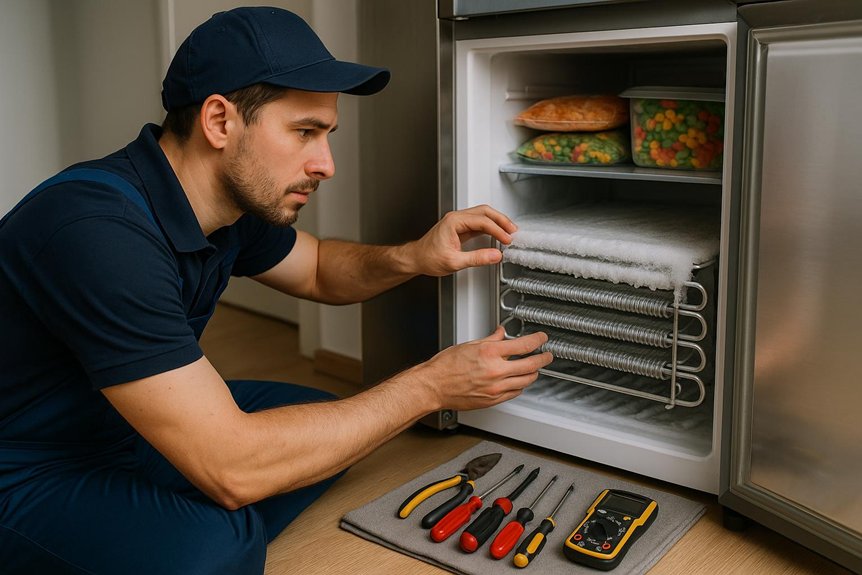
How do you know when your freezer isn't working properly? Start by checking the freezer temperature. If it's too high, inspect for ice buildup. This often signals airflow problems or defrost cycle malfunctions.
Examine the door seal; a poor seal can compromise energy efficiency. Listen for unusual compressor noises, which might indicate compressor issues. Check thermostat settings to verify they’re correct.
Inspect electrical connections for any faults that could affect performance. If you suspect refrigerant leaks, look for oily residue around the refrigeration lines. These leaks can drastically reduce cooling efficiency.
Regularly monitoring these aspects helps maintain your freezer’s function and extends its lifespan. By addressing these issues, you guarantee your appliance runs smoothly and efficiently, safeguarding your food.
What's That Noise in Your Freezer?
Ever wondered why your freezer is making strange noises? You might be dealing with ice buildup or frost formation, which can cause the fan to make odd sounds as it struggles to operate efficiently.
Check for a faulty door seal, as it can lead to temperature fluctuations and force your compressor to overwork, leading to loud compressor sounds.
Unusual vibrations can also occur if the unit isn’t level or if components are loose.
Pay attention to fan noise, which might indicate the fan blades are obstructed or damaged.
These issues not only create noise but can also affect your freezer’s efficiency and your food’s safety.
Identifying these problems early can prevent more costly repairs and keep your unit running smoothly.
DIY Fixes for Freezer Problems
Tackling freezer problems on your own can be effective and rewarding, provided you know where to start.
Begin with freezer troubleshooting by checking the temperature settings. Use a reliable thermometer to verify the internal temperature is around 0°F (-18°C). If it’s off, adjust it accordingly.
Next, inspect the door seals for cracks or gaps; a simple dollar bill test can help—if it slides out easily, the gasket might need replacing.
For drainage issues, clear the drain hole using a pipe cleaner. Keep repair tools handy, like a multimeter, to test electrical components.
If the freezer's not cooling, examine the condenser coils for dust buildup and clean them with a coil brush.
These steps can often resolve common issues efficiently.
Need Appliance Repair Now?
Find trusted appliance repair technicians in your area. Browse our nationwide directory of verified professionals.
Find Local Repair Pros Call (866) 466-5715Knowing When to Call a Pro
When your freezer starts making unusual noises or fails to maintain the correct temperature, it's essential to recognize these signs of malfunction.
Attempting repairs on your own might lead to further damage and increased costs.
Signs of Malfunction
If your freezer's acting up, it’s important to recognize the signs that signal a deeper issue, so you know when to call a professional.
One common indicator is excessive frost buildup. If you notice thick layers of ice accumulating, it could mean your defrost system isn’t functioning properly. Check for a faulty thermostat or timer.
Another critical sign is a compromised door seal. If the seal’s not tight, warm air enters, causing your freezer to work harder, leading to inefficiency. Inspect the gasket for cracks or gaps. A functioning seal should create a firm closure.
Lastly, listen for unusual noises. Loud humming or clanking may indicate motor or compressor issues.
Identifying these signs early can prevent costly repairs and maintain your food safety.
Cost-Effective Solutions
Recognizing the signs of freezer malfunction is just the beginning; taking action with cost-effective solutions guarantees efficient operation.
First, inspect door seals for gaps. Replacing them can be a budget-friendly repair that prevents energy loss.
Next, check the condenser coils; cleaning them improves efficiency and reduces strain on the compressor. If the thermostat isn’t accurate, consider replacing it with an energy-efficient upgrade.
However, some issues require professional help. If the freezer leaks refrigerant or makes unusual noises, it’s wise to call a pro.
Their expertise assures the problem is fixed correctly, saving you more in the long run. Don’t hesitate to seek professional advice for complex repairs, balancing DIY efforts with expert intervention to maintain your appliance effectively.
Proactive Steps to Boost Freezer Efficiency
To maximize your freezer's performance, start by confirming it's not overcrowded; this allows air to circulate efficiently and maintain consistent temperatures. Choose energy-efficient models to reduce power usage and enhance cooling capabilities. Proper freezer organization is vital. Label items and keep similar foods together to minimize door-opening time, which helps maintain temperature stability.
| Step | Action |
|---|---|
| Choose Efficient Models | Opt for energy-efficient models to save energy and cost. |
| Organize Smartly | Group similar items; use bins for easy access. |
| Maintain Airflow | Avoid overpacking; allow space between items. |
Regularly check door seals for a tight fit, preventing cold air leaks. Clean the condenser coils to improve efficiency. These proactive steps guarantee your freezer runs effectively and extends its lifespan.
Preventing Food Spoilage and Waste in Your Freezer
To prevent food spoilage and waste in your freezer, set the temperature to 0°F (-18°C), ensuring ideal preservation.
Regularly clean the coils and check the door seals to maintain efficiency and prevent temperature fluctuations.
Organize items using labels and dates, so you can easily track and use food before it spoils.
Optimal Temperature Settings
When setting your freezer's temperature, it's vital to maintain an ideal range to prevent food spoilage and waste. Start by keeping the temperature at 0°F (-18°C). This setting guarantees your food stays frozen and safe.
To achieve this, consistent temperature monitoring is important. Here’s what to do:
- Use a Thermometer: Place a reliable appliance thermometer inside to guarantee accurate readings.
- Check Regularly: Monitor the temperature weekly to catch any fluctuations early.
- Adjust as Needed: If the temperature drifts, adjust the dial to maintain the ideal settings.
These steps help keep your food fresh and minimize waste.
Regular Maintenance Tips
Maintaining the ideal temperature is just one aspect of freezer care. To prevent food spoilage, establish a regular cleaning schedule.
Every three months, unplug your freezer and remove all items. Use a mild detergent to clean shelves and walls, ensuring no ice buildup.
Next, conduct a thorough seal inspection. Check for cracks or gaps in the door seal that could let warm air in. A simple dollar bill test can help: close the door on a bill and try pulling it out. If it slides easily, the seal might need replacing.
Regularly vacuum the condenser coils to enhance efficiency and prevent overheating.
These steps keep your freezer running smoothly, ensuring your food remains safe and waste is minimized.
Frequently Asked Questions
How Long Can Food Stay Frozen During a Power Outage?
During a power outage, food can stay frozen for about 48 hours if the freezer's full, or 24 hours if it's half-full.
To maximize this duration, keep the freezer door closed. For food safety, place ice packs or dry ice inside if you expect a longer outage.
Always check food's temperature; it should remain below 40°F. These food safety tips guarantee minimal spoilage and maintain quality.
What Temperature Should My Freezer Be Set At?
Set your freezer to an ideal temperature of 0°F (-18°C) to guarantee food safety and efficiency.
This setting keeps your food frozen solid, preventing bacterial growth. Check your freezer settings regularly using an appliance thermometer to maintain accuracy.
Keep the door closed as does-appliance-repair-cost.html">much as possible to retain cold air.
Can I Put Hot Food Directly Into the Freezer?
No, you shouldn't put hot food directly into the freezer. Doing so can raise the freezer temperature, affecting stored items. Allow the food to cool to room temperature first.
This practice guarantees hot food safety by preventing bacterial growth and maintaining the efficiency of your freezer. Once cooled, store it in airtight containers to prevent freezer burn and maintain quality.
This method keeps your freezer operating at peak performance and your food safe.
How Often Should I Defrost My Freezer?
Defrost your freezer every six months to prevent frost buildup. This helps maintain efficiency and extends its lifespan.
Start by unplugging the freezer and removing all contents. Use safe defrosting techniques like placing bowls of hot water inside to speed up the process. Avoid sharp objects to chip away ice, as they can damage the interior.
Once defrosted, clean and dry thoroughly before plugging it back in.
Are There Specific Foods That Shouldn't Be Frozen?
Yes, there are foods you shouldn't freeze due to texture changes.
Freezing myths often suggest all foods are freezer-friendly, but that's not true. Avoid freezing foods like lettuce, which becomes mushy, or eggs in shells, which can crack and become unsafe.
Dairy products, like soft cheeses, can separate. Always consider food texture before freezing to maintain quality.
Proper storage guarantees your food stays safe and enjoyable to eat.
Browse our national appliance repair directory to find technicians near you.