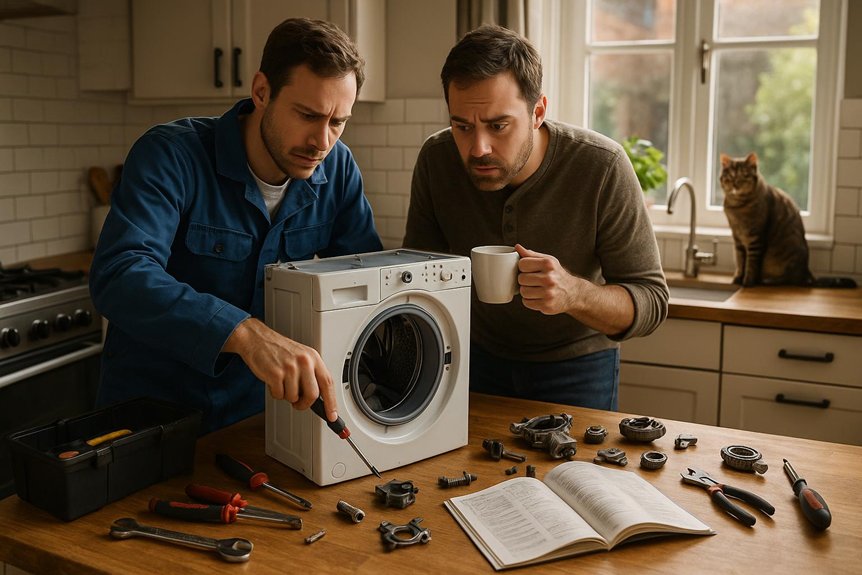
Emergency Appliance Repair: What to Do When an Appliance Breaks Down
When an appliance suddenly stops working, your first move should be to guarantee safety by unplugging it immediately. Carefully check for any visible damage to cords or plugs, and test the outlet with another device. Consult the user manual for troubleshooting tips, and try the reset button if it's available. If the problem seems too complex or involves electrical or gas components, it’s time to contemplate calling a professional. But what if you could handle some fixes yourself?
Quick Troubleshooting Steps for Appliances
When your appliances act up, tackling the issue with quick troubleshooting steps can save time and money. First, verify appliance safety by unplugging the device before you begin.
Check the user manual for specific troubleshooting tips related to your model. Often, manuals include solutions for repair-common-issues-and-solutions.html">common problems, helping you identify issues like power supply disruptions or incorrect settings.
If the appliance has a reset button, try using it before delving deeper. Examine cords and plugs for any visible damage. Confirm that outlets are functioning by testing with another device.
If the problem persists, consider consulting a professional to avoid further damage. Always prioritize safety and refer to user manuals for guidance to efficiently address appliance issues.
Common Appliance Problems Explained
Understanding common appliance problems can help you tackle issues effectively and prevent unnecessary stress. Start by identifying common symptoms like unusual noises or inefficient performance.
Check your user manuals for troubleshooting guides, which often reveal quick fixes. Regular maintenance tips, such as cleaning filters and checking seals, can extend appliance lifespan and boost efficiency.
If problems persist, consult repair resources or warranty information to determine if professional help is needed.
Must-Have Tools for DIY Appliance Fixes
Equipping yourself with the right tools can make DIY appliance repair much easier and more efficient. Start with a versatile set of screwdrivers. Phillips and flathead types are indispensable for accessing internal components. Make certain you have various sizes to fit different screws.
A multimeter is essential for diagnosing electrical issues. It helps you measure voltage, resistance, and continuity, confirming circuits are functioning correctly. Familiarize yourself with multimeter usage to safely test power sources and components.
Additionally, needle-nose pliers are useful for gripping small parts, while an adjustable wrench can tackle various nut sizes. A flashlight guarantees visibility in tight spaces.
Keep these tools organized and accessible, and you’ll be prepared to handle most appliance repairs confidently and safely.
DIY Fixes vs. Professional Help: When to Call In
While tackling appliance repairs yourself can be rewarding, knowing when to call a professional is vital. DIY fixes might seem cost-effective, but appliance safety shouldn't be compromised. Repair myths can lead to costly mistakes. If you're unsure, opting for professional help guarantees proper handling and expertise.
Here's a quick guide:
| DIY Fixes | Professional Help |
|---|---|
| Minor issues | Electrical problems |
| Leaky faucets | Gas appliance repairs |
| Loose screws | Complex diagnostics |
Attempting repairs without the right knowledge can worsen the situation. Consider your skills and the complexity of the issue. For instance, if your fridge isn’t cooling, it might be more than a simple seal issue. Always prioritize safety and efficiency over saving a few bucks. Don’t hesitate to reach out to a certified technician when in doubt.
Need Appliance Repair Now?
Find trusted appliance repair technicians in your area. Browse our nationwide directory of verified professionals.
Find Local Repair Pros Call (866) 466-5715How to Stop Future Appliance Failures
Preventing future appliance failures requires regular maintenance and proactive measures. Start with a preventive maintenance schedule. Check your appliances monthly for any unusual noises, leaks, or vibrations.
Clean filters, coils, and vents to guarantee efficiency. Follow the manufacturer's guidelines for each appliance to extend its lifespan. It's essential to address minor issues immediately; this prevents them from becoming costly repairs. Use surge protectors to guard against electrical damage.
For refrigerators, verify the door seals are tight and free from cracks. With washing machines, don’t overload them, and inspect hoses for wear.
Regularly clean your oven’s interior to prevent buildup. By taking these steps, you’ll not only improve performance but also save money and extend the appliance lifespan.
Repair Costs: What to Expect
Understanding repair costs is essential before you call a technician. Start by evaluating your repair budget. Knowing how much you’re willing to spend helps in decision-making.
Key cost factors include the appliance type, age, and the complexity of the issue. For instance, a refrigerator repair might cost more than a microwave fix due to parts and labor intensity. Also, consider the technician’s expertise and any additional service fees.
Don’t forget to check if the appliance is under warranty, as this could substantially reduce costs. Compare estimates from different technicians to guarantee you’re getting a fair deal.
Keep in mind that sometimes, replacing an old appliance might be more economical in the long run than constant repairs. Plan wisely to manage your expenses effectively.
Finding a Reliable Repair Service
When you're looking for a reliable repair service, it’s essential to do your homework to assure quality and professionalism. Start by checking customer reviews online. These insights reveal the experiences of others and can guide you in choosing a service with a solid reputation.
Look for detailed feedback about their responsiveness, expertise, and efficiency.
Next, inquire about service warranties. A trustworthy company stands by its work, offering guarantees that protect you from recurring issues. Ask questions about what the warranty covers and its duration to avoid unexpected costs later.
Also, verify their certifications and licenses. This confirms technicians are qualified and adhere to industry standards.
Finally, get multiple quotes to compare prices and services, ensuring you make an informed decision.
Frequently Asked Questions
How Can I Maintain Appliance Warranties During Repairs?
To maintain appliance warranties during repairs, guarantee warranty compliance by only using authorized service providers.
Keep detailed repair documentation, including invoices and service reports.
Don’t attempt DIY fixes, as they can void the warranty.
Always follow the manufacturer’s guidelines for maintenance and repair.
If parts are replaced, verify they’re approved by the manufacturer.
Store all documents safely, as they’re essential for any future warranty claims.
Are There Eco-Friendly Options for Appliance Disposal?
Yes, there are eco-friendly options for appliance disposal.
Start by recycling appliances through local programs or retailers offering sustainable disposal services. Check if the manufacturer has a take-back program.
You can also contact waste management facilities for guidelines on proper recycling. Make sure you remove any hazardous materials first.
What Are the Risks of Ignoring Minor Appliance Issues?
Ignoring minor appliance issues can lead to bigger, costlier problems. Address minor repairs promptly to prevent further damage.
If you delay, you risk reducing appliance longevity, potentially leading to a complete breakdown. Small issues can strain components, increasing energy consumption and wear.
Regular maintenance guarantees peak performance, saving you money and extending the life of your appliances.
Don’t wait—act quickly to maintain efficiency and avoid unexpected failures.
How Do Seasonal Changes Affect Appliance Performance?
Seasonal changes impact appliance performance considerably.
Temperature fluctuations can strain your appliances, causing motors to work harder and potentially fail. High humidity levels may lead to moisture buildup, risking electrical issues or mold.
Regularly check seals and clean coils to guarantee efficiency. Adjust appliance settings to match seasonal demands.
Can Power Surges Damage Appliances?
Yes, power surges can damage appliances and shorten their lifespan.
To protect them, install surge protectors or a whole-house surge protection system. Regularly check your appliances for any unusual noises or performance issues.
If a power surge occurs, unplug sensitive electronics immediately. Consider consulting a professional electrician to inspect your home's wiring, ensuring it's equipped to handle sudden voltage spikes efficiently and maintain your appliances' longevity.
Browse our national appliance repair directory to find technicians near you.


.jpg)
