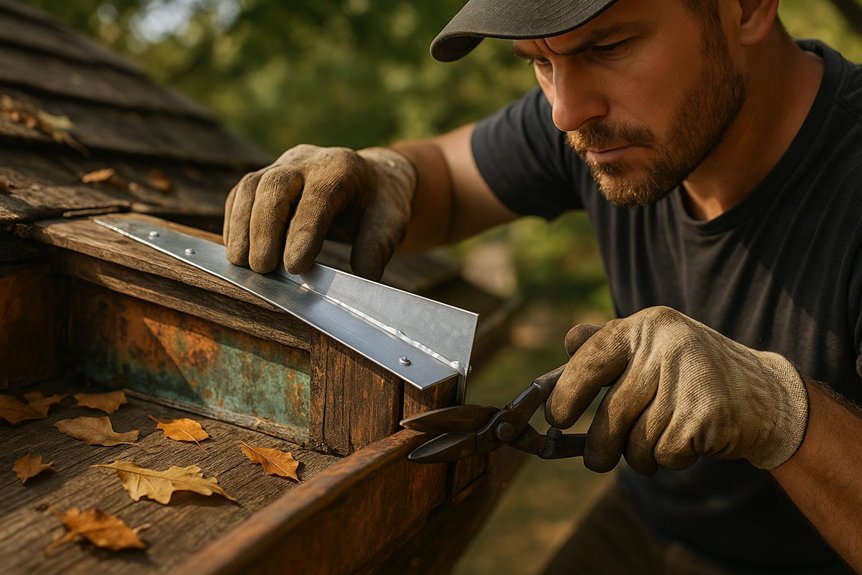
Box Gutters Repair and Replacement Guide
You're about to tackle the intricate world of box gutter-installation-and-maintenance.html">gutter-cleaning-how-often-and-why-it-matters.html">gutter-repair-vs-replacement-when-to-replace-your-gutters.html">gutters, an essential yet often overlooked component of roofing systems. Understanding their function and maintenance can save you from costly repairs. Recognize signs of trouble like leaks and rust early. Use durable materials like aluminum for replacements, ensuring longevity. Regular inspections are key, but should you handle it yourself or bring in a pro? Let's weigh your options and keep your systems efficient.
What Are Box Gutters and Why Do They Matter?
Box gutters, essential components of many roofing systems, are concealed drainage channels designed to manage rainwater effectively. You’ll find them integrated into the roof’s structure, offering a seamless look.
When considering their design, you’ve got to account for factors like roof pitch, material durability, and local climate to guarantee peak functionality. Historically, box gutters have been used in architectural designs for centuries, offering both aesthetic appeal and practical rainwater management.
Their historical significance lies in their ability to blend with traditional building styles while providing modern drainage solutions. To maintain their efficiency, focus on regular inspections and cleaning.
Signs of Box Gutter Problems
Understanding the design and maintenance of box gutters is essential, but recognizing when they’re not performing at their best is equally important.
You’ll want to look for signs like water stains on fascia boards, pooling water, or sagging gutters. These indicators suggest inadequate drainage or potential leaks.
Employing gutter maintenance tips, such as checking seams and joints, can prevent costly damage. During seasonal inspections, pay attention to rust, corrosion, or peeling paint, as these often signal underlying issues.
Confirm downspouts are clear and functioning efficiently to avoid overflow. Observing vegetation growth in the gutters is another red flag, indicating debris buildup.
Regular inspections and prompt attention to these signs will help maintain your box gutter system's longevity and performance.
Identifying Common Box Gutter Issues
To pinpoint common box gutter issues, start by checking for signs of water damage like stains or peeling paint inside the building.
Next, inspect for rust and corrosion, which compromise the gutter's integrity and lead to leaks.
Finally, clear any blockages and debris that can obstruct water flow and cause overflow problems.
Signs of Water Damage
How can you spot the early signs of water damage in box gutters? Look for telltale indicators that could compromise your gutter system's structural integrity.
Water stains are a major red flag, often appearing on ceilings or walls, signaling that water's not being properly diverted. Check the fascia and soffits for any discoloration or swelling, as these can suggest trapped moisture.
Here are some key things to watch for:
- Water stains: Visible marks on ceilings or walls.
- Sagging gutters: Indicating water pooling and excess weight.
- Peeling paint: Often caused by persistent moisture exposure.
- Mold or mildew: Growth around gutters or nearby surfaces.
Identifying these issues early helps prevent more extensive damage and costly repairs.
Stay vigilant and maintain your gutters well.
Rust and Corrosion Indicators
Even though box gutters are known for their durability, rust and corrosion can still be significant issues that compromise their function.
You'll want to inspect for early signs like discoloration, pitting, or flaking metal. These indicators suggest the onset of corrosion.
To address this, apply a rust prevention coating that acts as a barrier against moisture. Regularly maintaining the protective layer is essential for long-term effectiveness.
If you notice advanced corrosion, consider professional corrosion treatment options to restore the gutter's integrity. Look for specialized sealants or treatments specifically designed for metal gutters.
These products can halt further degradation and extend the life of your system. By addressing rust and corrosion promptly, you’ll guarantee your box gutters remain efficient and reliable.
Blockages and Debris Issues
Addressing rust and corrosion is key, but it’s equally important to tackle blockages and debris, which are common issues in box gutters.
Efficient blockage prevention and debris management are essential to maintaining proper water flow. You’ll want to regularly inspect your gutters for leaves, twigs, and other debris that can obstruct water drainage.
To effectively manage these issues, consider the following:
- Install gutter guards: These reduce debris accumulation and simplify maintenance.
- Schedule routine cleanings: Regularly remove debris to prevent build-up and water overflow.
- Check drainage slopes: Confirm gutters have the correct pitch for ideal water flow.
- Inspect downspouts: Verify that they're clear to prevent backflow and water stagnation.
How to Conduct a Thorough Box Gutter Inspection
Before you begin inspecting box gutters, confirm you have the right tools and safety equipment on hand. Gutter maintenance tips suggest using inspection tools like a sturdy ladder, flashlight, and a moisture meter. Wear gloves and safety goggles to protect yourself.
Start by checking for visible rust, cracks, and sagging sections. Look for water stains on the fascia, indicating potential leaks or overflow issues. Verify downspouts are clear and securely attached.
Check for rust, cracks, and sagging; ensure downspouts are clear and secure.
Examine the gutter’s pitch; it should slope toward the downspouts for effective drainage. Use a moisture meter to detect hidden dampness within the structure.
Regular inspections help identify problems early, preventing costly repairs. Always document your findings to track deterioration over time, guaranteeing thorough maintenance.
Quick Fixes for Box Gutter Leaks
When addressing quick fixes for box gutter leaks, start by identifying the leak's source. Engage in precise leak detection by inspecting joints, seams, and downspouts.
Once located, apply these maintenance tips to mitigate the issue:
- Sealant Application: Use silicone or polyurethane sealant to cover small cracks and gaps.
- Temporary Patching: For larger breaches, apply a self-adhesive patching tape designed for roofing.
- Rust Treatment: Remove corrosion with a wire brush and apply a rust-inhibiting primer to prevent further damage.
- Gutter Cleaning: Confirm debris isn’t obstructing water flow, as clogs can exacerbate leaks.
These quick fixes are essential for immediate resolution but remember, they’re temporary.
Regular maintenance and inspections are critical to prolonging your gutter’s lifespan.
Need a Gutter Contractor?
Find licensed gutter professionals in your area. Cleaning, repair, and installation available.
Find Gutter ProsCall (866) 314-4362Step-by-Step Guide to Box Gutter Repair
To begin repairing your box gutters, first identify any visible damage such as rust, cracks, or sagging.
You'll need essential tools and materials like a gutter scoop, sealant, metal patches, and a sturdy ladder to guarantee a safe and effective repair.
Identifying Gutter Damage
How can you be sure your box gutters need attention? Start by conducting a thorough inspection to spot signs of damage early.
Implement gutter maintenance tips and damage prevention strategies to minimize future issues. Look for these common indicators:
- Rust and Corrosion: Check for any rust spots or corrosion, indicating water isn't flowing correctly.
- Sagging Sections: Notice any sagging? This suggests that the gutters might be pulling away from the structure.
- Leaks and Drips: Water stains on walls or pooling around the foundation point to leaks needing immediate action.
- Blockages: Debris accumulation can lead to clogs, preventing proper water drainage.
Repair Tools and Materials
A successful box gutter repair begins with gathering the right tools and materials. Precision in repair techniques demands crucial tools that guarantee effectiveness. Start with a sturdy ladder for safe access. Utilize a gutter scoop for debris removal and a wire brush to clean surfaces. A caulking gun, paired with high-quality sealant, is essential for sealing leaks. Don’t forget a utility knife for cutting damaged sections and a measuring tape for accurate repairs. Here’s a quick reference:
| Essential Tools | Purpose |
|---|---|
| Sturdy Ladder | Safe access |
| Gutter Scoop | Debris removal |
| Wire Brush | Surface cleaning |
| Caulking Gun | Sealant application |
| Utility Knife | Cutting damaged sections |
These tools streamline the process, enhancing your repair techniques to restore functionality efficiently.
Avoiding Common Box Gutter Repair Mistakes
One essential aspect of box gutter maintenance is understanding and avoiding common repair mistakes that can lead to further damage. Missteps often arise from common pitfalls and repair misconceptions, which can compromise the gutter system.
Ascertain you’re using the right techniques to protect your investment.
- Incorrect Slope: Confirm proper pitch for ideal water flow; a poor slope can lead to pooling and leaks.
- Inadequate Sealing: Use high-quality sealants; improper sealing can result in water infiltration.
- Ignoring Damage: Don’t overlook rust or corrosion; address these issues promptly to prevent structural failure.
- Improper Material Use: Match repair materials with existing gutters to maintain integrity and performance.
Best Materials for Box Gutter Replacement
When replacing box gutters, you'll want to contemplate materials like stainless steel and aluminum for their durability and resistance to corrosion.
While these options might've higher upfront costs, they offer long-term savings by reducing maintenance needs.
If budget constraints are a concern, galvanized steel provides a cost-effective alternative with a reasonable lifespan.
Durable Material Options
While selecting materials for box gutter replacement, durability and performance should be your top priorities.
You'll want to evaluate several options that excel in these areas:
- Aluminum Options: Known for being lightweight and corrosion-resistant, aluminum is a popular choice for its longevity and ease of installation.
Its malleability allows for custom shaping to fit various designs.
- Copper Benefits: Copper offers exceptional durability and a classic aesthetic.
It naturally develops a patina over time, enhancing its resistance to environmental elements.
- Stainless Steel: This material provides robust strength and high resistance to rust.
It's ideal for areas with extreme weather conditions.
- Zinc: Zinc's self-healing properties make it a sustainable choice.
It forms a protective layer that helps prevent corrosion over time.
Cost-Effective Solutions
Selecting the right materials with durability in mind naturally leads to contemplating cost-effective solutions for box gutter replacement.
Opt for aluminum as a budget-friendly option that offers corrosion resistance and lightweight handling. Its longevity translates to long-term savings, cutting down future maintenance costs.
Galvanized steel is another viable contender, providing robustness and a lower price point, though it requires regular upkeep to prevent rust.
For those seeking premium choices, consider copper. While upfront costs are higher, its unmatched durability offers substantial long-term savings, reducing the need for frequent replacements.
Always weigh initial investment against lifecycle costs to guarantee you're making an informed decision. A strategic approach to materials guarantees both durability and financial efficiency in your gutter project.
Maintaining Your Box Gutters for Longevity
To guarantee the longevity of your box gutters, it’s important to implement regular maintenance practices. Effective box gutter maintenance tips include using a seasonal maintenance checklist to verify no aspect is overlooked.
Implement regular maintenance practices to ensure your box gutters last longer using a seasonal checklist.
These practices prevent costly repairs and extend the lifespan of your gutters.
Key maintenance tasks:
- Inspect for Debris: Regularly remove leaves, twigs, and other blockages to maintain ideal water flow.
- Check for Leaks: Examine seams and joints for leaks, using sealant as needed to prevent water damage.
- Assess Structural Integrity: Look for signs of sagging or corrosion, especially in older systems, to prevent structural failure.
- Confirm Proper Drainage: Ensure that downspouts are clear and functioning, preventing overflow and potential foundation issues.
These proactive steps keep your system efficient and durable.
Decide: DIY or Hire a Professional?
After implementing regular maintenance practices, you might wonder whether to tackle repairs yourself or hire a professional. DIY considerations include evaluating your skill level and understanding the complexity of box gutter systems. If you're confident with tools and have experience, you might save on costs.
However, gauging the scope of the damage is essential. Minor leaks might be manageable, but structural issues require more than just a patch-up.
On the other hand, professional expertise guarantees a thorough assessment and repair. Experts have access to specialized tools and materials, assuring long-term durability and preventing future issues.
They’re familiar with local codes and safety standards, which can be a significant advantage. Ultimately, weigh the benefits of professional knowledge against your comfort with DIY tasks.
Frequently Asked Questions
How Often Should Box Gutters Be Cleaned?
You should clean box gutters at least twice a year for ideal maintenance.
This cleaning frequency helps prevent clogs and water damage, ensuring efficient water flow.
Inspect gutters regularly, especially after heavy storms, to mitigate debris accumulation.
Utilize industry-standard tools like gutter scoops and high-pressure hoses.
Can Box Gutters Affect Home Insurance Rates?
Yes, box gutters can affect home insurance rates. Insurers often conduct insurance assessments, evaluating risks like water damage.
Proper gutter maintenance is essential. If your box gutters are neglected, it might increase the likelihood of claims, thereby raising your premiums.
Regular inspections, timely repairs, and professional cleaning demonstrate diligence, potentially leading to lower rates.
Always check with your insurer about specific maintenance requirements to optimize your coverage.
What Are the Environmental Impacts of Box Gutters?
Box gutters play an essential role in rainwater management by efficiently directing water, reducing soil erosion and minimizing pollution.
You’ll find they help prevent runoff from carrying pollutants into local waterways. By maintaining them properly, you guarantee effective water diversion, which supports sustainable drainage systems.
Regular inspections and cleaning can enhance their performance, keeping the environmental impact low and contributing to cleaner ecosystems and improved stormwater management.
Are There Any Aesthetic Options for Box Gutters?
Yes, you’ve got several aesthetic options for box gutters.
Choose design materials like copper or aluminum for a sleek look.
Opt for decorative finishes such as powder coating to match your home’s style.
Consider custom fascia covers or unique profiles to enhance the visual appeal.
Using these options, you can maintain functionality while ensuring your gutters complement your property's architectural design seamlessly.
How Do Box Gutters Handle Heavy Snowfall?
Box gutters manage heavy snowfall by effectively channeling meltwater, reducing snow load stress.
Verify they're properly sloped to prevent ice damming, which can cause leaks. Install heat cables to melt snow and reduce buildup.
Regular maintenance is key—clear debris and check for blockages. Use durable materials to withstand harsh conditions, and consider reinforcing support structures.
This proactive approach guarantees your box gutters handle winter's challenges efficiently.
Browse our national gutter directory to find certified professionals near you. See pricing guides for Cincinnati, Pittsburgh, New York, Brooklyn, Denver, and more.