Ice Dam Prevention and Gutter Solutions
You're about to tackle the challenge of ice dam prevention and effective gutter-guard-installation-cost-and-benefits.html">gutter solutions. By focusing on key areas like attic insulation, air sealing, and roof ventilation, you can greatly reduce the risk of ice formation and water damage. Implementing heating cable systems and regular maintenance further safeguards your home. Curious if heated gutter systems work or if DIY methods are sufficient? Let’s explore how these strategies can protect your home this winter.
Quick Tips to Prevent Ice Dams
When winter approaches, understanding how to prevent ice dams becomes vital. Implementing effective preventative measures is important for protecting your roof.
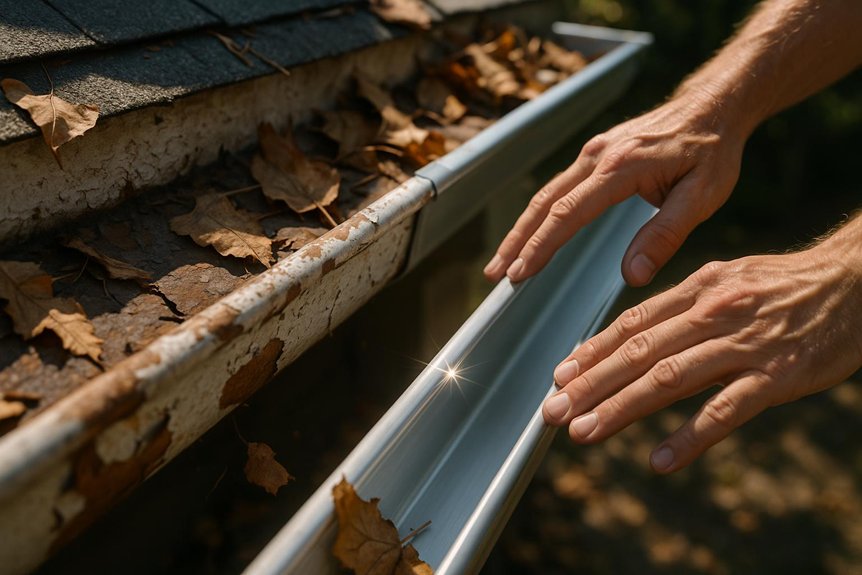
Start with thorough gutter maintenance. Make sure gutters-cause-foundation-damage.html">gutters are free from debris; this facilitates unobstructed water flow. Install gutter guards to minimize future blockages.
Ensure debris-free gutters for smooth water flow; install gutter guards to prevent blockages.
Evaluate insulation and ventilation in your attic. Proper insulation reduces heat escape, maintaining a consistent roof temperature. Verify that soffit vents are clear to promote airflow.
Sealing air leaks is another key strategy. Use caulk or weatherstripping around windows and doors to prevent warm air from melting roof snow.
Consider installing a roof de-icing system, like heat cables, to maintain ice-free eaves. Regularly inspect your roof for damage, as timely repairs reinforce your home’s defense against ice dams.
Understanding Ice Dams: Causes and Consequences
To tackle ice dams effectively, focus on minimizing heat loss through proper insulation, which prevents uneven roof temperatures.
Guarantee adequate roof ventilation to maintain a consistent cold surface, reducing the likelihood of snowmelt refreezing at the eaves.
Heat Loss Impact
Although ice dams often appear as a simple winter inconvenience, their formation is intricately tied to heat loss from your home. When warm air escapes into your attic, it warms the roof, causing snow to melt. This meltwater refreezes at the eaves, forming ice dams.
Not only do these dams damage roofing, but they also compromise your home's energy efficiency by allowing heat to escape.
To mitigate this, focus on insulating your attic adequately. Seal gaps around fixtures and guarantee your insulation meets current standards.
Roof Ventilation Importance
Proper roof ventilation is essential in preventing ice dams and preserving structural integrity. By optimizing ventilation systems, you guarantee efficient airflow management, which stabilizes attic temperatures and prevents snow from melting and refreezing at the eaves. Effective ventilation involves balancing intake and exhaust, maintaining a consistent flow of air to mitigate heat buildup.
| Component | Function |
|---|---|
| Ridge Vents | Release warm air |
| Soffit Vents | Allow cool air intake |
| Attic Fans | Enhance air circulation |
| Baffles | Prevent insulation blockage |
| Gable Vents | Supplement airflow |
Water Damage Risks
Maintaining effective roof ventilation is just one part of the strategy to prevent ice dams. To mitigate water damage risks, you need to address insulation and sealing gaps.
When warm air escapes into the attic, it melts snow on your roof, which refreezes at the eaves, forming ice dams. These dams trap water, leading to leaks that infiltrate your home’s structure.
Implement prevention strategies by ensuring your attic is well-insulated and air-sealed. Use a combination of heat cables and gutter guards to maintain water flow and prevent blockages.
Regularly inspect and clean gutters to avert clogs. By integrating these solutions, you effectively reduce the potential for water damage associated with ice dams, safeguarding your home’s integrity.
Maximize Attic Insulation for Efficiency
To effectively prevent ice dams, enhancing your attic's insulation is crucial. Focus on attic air sealing to eliminate gaps where warm air escapes. Use high-quality insulation materials like fiberglass or spray foam to guarantee ideal thermal resistance.
Prioritize areas around vents, chimneys, and electrical fixtures, where leaks are common.
Measure your current insulation’s R-value. If it's below recommended levels for your region, add more insulation. Consider loose-fill cellulose for irregular spaces or batt insulation for uniform areas.
Seal all penetrations with caulk or weatherstripping to maintain consistent temperatures.
Properly insulating reduces heat transfer and stabilizes indoor temperatures, minimizing the risk of ice dams. Regularly inspect and upgrade insulation to maintain peak efficiency, guaranteeing your home stays safe and energy-efficient.
Enhance Ventilation to Prevent Ice Buildup
After optimizing your attic's insulation, focus on enhancing ventilation to prevent ice buildup. Proper air circulation is vital. Use attic fans and ventilation systems to manage airflow patterns and control moisture. Integrate ridge vents and soffit vents to create a balanced system. This guarantees efficient thermal barriers and maximizes insulation materials.
Consider your roof design to optimize airflow. Effective ventilation reduces heat buildup, preventing ice dams. It’s important for maintaining consistent temperatures and minimizing condensation risks.
Here's a quick guide to enhance your ventilation:
| Component | Purpose |
|---|---|
| Ridge Vents | Facilitate upward air movement |
| Soffit Vents | Allow fresh air intake |
| Attic Fans | Boost air circulation |
Implementing these strategies will protect your home and improve roof efficiency.
Need a Gutter Contractor?
Find licensed gutter professionals in your area. Cleaning, repair, and installation available.
Find Gutter ProsCall (866) 314-4362Step-by-Step Roof and Gutter Care for Winter
When winter approaches, guaranteeing your roof and gutters are well-prepared becomes vital. Start with thorough roof maintenance. Conduct seasonal checks to identify potential weak spots.
Gutter cleaning is essential for effective drainage solutions, preventing snow buildup and ice dams. Enhance your snow management strategy by reinforcing insulation upgrades, which mitigate heat loss and minimize ice formation. Employ weatherproofing techniques to seal vulnerable areas against moisture.
- Inspect and repair roof shingles: Address damaged areas to prevent leaks.
- Clean and unclog gutters: Confirm water flows freely to avoid ice formation.
- Upgrade insulation: Reduce heat escape, preventing ice dams.
- Seal roof penetrations: Apply weatherproofing techniques for enhanced protection.
- Evaluate drainage solutions: Optimize systems to handle winter runoff efficiently.
These steps guarantee robust winter preparation.
Do Heated Gutter Systems Really Work?
When evaluating heated gutter systems, you’ll find they excel in mitigating ice dams in cold climates by maintaining water flow.
It's essential to assess their energy consumption levels, as efficient models optimize heat output without excessive power use.
Installation and maintenance should focus on ensuring seamless integration with your existing gutter setup to maximize performance and longevity.
Efficiency in Cold Climates
Considering the challenges of cold climates, the effectiveness of heated gutter systems is a significant topic. You need to guarantee that your system can handle cold air and substantial snow loads.
By focusing on thermal bridging, you can minimize heat loss and maximize efficiency. Adjusting the roof pitch and optimizing drainage patterns are essential for proper moisture management.
Winter maintenance becomes important, as heated systems must consistently perform.
- Cold Air Management: Guarantees system operates efficiently in frigid conditions.
- Snow Load Handling: Prevents excessive weight from damaging structures.
- Thermal Bridging Minimization: Reduces heat loss, improving energy efficiency.
- Optimized Roof Pitch: Enhances water flow and drainage, reducing ice formation.
- Effective Winter Maintenance: Maintains system functionality, preventing ice dams.
These solutions focus on enhancing performance in demanding environments.
Energy Consumption Levels
Although heated gutter systems promise to prevent ice dams, evaluating their energy consumption levels is crucial to determine their true efficacy. You need to assess whether these systems align with energy efficiency and sustainable practices.
Consumption trends indicate that heating systems can greatly increase energy use, impacting cost reduction strategies. By integrating advanced insulation materials, you can enhance winter preparedness while minimizing environmental impact.
Focus on smart controllers that optimize usage patterns, guaranteeing that the system activates only when necessary. This approach not only supports energy-efficient operations but also contributes to long-term savings.
To make sure your investment is worthwhile, always analyze the energy demands against the benefits, prioritizing systems designed with cutting-edge technology and sustainable solutions in mind.
Installation and Maintenance
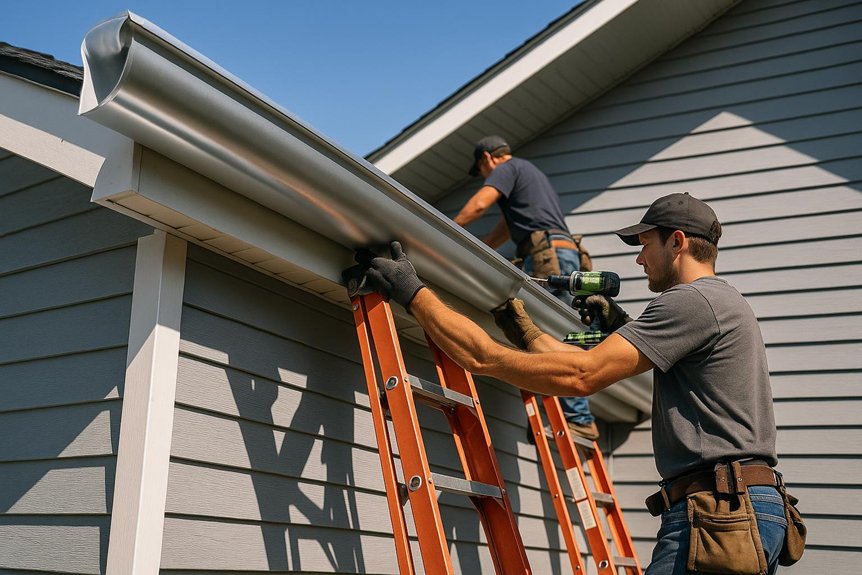
Installing and maintaining heated gutter systems requires precise attention to detail and a thorough understanding of their mechanics. Proper gutter installation guarantees peak performance, reducing ice dam risks.
Start with selecting robust material choices to withstand seasonal changes. Regular maintenance tips include conducting seasonal checks to verify proper drainage functionality. Engage professional services for installation to assure system integrity and efficiency.
Preventative measures are vital for long-term care. Implement these strategies to maintain your system:
- Inspect and clean gutters regularly to prevent blockages.
- Monitor heating cables for wear and damage.
- Schedule seasonal checks to assess system performance.
- Utilize professional services for installation and complex repairs.
- Choose durable materials to endure harsh winters.
Invest in these solutions to secure seamless operation and prevent costly damage.
DIY Solutions to Minimize Ice Dams
Tackling ice dams yourself can be efficient with the right techniques.
Begin by employing a roof rake to remove snow accumulation. This tool helps prevent meltwater from refreezing and forming ice dams. Make sure you pull snow down the slope, avoiding damage to shingles.
After clearing snow, apply a homemade de-icer to stubborn ice patches. Mix two parts water with one part calcium chloride in a spray bottle. This solution effectively melts ice without harming your roof.
Remember, safety first—use proper footwear and a sturdy ladder when working on elevated surfaces. Regularly inspecting your gutters for blockages can also prevent ice buildup.
Pro Services to Prevent Ice Dams
While handling ice dams yourself can be effective, hiring professional services guarantees thorough prevention. Experts conduct professional assessments to identify vulnerabilities in your roof and gutter system.
With seasonal inspections, they ascertain that your home remains protected year-choose.html">round. Skilled technicians utilize specialized equipment to remove snow and ice buildup safely, reducing potential damage to your property.
Consider these professional services:
- Thermal Imaging: Detects heat leaks contributing to ice dams.
- Roof Ventilation Optimization: Enhances airflow to prevent snow melting and refreezing.
- Gutter Maintenance Plans: Regular cleanings to ascertain proper drainage.
- Heating Cable Installation: Prevents ice formation by maintaining consistent temperatures.
- Insulation Upgrades: Bolsters thermal efficiency, minimizing ice dam risks.
Frequently Asked Questions
How Do Ice Dams Affect Home Insurance Policies?
Ice dams can impact your home insurance policy by affecting homeowner liability and insurance coverage.
If an ice dam causes water damage, you'll want to check if your policy covers such incidents. Often, insurance covers sudden damage but may exclude issues resulting from poor maintenance.
You should review your policy’s specifics on water damage and guarantee preventive measures are in place to avoid potential liability and claims complications.
Can Landscaping Influence the Formation of Ice Dams?
Yes, landscaping can influence ice dam formation. You should implement strategic landscaping techniques and drainage solutions.
Confirm your property slopes away from the foundation to prevent water accumulation. Use proper grading and install French drains to direct runoff effectively.
Plant trees and shrubs strategically to shield your roof from excessive snow. These actions help manage water flow and reduce the risk of ice dams, protecting your home’s integrity.
What Role Does Roof Color Play in Ice Dam Formation?
Roof color greatly influences ice dam formation. Dark roofs absorb more heat, increasing snow melting. This can lead to refreezing at roof edges, forming ice dams.
Conversely, lighter colors reflect sunlight, reducing roof heat. To mitigate ice dams, improve insulation effectiveness to maintain uniform roof temperature.
Consider your roof color's impact on snow melting dynamics and heat retention, ensuring ideal insulation for balanced thermal regulation and prevention.
Are There Eco-Friendly Materials for Ice Dam Prevention?
Yes, you can use eco-friendly materials for ice dam prevention. Choose natural insulation like cellulose, which enhances energy efficiency.
Optimize roof ventilation by installing ridge vents and soffit vents to maintain consistent attic temperatures. This reduces snow melt on your roof.
Implementing these solutions not only prevents ice dams but also promotes sustainability. You'll find they effectively balance performance with environmental responsibility, ensuring a durable, green approach to roof maintenance.
How Does Climate Change Impact Ice Dam Frequency?
Climate change impacts ice dam frequency by altering climate patterns and causing temperature fluctuations.
You’ll notice warmer winters with more freeze-thaw cycles, increasing the risk of ice dams. As temperatures rise, snow melts more frequently, refreezing at the roof's edge.
To address this, improve insulation and ventilation in your attic. Consider smart roof design and using heat cables to manage increased ice dam incidents effectively.
Browse our national gutter directory to find certified professionals near you. See pricing guides for Cincinnati, Pittsburgh, New York, Brooklyn, Denver, and more.