Signs You Need New Gutters
You're noticing signs that your gutter-sizes-which-size-is-right-for-your-home.html">gutter-fascia-and-soffit-repair-guide.html">gutters-repair-and-replacement-guide.html">gutters might be failing, and it's essential to address these issues promptly. Sagging, cracks, and rust can lead to water damage and structural problems. Uneven alignment and peeling paint signal moisture retention, while persistent overflow or mold growth suggests a need for replacement. Regular checks can prevent clogs and fastener problems, but do you know how to effectively assess and tackle these challenges?
Why Recognizing Gutter Issues Matters
Recognizing gutter issues is vital because they play an important role in protecting your home from water damage. Gutters direct rainwater away, preventing soil erosion, basement flooding, and structural damage. When you understand gutter importance, you realize how essential it's to keep them in peak condition.
Timely repairs are key. If gutters become clogged, cracked, or misaligned, water can overflow, leading to rot, mold, and foundation problems. You should regularly inspect them for signs of wear, such as rust or leaks. Promptly addressing these issues guarantees longevity and efficiency.
Ignoring gutter problems can escalate repair costs greatly. By prioritizing maintenance and timely repairs, you safeguard your home’s integrity, extend your gutters' lifespan, and avoid costly future damage.
How to Spot Sagging Gutters
Understanding the importance of timely gutter maintenance, it's also important to know how to spot specific issues like sagging gutters.
Start by checking the gutter alignment. If they appear uneven or pulling away from the roofline, that's a clear sign of sagging. You can use a level to guarantee they’re properly aligned.
Next, observe water flow during rainfall. If water spills over the sides instead of flowing smoothly to the downspout, sagging may be disrupting the flow.
Additionally, look for gaps between the gutter and fascia board, which can further indicate misalignment.
Identifying and Preventing Rust
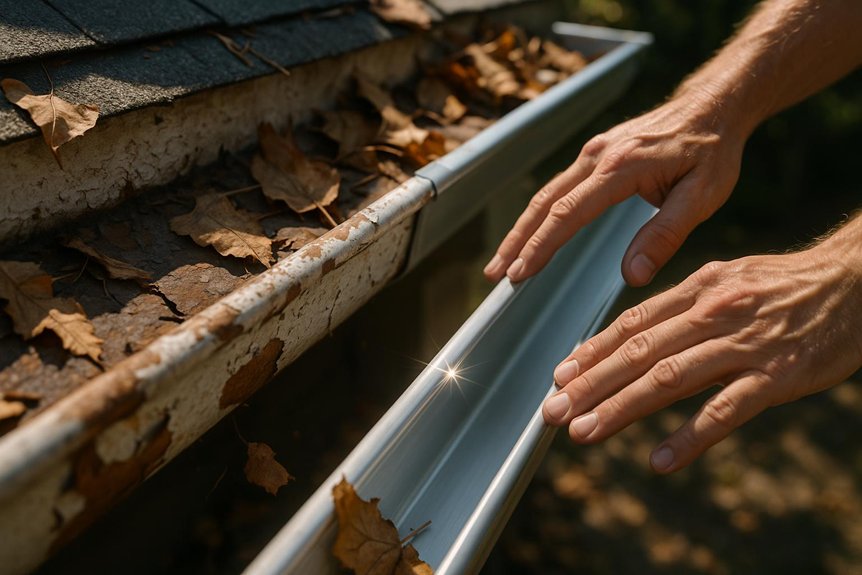
Check your gutters for early rust signs like discoloration or flaking.
To prevent rust, guarantee proper drainage and apply a protective sealant regularly.
Regular maintenance will extend your gutters' lifespan and keep them functioning efficiently.
Spotting Early Rust Signs
When you notice small patches of discoloration, it’s crucial to inspect your gutters for early signs of rust. Check for common rust types such as surface rust and pitting. Surface rust appears as reddish-brown spots and can be treated with a wire brush and rust treatment products.
Pitting, however, indicates more severe damage and might need professional evaluation.
Use a flashlight to examine hard-to-see areas, especially around joints and seams where moisture collects. Regularly clear debris to prevent water from pooling, which accelerates rust formation.
Rust Prevention Techniques
To effectively prevent rust in your gutters, start by ensuring they’re clean and free from debris. This simple step enhances corrosion resistance and prolongs their lifespan.
Follow these steps to maximize protection:
- Apply Rust Inhibitors: Use specially formulated products to coat your gutters. These create a protective barrier against moisture, enhancing corrosion resistance.
- Regular Inspections: Check for early signs of rust and address them immediately. Early intervention prevents extensive damage.
- Install Gutter Guards: These prevent leaves and debris from accumulating, reducing moisture retention and potential rust formation.
- Ensure Proper Drainage: Verify that your gutters are pitched correctly to facilitate water flow, preventing standing water which accelerates rust.
Handling Clogs Effectively
To handle clogs effectively, start by identifying common blockages like leaves, twigs, and debris.
Implement regular maintenance by inspecting your gutters and removing obstructions to guarantee smooth water flow.
Use effective cleaning tools like gutter scoops and high-pressure hoses to maintain peak gutter performance.
Identify Common Blockages
Clogs often form in gutters due to leaves, twigs, and other debris that accumulate over time. These blockages disrupt water flow, leading to potential damage.
Identifying common blockages is essential for effective gutter maintenance. Here’s what to look for:
- Leaf Accumulation: Fallen leaves are the most common gutter debris, especially during autumn. They compact and trap moisture.
- Twigs and Branches: These can create structural blockages, snagging other debris and causing water overflow.
- Dirt and Shingle Granules: Over time, dirt and granules from shingles collect, forming a sediment layer.
- Animal Nests: Birds and rodents might build nests in your gutters, obstructing water flow.
Regularly inspect these areas to guarantee your gutters function efficiently. Addressing blockages promptly prevents costly repairs.
Regular Maintenance Tips
Identifying blockages is just the beginning; effective maintenance guarantees your gutters remain clear and functional. Regular gutter cleaning is essential to prevent overflow and damage.
Start with seasonal checkups to assess conditions after heavy rainfall or storms. Look for accumulated leaves, twigs, or debris that might obstruct water flow.
To handle clogs effectively, schedule gutter cleaning at least twice a year, ideally in spring and fall. This timing aligns with seasonal debris accumulation.
Remove obstructions using gloves and a trowel, ensuring downspouts are clear. Consistent maintenance reduces the risk of water damage to your home’s foundation and roof.
Effective Cleaning Tools
One essential aspect of effective gutter maintenance is using the right cleaning tools to handle clogs. Proper gutter cleaning guarantees water flows freely, preventing damage.
Here are four maintenance tools that can make your job easier:
- Gutter Scoop: This tool helps you remove debris efficiently. Its shape fits the gutter, making it easy to scoop out leaves and dirt.
- Telescopic Wand: Attach this to your hose for high-pressure cleaning. It blasts away stubborn clogs without the need for a ladder.
- Gutter Guards: These aren’t cleaning tools per se, but they prevent debris accumulation, reducing cleaning frequency.
- Plumber’s Snake: For stubborn downspout blockages, a plumber’s snake can effectively clear clogs, guaranteeing smooth drainage.
Invest in these tools for peak gutter health.
Detecting Cracks and Splits in Gutters
When inspecting your gutters, it's important to spot any cracks and splits that could lead to significant issues. Crack detection and split assessment are vital to maintaining gutter efficiency. Look for visible damage during routine checks. Even small cracks can expand, causing leaks and water overflow.
Use a flashlight to examine hard-to-see areas, especially corners and joints. You'll need to address any damage promptly to prevent further deterioration. Here's a quick reference table to guide your assessment:
| Signs of Damage | Action Needed |
|---|---|
| Small cracks | Seal with gutter sealant |
| Large splits | Consider replacement |
| Rust around cracks | Remove rust, seal cracks |
| Loose sections | Tighten fasteners |
| Consistent leaks | Professional inspection |
Stay proactive to guarantee your gutters function effectively.
Signs of Water Damage to Watch For
How can you tell if your gutters are causing water damage? Inspect your home for the following signs:
1. Water Stains and Ceiling Leaks: Look for discoloration on ceilings and walls.
These indicate that water is seeping through, potentially leading to mold growth.
2. Foundation Issues and Basement Flooding: Check for cracks around your foundation.
Poorly functioning gutters can lead to water pooling, causing structural damage and flooding.
3. Siding Damage and Landscape Erosion: Notice any warping or peeling on your siding?
Excess water can erode soil and damage plants, altering your landscape.
4. Pest Infestations: Standing water attracts pests.
Make certain gutters direct water away to prevent infestations.
Regular checks can help you catch these issues early and maintain your home’s integrity.
Need a Gutter Contractor?
Find licensed gutter professionals in your area. Cleaning, repair, and installation available.
Find Gutter ProsCall (866) 314-4362Is Your Gutter Paint Peeling?
Have you noticed the paint on your gutters peeling or flaking? This issue doesn't just affect gutter aesthetics; it can also signal underlying problems.
Peeling paint often indicates that your gutters are retaining moisture, which compromises paint longevity. Moisture can seep into the material, leading to rust or corrosion, especially in metal gutters. This deterioration not only looks unattractive but can also reduce the effectiveness of your gutter system over time.
To maintain both function and visual appeal, inspect your gutters regularly. Look for areas where paint is lifting or missing. If peeling persists, consider repainting or replacing the gutters altogether.
Addressing these issues promptly guarantees your gutters continue to protect your home efficiently.
Are Your Gutters Coming Loose?
Check your gutters for visible fastener damage, as this can lead to sections coming loose.
If you notice sagging or misaligned sections, it indicates your gutters aren't securely attached.
Addressing these issues promptly can prevent further structural problems.
Visible Fastener Damage
When fasteners start to show visible damage, your gutters may be on the verge of coming loose. This can lead to serious problems if not addressed promptly.
Fastener longevity and installation quality are critical in maintaining the integrity of your gutter system. Here’s what to look for:
- Rust and Corrosion: Fasteners that are rusted or corroded lose strength, affecting their ability to hold gutters securely.
- Loose Screws or Nails: Check for screws or nails that are visibly loose or missing. This indicates weakened support.
- Misaligned Fasteners: Fasteners that aren't aligned correctly suggest poor installation quality, impacting gutter stability.
- Cracks or Breaks: Inspect for any cracks in fasteners. These can compromise the entire system's effectiveness.
Address these issues to guarantee your gutters function properly.
Sagging or Misaligned Sections
If sections of your gutters are sagging or misaligned, it’s a clear sign they might be coming loose. Sagging causes include debris buildup, improper installation, and weak support brackets. Misalignment can lead to improper drainage, causing water damage to your home. Address these issues promptly to maintain gutter efficiency.
Here's a quick guide to assess and fix common problems:
| Issue | Sagging Causes | Alignment Solutions |
|---|---|---|
| Debris Buildup | Leaves and dirt add weight | Regular cleaning |
| Weak Brackets | Insufficient support | Reinforce with stronger brackets |
| Improper Installation | Incorrect slope or angle | Reinstall with correct alignment |
What Causes Gutter Overflow?
Although gutter overflow can be a common issue, understanding its causes is vital for effective maintenance. Proper gutter design and efficient water flow are essential.
Here are four primary reasons for overflow:
- Clogged Gutters: Leaves, debris, and dirt can block water flow, causing spillage over the sides.
- Improper Gutter Design: If gutters aren’t sized or pitched correctly, they can’t handle heavy rainfall.
- Insufficient Downspouts: Without enough downspouts, water accumulates faster than it can drain, leading to overflow.
- Gutter Damage: Warping or sagging disrupts water flow, causing pooling and eventual overflow.
Regular inspections and maintenance can prevent these issues, ensuring your gutters perform effectively.
Mold and Mildew: A Gutter Problem
Unchecked mold and mildew in your gutters can lead to significant problems for your home. Mold sources often include decaying leaves and trapped moisture, creating an ideal environment for mildew growth.
When gutters fail to drain properly, they retain water, turning into breeding grounds for these fungi.
As mold and mildew spread, they can penetrate your roof and siding, potentially causing structural damage. This not only compromises your home’s integrity but also poses health risks, as mold spores can enter living spaces.
Regularly inspect your gutters for signs of mold sources like standing water or debris buildup. Cleaning and ensuring proper drainage can prevent mildew growth and protect your home.
If issues persist, it might be time for new gutters.
Assessing Gutter Age and Material Deterioration
When evaluating the condition of your gutters, it's crucial to take into account their age and material. The gutter lifespan varies depending on the material types, affecting performance and durability.
Here's what to reflect on:
- Material Types: Aluminum, vinyl, and steel are common. Aluminum lasts around 20 years, while vinyl may need replacing sooner.
- Visible Deterioration: Look for rust on steel or cracks in vinyl, indicating the end of the gutter lifespan.
- Seam Weakness: Older gutters often have weak seams. Check for leaks where sections connect.
- Sagging Sections: This can be a sign of material fatigue, possibly from age or poor installation.
Regular inspection helps you determine if it's time for new gutters to prevent further issues.
Frequently Asked Questions
How Often Should Gutters Be Inspected?
Inspect gutters at least twice a year, ideally in spring and fall.
Regular gutter cleaning guarantees they function properly, preventing clogs and water damage. Increase inspection frequency if your home is surrounded by trees or experiences frequent storms.
During inspections, look for rust, sagging, or leaks. Addressing these issues promptly can extend gutter lifespan and protect your home.
Always prioritize safety when accessing gutters for maintenance.
Can Gutter Issues Affect My Home's Foundation?
Yes, gutter issues can affect your home's foundation. When gutters fail, water pooling occurs around the base of your home, leading to foundation damage.
Make certain gutters are clear and properly aligned to direct water away. Regular maintenance prevents leaks and overflow, safeguarding your foundation from cracks or settling.
A proactive approach maintains structural integrity and avoids costly repairs. Inspect gutters routinely to prevent water-related problems.
What Tools Are Needed for Gutter Maintenance?
For gutter cleaning, you'll need a sturdy ladder, gloves, a trowel, and a garden hose.
A gutter scoop can help remove debris efficiently. Use a plumber's snake for clogs in downspouts.
It's essential to create a regular maintenance schedule to prevent blockages and water damage.
Consider safety goggles and a dust mask if debris is excessive.
These tools guarantee effective upkeep and extend your gutters' lifespan.
How Do Weather Conditions Impact Gutter Lifespan?
Weather conditions greatly impact gutter lifespan. If you live in an area with weather extremes, like heavy rain or snow, your gutters experience more wear and tear.
Gutter materials matter; for instance, aluminum might corrode faster in coastal regions, while vinyl could crack in freezing temperatures.
Regular maintenance is essential, but choosing the right materials for your climate can extend their lifespan and reduce the need for frequent replacements.
Are Seamless Gutters Better Than Sectional Ones?
Seamless gutters often outperform sectional ones. They minimize leaks because they’re made from a single piece of material, reducing joints where leaks can occur.
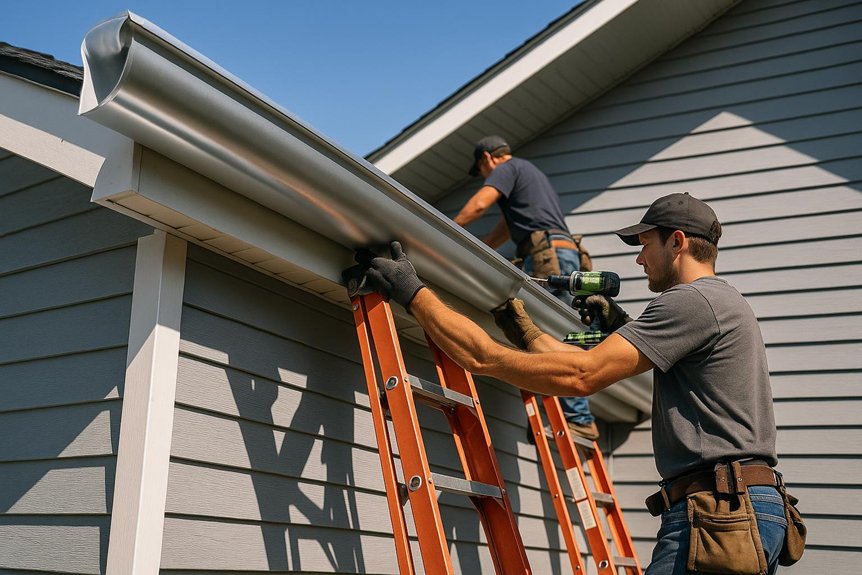
Choose durable gutter materials like aluminum or copper for longevity. Installation techniques for seamless gutters require precision and professional equipment, ensuring a custom fit.
In contrast, sectional gutters are easier to install but more prone to leaks due to multiple seams. Opt for seamless for better efficiency.
Browse our national gutter directory to find certified professionals near you. See pricing guides for St. Louis, Dayton, Jacksonville, Silver Spring, Baltimore, and more.