Outlet and Switch Repair and Installation
You're faced with outlet and switch issues, and understanding the basics is key to maintaining safety and efficiency. Regular checks can prevent hazards by spotting loose connections or damage early. Knowing the wiring requirements for different switches, like single-pole or dimmer, is vital. Smart outlets offer added convenience, but ensuring compliance with safety standards is non-negotiable. Curious about quick fixes or when it's time to call a pro? Let's explore the essentials.
Quick Fixes for Common Outlet and Switch Issues
When tackling common outlet and switch issues, you’ll find that many problems have straightforward solutions.
Begin by ensuring outlet safety. Check for loose connections; these not only affect performance but can also pose fire hazards. Tighten screws and inspect for any signs of wear or damage.
Ensure outlet safety by tightening screws and checking for loose connections to prevent performance issues and fire hazards.
For switches, understanding switch types is vital. Identify whether you’re dealing with a single-pole, three-way, or dimmer switch. Each type has specific wiring requirements and troubleshooting methods.
If a switch feels warm, it may indicate an overload or faulty wiring. Always turn off the power at the breaker before starting any repairs. Proper labeling of circuits aids in safety and efficiency.
DIY Tips for Fixing Flickering Lights and Dead Outlets
After addressing basic outlet and switch issues, you can confidently tackle flickering lights and dead outlets.
Begin by inspecting flickering bulbs. Verify they're securely screwed in and check for loose connections in the light fixture. If flickering persists, consider replacing the bulb or checking the circuit for overload.
For outlet troubleshooting, start by testing the outlet with a multimeter to confirm power presence. If dead, reset any tripped circuit breakers or GFCI outlets.
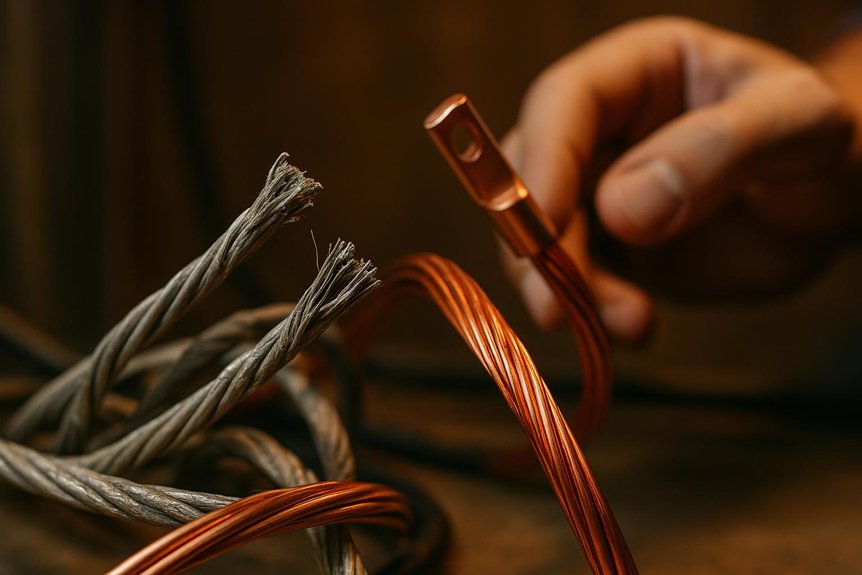
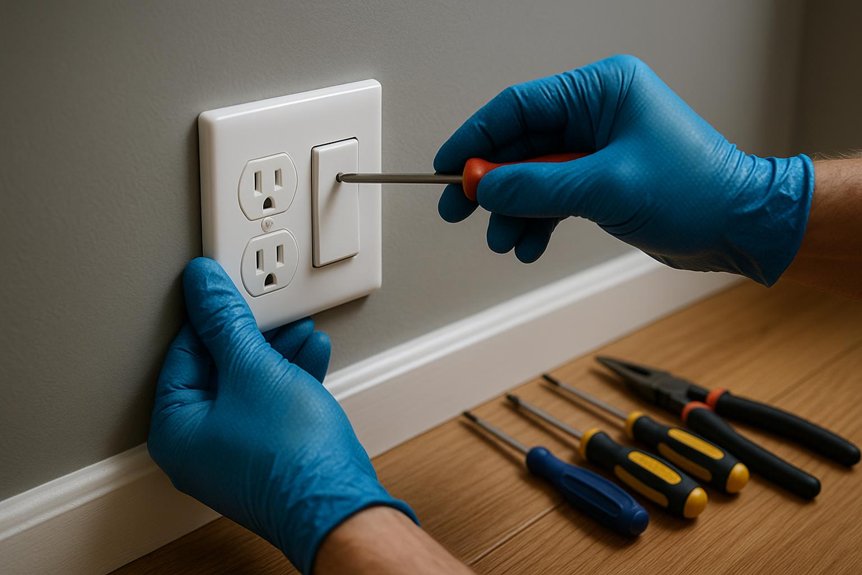
Examine the wiring by removing the outlet cover—verify connections are tight and wires aren't frayed. Replace damaged components as needed.
Always cut power at the breaker box before handling electrical components to guarantee safety. With these steps, you'll efficiently resolve flickering and non-functional outlets.
Make Your Home Safer With Proper Installations
Proper installation-cost-and-requirements.html">installation-and-backup-power-options.html">installations play an essential role in enhancing home safety, guaranteeing electrical systems function efficiently and reduce hazards.
Outlet safety is vital, as improper installations can lead to shocks or fires. You should understand different switch types to verify they’re suitable for your needs.
Outlet safety is crucial; improper installations may cause shocks or fires. Verify switch types to ensure suitability.
Here’s how proper installations can make your home safer:
- Choose the Right Switch Types: Different areas may require specific switches, like dimmers for lighting control or moisture-resistant switches for bathrooms.
- Guarantee Proper Outlet Safety: Install ground fault circuit interrupters (GFCIs) in areas prone to moisture, such as kitchens and bathrooms, to prevent electrical shocks.
- Regularly Inspect and Maintain: Consistent inspections can catch issues early, maintaining your system’s integrity and reducing risks.
Implement these steps to enhance safety and minimize hazards.
Need an Electrician?
Find licensed electricians in your area. Same-day and emergency service available.
Find ElectriciansCall (866) 314-4454When to Call a Professional Electrician for Outlet and Switch Issues
Ever wonder if it's time to call a professional electrician for outlet and switch issues? Addressing problems promptly guarantees outlet safety and switch functionality.
If your outlets feel hot, emit sparks, or show signs of discoloration, it's essential to contact an expert. These are indicators of potential electrical hazards that can lead to fires.
Similarly, if switches flicker, make buzzing noises, or don't work consistently, a professional assessment is necessary. Faulty wiring or loose connections can cause these issues, compromising your home's electrical system.
Don't attempt repairs yourself if you're unsure; improper handling can exacerbate problems. Prioritize safety by relying on a professional electrician to diagnose and resolve these issues efficiently, safeguarding your home and keeping it functional.
Choose the Right Outlets and Switches for Your Needs
Selecting the right outlets and switches is essential for optimizing your home's electrical system. Consider these factors to guarantee you make informed choices:
- Outlet Types: Choose smart outlets for modern convenience and enhanced energy efficiency. Confirm they meet safety standards to protect your home.
- Switch Designs: Decorative switches can enhance aesthetics while maintaining functionality. Evaluate compatibility factors with your existing wiring.
- Installation Tools: Have the right tools on hand for a seamless installation. This minimizes errors and guarantees adherence to safety standards.
Frequently Asked Questions
How Can I Prevent Outlets From Overheating?
To prevent outlets from overheating, guarantee you’re using outlet maintenance tips effectively.
Regularly inspect outlets for wear and tear, and replace any damaged ones promptly. Don’t overload outlets; adhere to electrical safety practices by distributing power usage.
Use surge protectors and guarantee proper grounding. Keep outlets dust-free, and avoid using high-wattage appliances in low-capacity outlets.
Schedule periodic professional inspections to guarantee everything’s up to code and functioning safely.
What Tools Are Needed for Outlet and Switch Repairs?
You’ll need a voltage tester, wire strippers, screwdrivers (Phillips and flathead), and needle-nose pliers for outlet and switch repairs.
Confirm you have the correct outlet types and switch designs for replacements. A multimeter helps verify connections, while a wire cutter trims wires neatly.
Don’t forget electrical tape for insulating connections and a flashlight for better visibility.
Always turn off power at the breaker before starting to confirm safety.
Are Smart Switches Compatible With All Homes?
Smart switches aren’t compatible with all homes. You need a neutral wire in your electrical wiring for most smart switch benefits. If your home lacks this, installation challenges arise. Check your electrical box before purchasing.
Additionally, verify your Wi-Fi network is strong for seamless integration.
However, once installed, smart switches offer convenient control over lighting, energy efficiency, and enhanced automation, making your home smarter and more efficient.
How Do I Identify Faulty Wiring?
Inspect wiring by checking for frayed or exposed wires, discolored outlets, or a burning smell.
During your wiring inspection, guarantee all wires are securely connected and not overheating. Use a multimeter to test voltage consistency, confirming electrical safety.
Listen for buzzing sounds near outlets, which can indicate faulty wiring. If you're unsure, consult a professional to prevent risks.
Prioritize safety by turning off power before inspecting.
What Are the Signs of Electrical Overloading?
You can spot signs of electrical overloading by noticing flickering lights, frequently tripped circuit breakers, or warm outlets.
Overloaded circuits often cause these issues, compromising electrical safety.
Listen for buzzing sounds or notice any unusual odors near outlets, which indicate trouble.
Check for discoloration around switches.
It’s crucial to address these signs promptly to prevent hazards and guarantee your electrical system operates safely and efficiently.
Browse our national electrical directory to find certified professionals near you. See pricing guides for San Francisco, Fort Worth, New York, San Antonio, Jacksonville, and more.