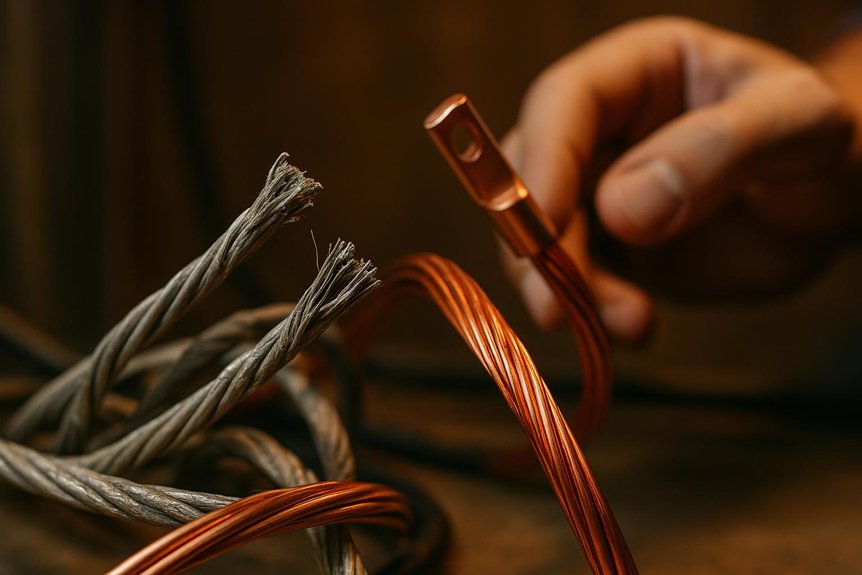
Aluminum Wiring Dangers and Replacement Options
You might not realize it, but if your home has aluminum wiring, you’re facing potential safety hazards. Aluminum wiring can lead to increased resistance, overheating, and oxidation, which pose serious fire risks. Recognizing symptoms like warm outlets or flickering lights is essential. Considering safer alternatives, such as copper wiring, is important for your home's safety. Wondering how to guarantee your electrical system is secure and efficient? Let’s explore the necessary steps for a safer home.
Aluminum Wiring Risks Explained
Although aluminum wiring was once a popular choice for electrical installation-and-wiring.html">installation-cost-and-requirements.html">installation-and-backup-power-options.html">installations, it poses significant risks that you can't ignore. The metal’s electrical conductivity is lower than copper, leading to potential overheating. Over time, aluminum wiring can oxidize, increasing resistance and creating a fire hazard.
Proper installation standards are vital; loose connections or improper terminations can exacerbate these issues. You should verify that any existing aluminum wiring meets current safety standards. This includes checking connections and using approved components designed for aluminum.
Regular inspections are essential to identify potential problems early. If you're uncertain, consulting a licensed electrician for an evaluation is advisable. Prioritizing safety and adhering to updated installation standards can help mitigate the inherent risks associated with aluminum wiring.
Why Was Aluminum Wiring So Popular?
During the mid-20th century, aluminum wiring gained popularity due to its cost-effectiveness and abundant supply. You might wonder why it became a preferred choice. The aluminum advantages were clear: it was cheaper than copper, reducing overall construction costs considerably.
In a historical context marked by rising copper prices and increased housing demands, aluminum became an attractive alternative for many builders and electricians.
Aluminum is lightweight and easier to handle, making installation faster and less labor-intensive. Its conductivity, while slightly less than copper, was deemed sufficient for residential use.
Lightweight and easy to handle, aluminum offered a quick and efficient installation process for residential wiring.
Manufacturers promoted these benefits, and builders quickly adopted aluminum wiring to meet the booming post-war housing market. Understanding these factors helps you appreciate why aluminum wiring seemed like a practical solution at the time.
Identifying Aluminum Wiring Issues
While aluminum wiring was initially celebrated for its cost-effectiveness, it soon revealed significant safety concerns that you shouldn't overlook. Identifying issues early can prevent hazards.
One common problem is the use of aluminum alloys, which can expand and contract, leading to loose connections. This loosening increases the risk of overheating and potential fires.
During wiring inspections, pay close attention to outlets and switches. Look for signs like warm cover plates or flickering lights, indicating poor connections.
Inspect the wiring for any corrosion or discoloration, as these are red flags. Ensure all connections are tight and secure.
If you notice any of these issues, consult a professional electrician immediately. Regular inspections are key to maintaining safety and preventing costly damages.
Does Your Home Have Aluminum Wiring?
To determine if your home has aluminum wiring, check the electrical panel for circuit breakers labeled “AL” or inspect the wiring itself for a silver color.
Pay attention to signs of wiring issues such as warm outlets, flickering lights, or a burning smell.
If you suspect problems, consult a licensed electrician to guarantee your home's safety.
Identifying Aluminum Wiring
Aluminum wiring was commonly used in homes built from the mid-1960s to late 1970s.
If your home dates back to this period, it's essential to check. Aluminum has a shorter wiring lifespan compared to copper, increasing the risk of electrical issues over time.
Use a flashlight to examine exposed wiring in basements or attics.
If you're uncertain, consult a licensed electrician to confirm the presence of aluminum wiring and guarantee your home's safety.
Signs of Wiring Issues
If you've identified potential aluminum wiring in your home, it's important to recognize signs of wiring issues that could pose safety risks.
Aluminum wiring is prone to specific wiring symptoms that demand attention. Watch for these key indicators of electrical malfunctions:
- Flickering Lights: If your lights flicker or dim unexpectedly, it might indicate poor connections due to aluminum's expansion and contraction.
- Warm Switches or Outlets: Feel your switches and outlets. If they're warm to the touch, it could mean faulty connections causing overheating.
- Burning Smell or Scorch Marks: A persistent burning smell or visible scorch marks around outlets and switches suggests insulation breakdown.
Addressing these symptoms promptly can prevent potential hazards, ensuring your home's electrical system remains safe and reliable.
The Dangers of Overheating and Corrosion
Aluminum wiring can lead to increased fire hazards due to overheating and corrosion.
You should be aware that oxidation at connections often causes failures, raising the risk of temperature-induced degradation.
Prioritize regular inspections to guarantee your home's safety and address these potential issues promptly.
Increased Fire Hazard Risks
When it comes to electrical safety in your home, understanding the risks associated with aluminum wiring is vital. Overheating and corrosion can greatly heighten fire hazard risks.
Aluminum expands more than copper when heated, which can loosen connections and lead to overheating. This poses a severe fire safety threat. Regular wiring inspections are important to catch these issues early. Without them, you’re at risk for dangerous situations.
Consider these potential hazards:
- Loose Connections: Heat expansion can cause wires to loosen over time.
- Corrosion: Aluminum is prone to oxidation, increasing resistance and heat.
- Overheating: Poor connections can cause excessive heat buildup.
Oxidation and Connection Failures
Even though aluminum wiring was once a popular choice, its tendency to oxidize can lead to serious connection failures. When aluminum is exposed to air, it forms an oxide layer that disrupts the electrical flow, compromising connection integrity.
This oxidation impact increases resistance, which can cause overheating at junctions. You’ll notice that connections may become loose or unreliable over time, posing a risk of electrical fires.
To maintain safety, regularly inspect all aluminum connections for signs of corrosion or discoloration. Tighten any loose connections and consider using anti-oxidant compounds to mitigate this issue.
If you’re unsure about the condition of your wiring, consult a professional electrician. Addressing these concerns promptly guarantees your home’s electrical system remains safe and efficient.
Temperature-Induced Degradation
While aluminum wiring offers certain benefits, its susceptibility to temperature-induced degradation is a critical concern. Temperature fluctuations cause aluminum to undergo thermal expansion, leading to loosening connections and increased resistance. This can result in overheating, posing a serious fire risk.
To better understand these dangers, consider:
- Thermal Expansion: Aluminum expands more than copper, causing connections to loosen over time.
- Increased Resistance: As connections loosen, resistance rises, creating heat and potential fire hazards.
- Corrosion: Heat accelerates corrosion, further degrading the wire’s integrity.
You’ve got to guarantee that aluminum wiring is regularly inspected and maintained.
Replacing it with copper or using aluminum-compatible connections can mitigate these risks.
Always prioritize safety by consulting a licensed electrician to evaluate and address any wiring concerns in your home.
Need an Electrician?
Find licensed electricians in your area. Same-day and emergency service available.
Find ElectriciansCall (866) 314-4454Safe Replacement Options for Aluminum Wiring
Replacing aluminum wiring is vital for guaranteeing electrical safety in your home. You should consider copper alternatives, which are reliable and durable. It's essential to arrange for professional assessments to evaluate your current setup. Experts can recommend appropriate wiring upgrades to enhance safety. Regular safety inspections will help identify potential issues early.
Here’s a quick comparison of materials:
| Material | Key Benefits |
|---|---|
| Copper | High conductivity, safe |
| Copper-clad | Cost-effective, stable |
| Copper-coated | Enhanced durability |
Engaging a certified electrician guarantees the job is done correctly. They’ll guide you through the process, ensuring compliance with local codes. Prioritizing these measures reduces the risk of electrical fires and enhances your home's overall safety. Act now to protect your investment and peace of mind.
Budgeting for Aluminum Wiring Replacement
When considering the upgrade to safer wiring, it's important to plan financially for the replacement of aluminum wiring. Start by evaluating cost-effective solutions while guaranteeing safety standards are met.
Upgrading to safer wiring requires careful financial planning and a focus on cost-effective, safety-compliant solutions.
You'll want to budget carefully, keeping in mind various expenses.
- Material Costs: Copper wiring and connectors can vary in price. Research current market rates for accurate estimates.
- Labor Expenses: Hiring skilled electricians is essential. Labor costs can depend on the complexity and size of your project.
- Financing Options: Explore available financing plans that allow you to spread costs over time, easing the financial burden.
Proper budgeting guarantees you address potential risks without compromising safety.
Choosing an Electrician for Aluminum Wiring
Selecting the right electrician is vital for safely addressing aluminum wiring issues. You’ll want to hire licensed electricians who've specific experience with aluminum wiring. This guarantees they’re familiar with the unique installation techniques required to prevent hazards like overheating or fire.
Don’t hesitate to ask for proof of licensing and inquire about their previous projects involving aluminum systems. Check for certifications that indicate specialized training and look for reviews or references from past clients.
An experienced electrician will assess your current wiring, recommend appropriate solutions, and execute replacements or repairs with precision. Remember, correctly handling aluminum wiring is critical for safety, so prioritize choosing professionals who are qualified and knowledgeable.
This careful selection will help avoid potential risks and secure a reliable electrical system.
Ensuring Long-Term Electrical Safety
Hiring the right electrician is just the start; now, focus on guaranteeing long-term electrical safety with aluminum wiring. To enhance long-term durability and electrical efficiency, you’ll need to take proactive steps. Here’s how:
- Regular Inspections: Schedule annual check-ups to spot and fix any potential issues before they escalate.
- Upgrade Connectors: Use aluminum-compatible connectors to prevent overheating and guarantee a secure connection.
- Consider Replacements: If feasible, replace aluminum wiring with copper to boost safety and efficiency.
These steps not only protect your home but also enhance the overall performance of your electrical system.
Always prioritize safety and efficiency by keeping up with maintenance and considering upgrades when necessary. Stay informed and proactive to maintain a safe environment.
Frequently Asked Questions
What Year Did Aluminum Wiring Become Common in Homes?
Aluminum wiring became common in homes during the mid-1960s, specifically around 1965.
In the wiring installation timeline, it gained popularity due to copper shortages.
As you explore aluminum wiring history, you’ll find it was used extensively until the mid-1970s.
Make sure you’re aware of potential risks and consider modern safety upgrades.
Always consult a professional electrician for proper guidance if you suspect your home has aluminum wiring.
Can Aluminum Wiring Be Repaired Instead of Replaced?
Yes, you can repair aluminum wiring instead of replacing it, but you must prioritize safety.
Use repair techniques like COPALUM crimps or AlumiConn connectors, ensuring you address safety concerns such as overheating and fire risks.
Always turn off the power before starting, and consider consulting a licensed electrician.
Regularly check connections for signs of wear.
These steps help maintain a safer electrical system in your home.
Are Insurance Premiums Higher for Homes With Aluminum Wiring?
Yes, insurance premiums can be higher for homes with aluminum wiring.
Insurers may view it as a risk due to potential wiring safety issues, which could lead to increased insurance costs.
To manage this, confirm your wiring is regularly inspected and consider updating it.
Replacing aluminum with copper or using proper connectors can enhance safety.
Consult with an electrician to explore your options and possibly lower your insurance expenses.
What Are the Signs of Aluminum Wiring Failure?
Look for signs like flickering lights, warm outlets or switches, and strange odors.
Aluminum conductivity issues can cause connections to loosen, creating fire hazard risks. If you notice scorch marks or buzzing sounds from outlets, take action immediately.
Regularly inspect your wiring for any discoloration or melted insulation. Address these issues promptly to guarantee safety, as aluminum wiring requires careful monitoring to prevent dangerous electrical failures.
Is There a Home Insurance Discount for Replacing Aluminum Wiring?
Yes, you can often get insurance savings by replacing aluminum wiring.
Many insurance companies view wiring upgrades as a safety improvement, which reduces risk. When you replace aluminum wiring with copper, you enhance your home's safety and may qualify for a discount.
Always check with your insurance provider to confirm eligibility and specific requirements for discounts related to electrical upgrades.
Prioritize safety and guarantee installations meet current standards.
Browse our national electrical directory to find certified professionals near you. See pricing guides for Tampa, San Diego, Las Vegas, Sacramento, San Francisco, and more.


