Knob and Tube Wiring Should You Replace It
You're faced with the challenge of determining whether to replace knob and tube wiring in your home. This outdated system, lacking modern safety features like grounding, presents significant risks including fire hazards. Understanding its limitations and how it compares to current electrical standards is essential. The decision to replace it involves weighing the costs against the benefits of enhanced safety and efficiency. But what exactly does this process entail, and how should you proceed?
Safety Concerns With Knob and Tube Wiring
While knob and tube wiring was once a standard electrical installation-and-backup-power-options.html">installation, it poses several safety concerns today. You’ll find that outdated wiring standards can lead to significant fire hazards.
During home inspections, professionals often flag these systems due to their inability to handle modern electrical loads safely. This can impact your home value and lead to costly insurance implications, as many companies are reluctant to insure homes with such wiring.
To guarantee electrical safety, consider renovation planning that includes electrical upgrades. Replacing knob and tube wiring aligns your home with current standards, enhancing safety and increasing market appeal.
How to Identify Knob and Tube Wiring
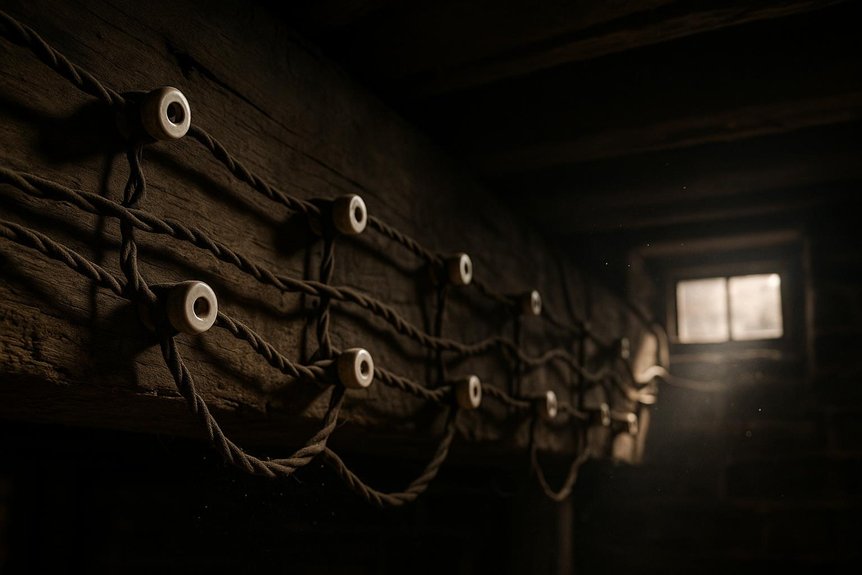
Curious about how to identify knob and tube wiring? Start by conducting a thorough wiring inspection in your home. Look for white ceramic knobs and black tubes, which are key components of this system. These knobs support the wires, while tubes protect them as they pass through wood structures. Check your basement, attic, and crawl spaces where these might be visible. Also, note the absence of a ground wire, a typical feature of modern systems.
Here’s a quick reference table:
| Feature | Description |
|---|---|
| Knob Identification | White ceramic knobs |
| Tube Appearance | Black tubes through wood |
| Wire Type | Single, ungrounded conductors |
| Location | Basements, attics, crawl spaces |
| Insulation | Cloth or rubber-coated wiring |
Spotting these details guarantees accurate knob identification.
Understanding Knob and Tube Wiring
When delving into the intricacies of knob and tube wiring, it’s essential to grasp its basic structure and historical context. Originating in the late 19th century, this system was prevalent until the 1940s.
It features two separate wires—one hot, one neutral—strung along porcelain knobs. These knobs support the wires while tubes protect them when passing through beams. This early method lacked a ground wire, making it less safe by today’s standards.
Installation techniques involved spacing wires several inches apart to reduce heat and prevent contact. Electricians utilized simple, open layouts, which facilitated cooling.
Understanding these aspects helps you evaluate its safety and compatibility with modern electrical demands, guiding informed decisions on replacement or retention.
How Does Knob and Tube Wiring Work?
You'll find that knob and tube wiring functions using individual copper conductors, which are supported by ceramic knobs and protected by tubes when passing through joists.
This system lacks modern insulation, raising safety concerns, especially with its inability to handle today's electrical loads.
As you assess this wiring, consider these limitations and potential hazards to guarantee a safe and efficient electrical system.
Components of Knob Wiring
Although knob and tube wiring is an outdated electrical system, understanding its components is essential for proper replacement and safety considerations.
The primary knob components include ceramic knobs and tubes, which support and insulate the wiring materials. Knobs are mounted on beams or joists, providing anchor points to keep wires securely elevated.
Tubes, also ceramic, protect wires as they pass through wooden structures, minimizing contact with combustible materials. The wiring materials used are typically single-insulated copper wires, lacking a grounding conductor.
This setup allows for heat dissipation but doesn't support modern electrical demands. Recognizing these components helps you assess whether it's time to replace the system, ensuring your home's electrical integrity and reducing potential fire hazards.
Insulation and Safety Concerns
Despite its historical significance, knob and tube wiring presents several insulation and safety concerns that modern homeowners must address. This wiring lacks a ground wire, increasing shock and fire risks.
Traditional insulation types, such as rubber, degrade over time, leaving wires exposed. You’ll find that modern insulation types, like fiberglass or spray foam, can’t safely envelop knob and tube wiring, as they cause overheating.
To enhance safety, consider vital upgrades. Installing circuit breakers and ground fault circuit interrupters (GFCIs) can mitigate risks.
Regular inspections are essential to identify wear and tear. Professional electricians can recommend targeted safety upgrades, ensuring your system meets current standards.
Electrical Load Limitations
Understanding the electrical load limitations of knob and tube wiring is essential for maintaining a safe home environment. This outdated system can struggle with modern energy demands, affecting your home’s safety and functionality. Its load capacity is limited, making it unsuitable for today’s high-energy appliances.
- Circuit limitations can lead to overheating and potential fire hazards.
- Appliance compatibility issues arise as many modern devices exceed the wiring's capacity.
- Energy efficiency is compromised, often resulting in higher utility costs.
- Renovation needs may increase, impacting home value and insurance.
Consider how these factors affect your decision to upgrade. The limitations of knob and tube wiring aren't just about inconvenience—they directly influence your home's safety and efficiency.
Why Is Knob and Tube Wiring Considered Outdated?
Given the advancements in electrical safety standards, knob and tube wiring is considered outdated due to its inability to support modern electrical loads and its lack of grounding. Historically, this wiring method was sufficient for the limited electrical needs of early 20th-century homes. However, it doesn't meet modern standards, which prioritize safety and efficiency. The absence of grounding makes it vulnerable to electrical shocks and fire hazards. Moreover, the insulation material used in knob and tube wiring deteriorates over time, leading to increased risks.
Here's a comparison:
| Aspect | Knob and Tube Wiring |
|---|---|
| Historical Context | Early 20th Century |
| Modern Standards | Does Not Comply |
| Grounding Capability | None |
You should consider upgrading to guarantee safety and compliance with today's electrical requirements.
Frequent Problems With Knob and Tube Wiring
Knob and tube wiring presents several frequent problems that homeowners should be aware of. As an outdated technology, it poses significant wiring hazards that can compromise your home's safety.
You’ll find that:
- Insulation Deterioration: Over time, the insulation can become brittle, leading to potential short circuits.
- Inadequate Capacity: Designed for a time when electrical demands were minimal, it struggles with modern appliances, risking overloads.
- Lack of Grounding: This system lacks a ground wire, increasing the risk of electric shock.
- Improper Modifications: Over the years, homeowners or unqualified electricians may have made unsafe modifications.
These issues are critical, as they can lead to fires or electrical failures.
Understanding these problems helps you make informed decisions about your electrical system's safety.
Benefits of Replacing Knob and Tube
While considering home safety, replacing knob and tube wiring offers numerous advantages that enhance both functionality and security.
Upgrading to modern systems improves energy efficiency and guarantees code compliance, meeting today's electrical standards. This shift markedly reduces fire risks, enhancing fire prevention and system reliability. By eliminating outdated wiring, you align with modern safety protocols, which can positively impact insurance implications, potentially lowering premiums.
Electrical upgrades not only boost your home's safety but also increase home value, making it more attractive to future buyers.
Enhanced system reliability minimizes electrical failures, providing peace of mind. With these benefits, replacing knob and tube wiring transforms your home's electrical infrastructure into a robust and secure system, equipping it for the demands of contemporary living.
Need an Electrician?
Find licensed electricians in your area. Same-day and emergency service available.
Find ElectriciansCall (866) 314-4454Cost of Upgrading Your Wiring System
When considering the cost of upgrading your wiring system, you’ll need to evaluate replacement expenses, which can vary based on your home's layout and wiring complexity.
You might also experience potential insurance savings, as modern systems often reduce premiums.
Ultimately, think of this upgrade as a long-term investment that enhances safety and boosts property value.
Evaluating Replacement Costs
Upgrading your wiring system from knob and tube to modern alternatives can be a substantial investment, but it's vital for safety and efficiency. Conducting a thorough cost analysis helps you understand the financial commitment.
Consider these budget considerations to guide your decision:
- Material Costs: Modern wiring materials are more expensive but offer enhanced safety features.
- Labor Expenses: Hiring a licensed electrician is essential, and labor fees can vary based on your location and the complexity of the job.
- Permits and Inspections: You'll need to factor in costs for necessary permits and professional inspections to guarantee compliance with local codes.
- Potential Upgrades: Additional upgrades, like new outlets or breakers, can increase overall costs but improve functionality.
Planning your budget carefully guarantees a smooth upgrade process.
Potential Insurance Savings
One significant advantage of replacing knob and tube wiring is the potential savings on your home insurance premiums. Insurers often offer insurance discounts when you upgrade to modern wiring. This is because newer systems reduce fire risks, aligning with policy requirements.
During a risk assessment, insurance companies evaluate the safety and reliability of your home's electrical system. By eliminating outdated wiring, you decrease potential hazards, which can lead to lower premiums.
Additionally, replacing old wiring can enhance your home's value. A modern electrical system reassures buyers and insurers alike, positioning your property as safer and more desirable.
Long-Term Investment Benefits
Although the initial cost of replacing knob and tube wiring might seem substantial, it represents a strategic long-term investment in your property's safety and efficiency.
Upgrading guarantees you'll benefit from modern electrical standards, enhancing both functionality and reliability. Here are some key long-term benefits:
- Long term savings: Reduced risk of electrical fires minimizes costly repairs and insurance claims.
- Increased property value: Modern wiring attracts potential buyers, boosting your home's market appeal.
- Energy efficiency: New wiring supports energy-efficient appliances, cutting down on utility bills.
- Safety enhancements: Improved safety for your family, reducing hazards associated with outdated wiring.
How to Replace Knob and Tube Wiring
Replacing knob and tube wiring involves a detailed, step-by-step process to guarantee safety and compliance with modern electrical standards. First, disconnect the old system to confirm safety.
You’ll need to gather modern wiring materials, including non-metallic sheathed cables and appropriate connectors. Carefully plan your installation techniques, mapping out circuits to avoid overloading.
Remove the old wiring, taking care not to damage existing structures. Install new junction boxes where necessary, ensuring they’re accessible and properly grounded.
Run new wires through walls and ceilings, securing them with clips. Connect to outlets, switches, and fixtures, checking each connection for tightness and accuracy.
Finally, test the entire system for continuity and grounding to confirm it’s safe and compliant with current codes.
Choosing the Right Electrician
When choosing an electrician for knob and tube wiring replacement, you should prioritize those with proven credentials and extensive experience.
Make certain to verify their licensing and insurance to guarantee compliance with safety standards.
Additionally, comparing quotes and services will help you find the best fit for your specific needs and budget.
Credentials and Experience Matter
Selecting the right electrician for knob and tube wiring replacement is essential, especially since this task requires specialized knowledge and skills. You need someone who meets certification standards and possesses extensive installation experience.
Look for an electrician with electrical expertise and safety training to guarantee your project adheres to industry knowledge and code compliance.
Consider these critical attributes:
- Troubleshooting skills: Essential for diagnosing and resolving complex issues.
- System upgrades: Experience in modernizing outdated systems efficiently.
- Risk assessment: Ability to identify potential hazards and mitigate them.
- Project management: Guarantees the job is completed on time and within budget.
An electrician with these qualifications assures a safe, effective replacement, keeping your home compliant and your family safe.
Verify Licensing and Insurance
Verifying your chosen electrician is licensed and insured forms a fundamental part of selecting the right professional for knob and tube wiring replacement.
First, confirm the electrician meets all licensing requirements specific to your locality. Licensing demonstrates that the electrician has undergone necessary training and adheres to safety standards. You can verify this by checking with local regulatory bodies.
Additionally, don't overlook insurance coverage. Adequate insurance protects you from potential liabilities, covering damages or injuries that might occur during the project. Ask for proof of both general liability and workers' compensation insurance to guarantee thorough protection.
This due diligence not only safeguards your home but also ensures your wiring replacement is handled by qualified, responsible professionals.
Compare Quotes and Services
How should you go about comparing quotes and services to choose the right electrician for your knob and tube wiring replacement? Start by gathering multiple estimates to perform thorough cost comparisons.
Evaluate each electrician’s proposal with a focus on both price and detailed service evaluations. Look beyond the numbers to guarantee quality and reliability.
- Assess Experience: Choose electricians with extensive experience in knob and tube wiring.
- Review Materials: Verify that high-quality, code-compliant materials are included in the quote.
- Check References: Contact past clients to gauge satisfaction and reliability.
- Analyze Timelines: Confirm the proposed timeline aligns with your needs and minimizes disruption.
What to Expect During Replacement
When commencing the replacement of knob and tube wiring, you'll encounter a process that involves meticulous planning and execution. Establish a clear replacement timeline and set realistic project expectations.
Be prepared for disruption factors, such as temporary power outages and restricted access to certain areas. Implement temporary solutions to maintain essential services.
Verify all electrical upgrades meet compliance requirements, focusing on future-proofing systems to accommodate technological advancements.
Post replacement considerations should include thorough inspections to confirm safety and functionality. Anticipate potential adjustments to align with modern electrical standards.
These steps guarantee a seamless shift, enhancing your home's safety and efficiency while minimizing inconvenience. Your proactive approach will lead to a successful upgrade of your electrical infrastructure.
Should You Replace Knob and Tube Wiring?
While evaluating the need to replace knob and tube wiring, consider the inherent limitations and potential hazards associated with this outdated system. Its historical significance doesn’t outweigh the risks it poses today.
The wiring lacks a grounding conductor, increasing the chance of electrical shock and fire. Aging insulation is prone to deterioration, leading to exposure and further safety risks.
Replacing knob and tube wiring is prudent due to:
- Increased load demands: Modern appliances exceed the original capacity.
- Insurance issues: Many providers refuse coverage for homes with this wiring.
- Installation challenges: Repairs are complex, often requiring wall removal.
- Safety concerns: Fire hazards and lack of grounding make it unsafe.
Addressing these factors guarantees a safer, more efficient electrical system in your home.
How Home Electrical Systems Evolved
Understanding the evolution of home electrical systems provides insight into why replacing knob and tube wiring is essential. Initially, historical wiring relied on knob and tube methods, suitable for the low electrical demands of early 20th-century homes. However, as electrical innovations emerged, these systems became outdated. Modern electrical systems support higher loads and offer enhanced safety features.
| Era | Wiring Type | Key Innovation |
|---|---|---|
| Early 1900s | Knob and Tube | Basic Insulation |
| Mid-20th Century | Conduit Systems | Grounding Protection |
| Present Day | Non-metallic Cable | Circuit Breakers |
Upgrading your wiring not only aligns with advanced safety standards but also accommodates today’s technological demands. As electrical innovations continue, understanding these developments helps you appreciate the need for modern electrical infrastructures.
Frequently Asked Questions
Can Insurance Companies Deny Coverage Due to Knob and Tube Wiring?
Yes, insurance companies can deny coverage due to knob and tube wiring.
They often cite safety concerns as a primary reason. This type of wiring doesn’t meet modern safety standards, increasing risks like fire hazards.
Insurance policies frequently require updates to electrical systems before granting coverage.
You should check with your provider to understand specific requirements and consider upgrading your wiring to avoid potential coverage issues.
Does Knob and Tube Wiring Affect Home Resale Value?
Yes, knob and tube wiring affects home resale value markedly.
Buyers often have resale concerns due to outdated systems. Safety implications also play an essential role, as this type of wiring lacks grounding and insulation, increasing fire risks.
You’ll find that modern buyers and inspectors prefer updated electrical systems for safety and efficiency.
Upgrading the wiring can enhance your home's appeal and potentially increase its market value.
Are There Any Modern Updates Compatible With Knob and Tube Systems?
Yes, you can integrate modern alternatives like AFCI breakers with knob and tube systems to address safety concerns.
These breakers provide enhanced protection by detecting arc faults, which are common in older wiring.
However, it’s vital to guarantee all connections are secure and the system is inspected regularly.
While some updates can improve safety, complete replacement is often recommended for compatibility with advanced electrical loads and devices.
What Is the Lifespan of Knob and Tube Wiring?
Knob and tube wiring typically lasts 70 to 100 years. However, you should assess wiring safety regularly, as aging can lead to electrical hazards.
Insulation may degrade, increasing fire risks. Verify connections are secure and not overloaded. If you notice any issues, consult a professional electrician.
While it can still function, integrating modern safety updates is essential for reducing potential hazards and guaranteeing a safe home environment.
How Does Knob and Tube Wiring Impact Energy Efficiency?
Knob and tube wiring impacts energy efficiency by often leading to energy loss due to outdated insulation.
This type of wiring lacks modern grounding, increasing safety concerns, and can cause higher energy consumption as it doesn’t support today’s energy demands efficiently.
You’ll find that its design, with separate wires, results in heat loss, further reducing efficiency.
Consider upgrading to modern wiring to enhance safety and optimize energy usage.
Browse our national electrical directory to find certified professionals near you. See pricing guides for Los Angeles, Houston, Miami, Brooklyn, Albuquerque, and more.


