Signs of Mold in Your Home What to Look For
You might not realize it, but mold-vs-mildew-what-is-the-difference.html">mold-behind-walls-how-to-detect-and-remove-hidden-mold.html">mold-in-air-ducts-signs-and-professional-cleaning.html">mold-causes-detection-and-removal.html">mold-removal-vs-professional-remediation.html">mold-inspection-and-testing-what-to-expect.html">mold can stealthily invade your home, manifesting in subtle yet telling signs. Have you noticed a persistent musty odor or unexplained health symptoms like allergies or respiratory issues? Dark spots and discoloration, particularly in moisture-prone areas, should catch your attention. Don’t ignore bubbling paint or warped surfaces, either. These could be telltale signs of water damage, hinting at concealed mold issues. What's lurking in those hidden corners?
Why Early Mold Detection Matters
When mold begins to grow in your home, detecting it early is crucial to prevent extensive damage and potential health risks. Implementing effective mold prevention strategies is an important component of home maintenance.
You should regularly inspect areas prone to moisture, like basements, bathrooms, and kitchens. Utilize dehumidifiers to maintain ideal humidity levels, ideally between 30% and 50%. Address leaks promptly, as even minor water intrusion can promote mold growth.
Confirm proper ventilation by using exhaust fans and opening windows when possible. It's important to clean and dry any water-damaged materials within 24 to 48 hours.
Identifying Unexplained Health Symptoms
You might notice persistent respiratory issues and allergies that don't respond to typical treatments, which could indicate mold exposure in your home.
Additionally, skin irritations and frequent headaches are common symptoms linked to mold presence.
It's important to monitor these health changes, as they often signal a hidden mold problem requiring immediate attention.
Respiratory Issues and Allergies
Experiencing persistent respiratory issues or allergies might signal a hidden mold problem in your home. Mold exposure can lead to a range of symptoms, including sneezing, coughing, and nasal congestion.
These respiratory issues often arise due to mold spores acting as potent allergy triggers. When inhaled, they can irritate your airways, causing discomfort or even exacerbating asthma symptoms.
You might notice these health problems worsening in specific areas of your home or during particular weather conditions. Pay attention to symptoms that persist despite typical treatments or when you're indoors for extended periods.
Identifying the source of these issues early can help in taking effective steps to address mold growth, ensuring a healthier living environment for you and your family.
Skin Irritations and Headaches
Curiously, have you noticed unexplained skin irritations or persistent headaches? These symptoms might be more than just a minor inconvenience—they could be signs of mold in your home.
Mold spores can cause skin reactions, leading to redness, itching, or a rash. When mold spores are inhaled or come into contact with your skin, they can trigger allergic responses.
Headache triggers include volatile organic compounds (VOCs) released by mold. These compounds can irritate your central nervous system, resulting in headaches that seem to come from nowhere.
If you’re experiencing these symptoms without a clear cause, consider investigating your living environment for mold. Identifying and removing mold early can alleviate these health issues and improve your overall well-being.
Recognizing Musty Odors in Your Home
How can you detect the subtle presence of musty odors in your home? Start by identifying areas where mold sources might thrive, such as basements, bathrooms, or under sinks. These locations often have higher humidity, making them prime spots for mold growth.
Pay attention to odor intensity; a faint mustiness might indicate early stages of mold, while a strong, pervasive smell suggests more extensive contamination. Use your sense of smell strategically by moving from room to room, noting any changes in odor.
Ventilation plays a vital role, so open windows and doors to see if the smell dissipates or persists. If the musty odor lingers despite ventilation, it's a clear indicator of potential mold issues needing further investigation.
Detecting Discoloration in Your Home
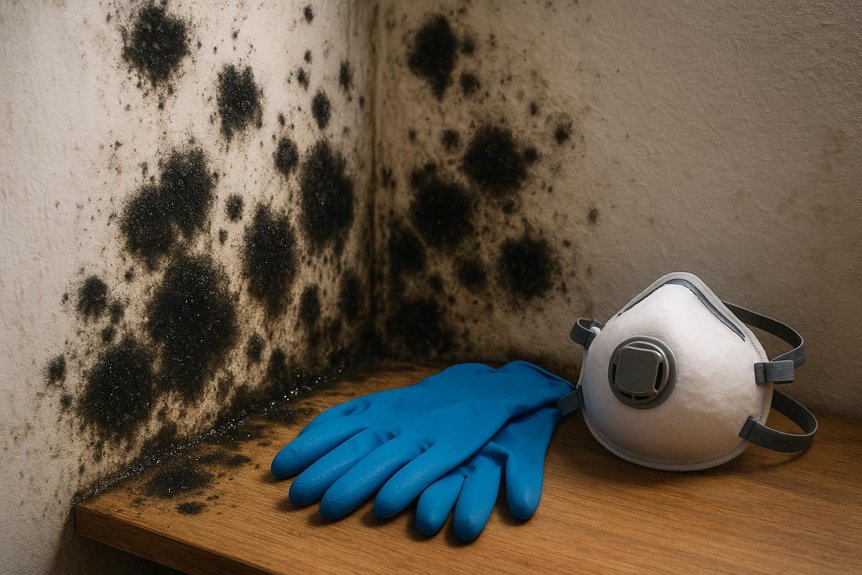
When inspecting your home for mold, look for discoloration on walls, ceilings, and other surfaces. Different mold types can cause various colors, including black, green, or brown patches. These discolorations often appear in areas with high humidity or where moisture sources are present, such as bathrooms and kitchens.
Check corners, behind furniture, and near windows, as these are common spots for mold growth. Pay attention to areas where condensation might occur, like around plumbing fixtures.
The discoloration might be subtle, so scrutinize surfaces under good lighting. Mold thrives where moisture lingers, so identifying these spots can help you address potential issues early.
Regularly monitoring these areas guarantees you catch signs of mold before they escalate into a more significant problem.
Need Mold Remediation?
Find certified mold removal professionals in your area. Inspection and testing services available.
Find Mold ProsCall (866) 466-9024Spotting Water Damage and Leaks
Identifying discoloration is just one part of addressing mold issues; it's equally important to spot water damage and leaks, as these are often the sources of moisture that encourage mold growth.
Begin with a thorough moisture assessment. Check for bubbling or peeling paint, and inspect ceilings and walls for dark spots. Use leak detection tools to identify hidden leaks behind walls or under floors.
Pay attention to musty odors, as they can indicate moisture presence. Examine plumbing fixtures, pipes, and appliances for signs of dripping or pooling water. Look for warped surfaces that might suggest a persistent leak.
Regularly monitor your home's humidity levels, maintaining them below 60% to minimize mold risk. Early detection and repair are vital to prevent mold proliferation.
Why Surfaces Warp and Peel
Although often overlooked, understanding why surfaces warp and peel is essential for maintaining your home's integrity.
Surface materials like wood, paint, and drywall are susceptible to damage when exposed to moisture accumulation. When moisture infiltrates these materials, it causes them to expand and contract. This repeated movement weakens the bond between layers, leading to warping or peeling.
You'll notice that wood floors might buckle or paint may bubble and flake. High humidity levels exacerbate this problem, promoting further degradation.
Guarantee proper ventilation and quickly address leaks to prevent moisture buildup. Regularly inspect areas prone to dampness, such as bathrooms and kitchens.
Have You Checked Your Basement Lately?
How often do you inspect your basement for signs of mold? Mold thrives in the basement's damp, poorly ventilated spaces. Begin with basement ventilation and moisture control to mitigate risk. Examine walls and corners for discoloration or a musty smell.
Here's a quick reference table:
| Indicator | Possible Cause | Solution |
|---|---|---|
| Musty Odor | Poor ventilation | Improve air circulation |
| Wall Discoloration | Excess moisture | Install a dehumidifier |
| Peeling Paint | Humidity fluctuations | Apply moisture-resistant coating |
Ensure regular checks and address moisture sources. Seal any leaks and maintain consistent airflow. Proper ventilation controls humidity, reducing mold growth. By monitoring these aspects, you’ll prevent mold from taking hold, safeguarding your home’s integrity.
Frequently Asked Questions
How Can Mold Affect Pets in the Home?
Mold affects pets by causing respiratory issues, skin irritation, and digestive problems.
You'll notice mold symptoms like sneezing, coughing, or excessive scratching. Pet health can decline with prolonged exposure, leading to lethargy or loss of appetite.
Verify you regularly check damp areas and improve ventilation to minimize mold risks.
If symptoms persist, consult a veterinarian to address any mold-related health concerns in your pets.
What Tools Help in Detecting Hidden Mold?
To detect hidden mold, use a mold test kit and moisture meter.
The mold test kit helps identify airborne spores, giving you insights into the mold type present. A moisture meter detects damp areas, pinpointing potential mold growth spots.
These detection methods provide objective data, allowing you to address the issue effectively.
Make sure you follow the instructions precisely for accurate results in your home environment.
Can Mold Grow in Air Conditioning Systems?
Yes, mold can grow in air conditioning systems. When moisture accumulates, it creates an ideal environment for mold, impacting air quality and posing health risks.
You might notice a musty odor or experience allergy-like symptoms. Regular maintenance, including cleaning filters and ducts, helps prevent mold growth.
To guarantee safety, use a hygrometer to monitor humidity levels and keep them below 60%, reducing the chance of mold development.
Are There Any Mold-Resistant Materials for Home Construction?
Yes, there are mold-resistant materials for home construction. You can use mold-resistant paints, which contain antimicrobial agents that inhibit mold growth on walls.
For flooring, consider mold-resistant options like vinyl or tile, as they don't absorb moisture easily. These materials help maintain a healthier indoor environment by reducing the likelihood of mold development.
It's essential to guarantee proper installation and ventilation to maximize their effectiveness.
How Does Humidity Contribute to Mold Growth?
Humidity causes mold growth by providing moisture that mold spores need to thrive.
When humidity levels exceed 60%, it creates an ideal environment for molds. You can manage this by addressing causes of humidity, like poor ventilation and water leaks.
Implement prevention strategies such as using dehumidifiers, ensuring proper ventilation, and fixing leaks promptly.
Regularly monitor humidity levels to keep them in check, preventing mold proliferation.
Browse our national mold remediation directory to find certified professionals near you. See pricing guides for Los Angeles, Orlando, Houston, Brooklyn, Miami, and more.