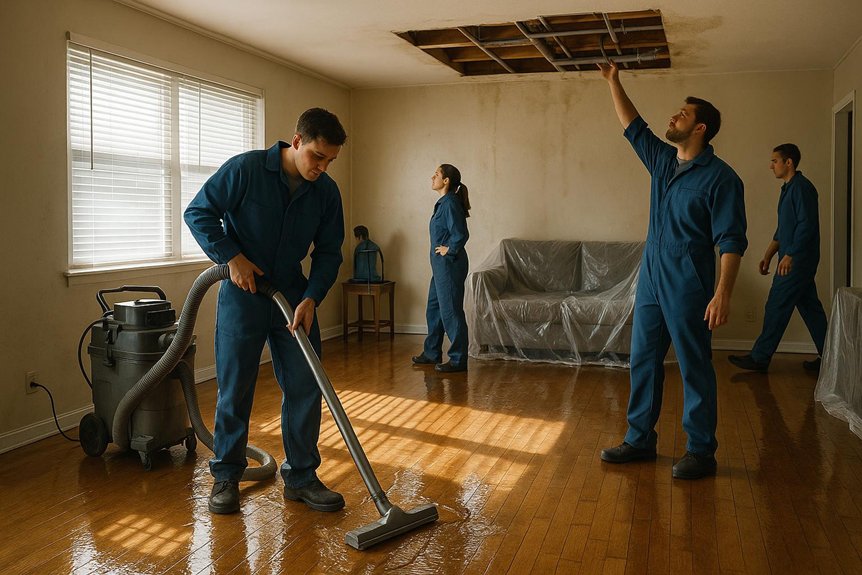
Water Damage Behind Walls Hidden Damage Signs
You're likely unaware of the hidden dangers lurking behind your walls. water-damage-vs-flood-damage-insurance-differences.html">water-damage-restoration-services.html">water-damage-restoration-equipment-and-techniques.html">water-heater-leak-damage-and-prevention.html">Water damage often goes unnoticed until it causes serious issues, such as structural weakness and mold growth. Discoloration, peeling paint, and musty odors are key indicators of moisture problems. You might also see warped surfaces or notice unexpected increases in your water bill. Recognizing these signs early is essential, but what tools and expertise are needed to effectively tackle these stealthy intrusions?
Preventing Hidden Water Damage
Prioritize roof maintenance to avoid leaks, and schedule gutter cleaning to guarantee proper drainage. Consider basement waterproofing techniques to protect against moisture infiltration.
Implement effective drainage solutions around your property to divert water away from the foundation, reducing the need for costly foundation repairs. Control indoor humidity with dehumidifiers and verify appliance checks for leaks, especially in areas like kitchens and laundry rooms.
Don’t overlook seasonal preparations; inspect weatherstripping and seals before the rainy season. These proactive measures help safeguard your home’s structure from the costly effects of hidden water damage.
Early Signs of Water Intrusion
When you notice discoloration or stains on your walls, it's a clear indicator of water intrusion behind the surface.
Additionally, a persistent musty odor often signals the presence of mold or mildew resulting from hidden moisture.
Identifying these early signs can help you address potential water damage before it escalates into more severe structural issues.
Discoloration and Stains
Although often overlooked, discoloration and stains are pivotal early indicators of water intrusion behind walls. You should pay attention to discoloration patterns, as they can reveal the direction of water flow or pooling.
Stain sources often include leaky pipes, roof damage, or faulty windows, resulting in varied colorations such as yellow, brown, or gray. These stains might appear blotchy or streaked, hinting at the severity and duration of the water exposure.
To accurately identify water damage, inspect areas where moisture is likely to accumulate, such as near plumbing fixtures or beneath windows. Regularly monitoring these areas allows for early detection and intervention, preventing further structural damage.
Always investigate the root cause of any discoloration to effectively address the problem.
Musty Odor Presence
Detecting a musty odor can be an early sign of water intrusion behind walls, often indicating mold or mildew growth. This smell results from microbial activity thriving in damp, hidden spaces.
Mold growth not only damages structures but also impacts air quality, posing potential health risks. You might notice this odor in specific areas, suggesting localized water damage.
To confirm, inspect for additional signs like increased humidity or peeling paint. Consider using moisture meters or infrared cameras to pinpoint moisture accumulation.
Addressing the source of water intrusion promptly prevents further deterioration and maintains healthy air quality. Regular maintenance and swift action are essential in mitigating the adverse effects of hidden water damage, ensuring a safe and sound environment.
Musty Odors: Hidden Moisture Clues
If you notice a persistent musty odor in your home, it might be a sign of hidden moisture issues behind the walls.
A musty environment often indicates concealed moisture sources that need immediate attention. Here’s how you can identify and address these clues:
- Inspect for Leaks: Check plumbing fixtures and roofs. Undetected leaks can contribute to moisture buildup.
- Evaluate Ventilation: Poor air circulation can trap humidity, creating a musty environment.
- Check Humidity Levels: Use a hygrometer to monitor indoor humidity, ideally keeping it below 60%.
- Assess Wall Integrity: Look for soft spots or discoloration, which may indicate moisture infiltration.
Addressing these factors promptly can prevent further damage and maintain a healthy indoor environment.
Peeling Paint and Wallpaper Revelations
When paint or wallpaper starts peeling, it's often more than just an aesthetic issue; it can signify underlying water damage. Moisture behind walls causes paint to lose adhesion, resulting in paint bubbles and peeling wallpaper.
You’ll notice these signs particularly in areas with high humidity or where leaks occur. Inspect the areas around windows, plumbing fixtures, and roofs, as these are common entry points for water.
To diagnose the problem, gently press on the bubbled paint. If it feels soft, moisture is likely present. Peeling wallpaper might also emit a damp odor, further indicating water intrusion.
Addressing these signs promptly prevents further structural damage and potential mold growth. Regular maintenance and inspections can help you catch these issues early.
Warped Walls: Structural Warnings
While examining your home, you might notice walls that appear uneven or bulging, which should prompt immediate attention.
These warps can signal underlying issues affecting your home's structural integrity. Moisture infiltration often undermines walls by compromising moisture barriers and allowing water to seep through.
Here's what you should look for:
- Bulging or Leaning: Walls that bulge or lean can indicate compromised structural integrity due to prolonged moisture exposure.
- Cracks and Gaps: These often appear as the wall shifts, weakening its overall stability.
- Discoloration: Dark spots or stains often signify moisture retention behind the surface.
- Soft Spots: Press gently on suspicious areas; soft spots can reveal hidden water damage.
Address these signs promptly to maintain your home's stability.
Need Water Damage Help Now?
Find certified water damage restoration professionals in your area. Emergency response available 24/7.
Find Restoration Pros Call (866) 466-7560Unexplained Spikes in Your Water Bill
Could an unexpected increase in your water bill be signaling a hidden issue? When you notice water bill anomalies, it’s essential to investigate. Such spikes often indicate unexpected leaks behind walls. These leaks mightn't be visible immediately, but they can cause significant damage over time.
Your plumbing system should be your first point of inspection. Check all accessible pipes for any signs of moisture or corrosion. Listen for sounds of dripping or running water when fixtures are off.
Inspect your plumbing first: look for moisture, corrosion, and listen for dripping when fixtures are silent.
If you can't pinpoint the source, consider the possibility of leaks in concealed areas. Addressing these anomalies promptly helps prevent further damage to your home and unnecessary water expenses.
Monitor your bill closely to catch these issues early.
Essential Tools to Detect Water Damage
Unusual spikes in your water bill might hint at hidden leaks, prompting the need for effective detection tools. To guarantee you address water damage correctly, consider these essential tools:
- Moisture Meters: These devices measure the moisture content in materials, helping you pinpoint damp areas behind walls. They're vital for evaluating the extent of water infiltration.
- Thermal Imaging Cameras: Use these to detect temperature variations caused by moisture. They provide a visual map of the affected areas, making it easier to identify leaks.
- Endoscopic Cameras: These are small, flexible cameras that let you inspect hidden spaces within walls without causing damage.
- Leak Detectors: These devices monitor water flow and alert you to irregularities, helping prevent extensive damage.
Each tool offers unique insights, guaranteeing thorough detection.
Should You Call in the Pros?
When facing water damage behind walls, consider whether professional expertise and specialized equipment are crucial to effectively address the issue.
Weigh the costs against potential DIY risks, such as incomplete repairs that could lead to further complications.
Engaging professionals can help guarantee thorough solutions, minimizing long-term damage and safeguarding your property’s integrity.
Expertise and Equipment Needed
Addressing water damage behind walls requires both specialized expertise and the right equipment, making it essential to evaluate whether professional intervention is necessary.
Professionals use advanced tools that you mightn't have at home, ensuring thorough detection and restoration. Here’s what they bring to the table:
- Moisture Meters: These devices accurately measure moisture levels, pinpointing hidden dampness.
- Thermal Imaging: This technology identifies temperature variations, revealing water intrusion areas without invasive methods.
- Specialized Training: Professionals possess knowledge in understanding complex water damage patterns and structural implications.
- Comprehensive Solutions: Experts offer tailored strategies for repair and prevention, minimizing future risks.
Considering these factors, professional services can be invaluable in managing water damage effectively.
Cost vs. DIY Risks
While evaluating water damage behind walls, it’s crucial to weigh the costs against the risks of a DIY approach. Conduct a thorough cost analysis to determine if professional intervention is warranted.
Hiring experts might seem expensive, but DIY challenges like inadequate tools, misdiagnosing problems, or improper repairs can escalate costs unexpectedly.
Consider the complexity of hidden damage—professionals have the experience to identify and address issues you might overlook.
DIY attempts often lack the precision and expertise required, leading to potential structural problems and safety hazards.
Assess your skill level honestly. If you're not confident in handling the intricacies of the task, calling in the pros could save you time, money, and stress, ensuring a thorough and reliable resolution.
Long-Term Damage Prevention
Effective long-term damage prevention hinges on expert intervention. You can't underestimate the importance of professionals when dealing with potential water damage behind walls.
They've the expertise to identify hidden issues and implement solutions like moisture barriers and routine inspections. Here's why calling in the pros is essential:
- Comprehensive Assessment: Professionals conduct thorough inspections, identifying even the smallest signs of moisture intrusion.
- Advanced Tools: They use specialized equipment to detect moisture levels without invasive methods.
- Preventive Measures: Experts install moisture barriers that protect against future water damage effectively.
- Routine Inspections: Regular check-ups guarantee early detection and mitigation of issues, preventing costly repairs.
Why Hidden Water Damage Matters
Hidden water damage matters because it silently undermines the structural integrity of your home. When water damage occurs due to hidden leaks, it seeps into walls and floors, weakening essential components like studs and joists.
Over time, this moisture fosters mold growth, compromising air quality and posing health risks. Additionally, hidden water damage can lead to electrical hazards if it reaches wiring, creating potential fire risks.
You might notice increased utility bills as moisture affects insulation efficiency. Detecting these issues early prevents costly repairs and extensive renovations.
Regular inspections and moisture sensors can help identify hidden leaks. Addressing these problems promptly guarantees the safety and longevity of your home, preserving both its value and your peace of mind.
Frequently Asked Questions
How Can I Test for Water Damage Without Professional Tools?
To test for water damage without professional tools, use DIY testing.
Check for moisture indicators like discoloration or warping on walls. Feel for dampness by pressing your hand against the surface. Smell for musty odors indicating mold.
Tap the wall lightly; a hollow sound might suggest hidden damage. Use a flashlight to inspect crevices for any water stains.
These methods provide insight without needing specialized equipment.
What Health Risks Are Associated With Hidden Water Damage?
Hidden water damage can lead to mold growth, which increases respiratory issues like asthma and allergies.
Compromised structural integrity poses safety risks, as weakened walls or ceilings might collapse.
Water-damaged areas often attract pests, such as termites and rodents, worsening the situation.
You might notice increased humidity, unpleasant odors, or visible mold, all of which signify underlying problems.
Address these promptly to maintain a safe and healthy environment.
Can Insurance Cover Hidden Water Damage Repairs?
Yes, insurance can cover hidden water damage repairs, but it depends on your policy.
Review your insurance policies for clauses on hidden leaks and water damage. Many policies cover sudden, accidental leaks but exclude gradual damage due to neglect.
Confirm you understand your coverage, document the damage thoroughly, and report it promptly.
Consulting with your insurance representative can clarify specific exclusions and requirements for claims related to hidden water damage.
How Long Does It Take for Water Damage to Show Visible Signs?
Water damage can show visible signs in as little as 24 to 48 hours.
You might notice a water stain on the wall or ceiling, which often hints at underlying issues.
Mold growth can follow shortly, typically within 48 hours, especially in humid conditions.
It's vital to act quickly because these signs indicate that the problem might be worsening, potentially leading to structural damage if not addressed promptly.
What Common Household Items Might Indicate Water Damage?
You might notice water stains on walls or ceilings, which are clear indicators of water damage.
Additionally, if you detect musty odors, it suggests mold growth likely caused by hidden moisture.
Check around sinks, toilets, and appliances for these signs.
Inspect baseboards and flooring for warping or discoloration.
These common household items can provide essential clues, prompting further investigation to prevent extensive structural damage.
Browse our national water damage restoration directory to find certified professionals near you. See pricing guides for Fort Myers, Indianapolis, Colorado Springs, Chicago, Tampa, and more.