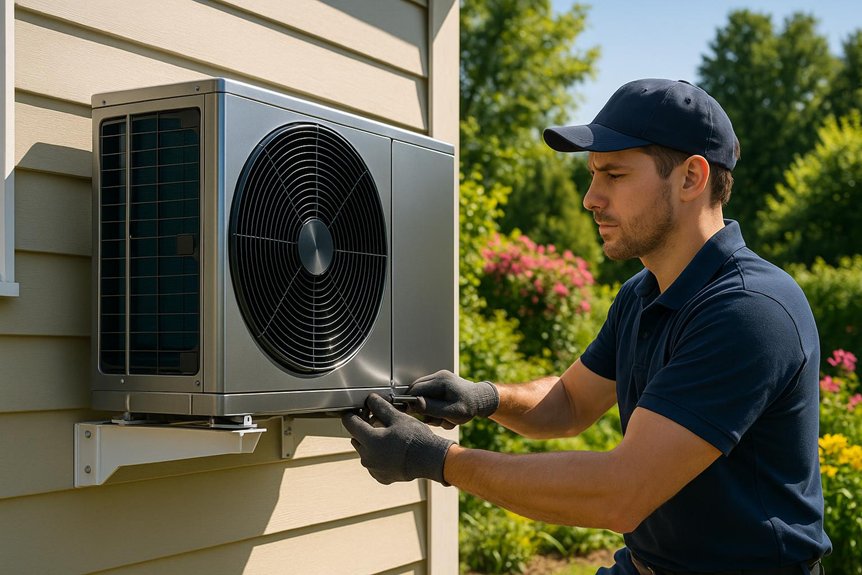
Heat Pump Installation Cost and Benefits
You're considering a heat pump, but what's the real cost-benefit analysis? Installation expenses can range from $3,000 to $8,000, influenced by climate, repair-and-replacement-services.html">ductwork needs, and home size. Yet, the promise of reduced utility bills and minimal maintenance due to fewer mechanical components is enticing. Plus, energy-efficient homes with heat pumps heating-common-causes-and-solutions.html">furnace.html">often see increased property values. The environmental advantages add another layer of appeal. Curious about if it's the perfect fit for you?
How Climate Affects Your Heat Pump
When considering heat pump efficiency, climate plays a fundamental role in its overall performance. You’ve got to evaluate heat zones and temperature fluctuations to determine the best system.
Humidity levels greatly impact seasonal performance, necessitating climate adaptation strategies. Understanding your region’s energy demands can guide you in enhancing your heat pump’s efficiency.
Installation timing is essential; aligning it with regional variations guarantees maximum effectiveness. For instance, areas with mild winters and hot summers present different challenges than those with extreme conditions.
Adjusting for these factors helps maintain efficiency year-round. By evaluating these elements, you’ll guarantee your heat pump operates at its best, leveraging climate-specific insights to meet your home’s unique demands while minimizing energy waste.
Heat Pump Installation Cost Breakdown
Understanding the heat pump installation cost involves dissecting several key components. You’ll need to take into account the unit price, labor, installation timeline, and potential maintenance costs. The initial investment can vary greatly depending on the system's complexity and your home's specific requirements. Here's a breakdown:
| Component | Estimated Cost |
|---|---|
| Heat Pump Unit | $3,000 - $8,000 |
| Labor | $1,000 - $3,000 |
| Installation Timeline | 1-3 Days |
| Ductwork Modifications | $500 - $2,000 |
| Maintenance Costs | $150 - $300/year |
You'll want to guarantee the quality of installation to optimize efficiency and minimize future expenses. Prioritizing a professional installer can reduce unexpected delays in the installation timeline and help manage ongoing maintenance costs effectively.
Key Factors Affecting Heat Pump Costs
Several critical factors greatly influence heat pump costs, and understanding them can guide your decision-making process.
First, installation complexity plays a pivotal role. If your system requires intricate ductwork or challenging placement due to structural constraints, expect costs to rise. Custom installations demand skilled labor, increasing labor hours and expenses.
Next, equipment quality considerably impacts pricing. High-efficiency models with advanced technology, such as variable-speed compressors and smart thermostats, offer superior performance but come at a premium. Investing in top-tier brands guarantees longevity and reliability, but you'll need to weigh these benefits against initial costs.
High-efficiency models offer superior performance but come at a premium, balancing longevity against initial costs.
Additionally, regional climate conditions and local regulations can affect installation procedures, further influencing the overall expenditure.
Need Heating Repair?
Find licensed heating and furnace repair professionals in your area. Same-day and emergency service available.
Find Heating ProsCall (866) 314-1614Home Size and Installation Costs
When considering heat pump installation, your home's square footage greatly influences cost projections and system sizing requirements.
Larger homes typically necessitate higher capacity units, impacting both upfront investment and long-term cost efficiency.
Evaluating these variables guarantees ideal performance and return on investment, aligning with specific energy needs.
Square Footage Impact
Although often overlooked, the square footage of your home considerably influences heat pump installation costs. Larger homes require more extensive ductwork and higher-capacity units, impacting overall expenses.
Here are some square footage considerations and installation implications to keep in mind:
- Load Calculations: Larger spaces demand precise load calculations to determine the appropriate heat pump size, ensuring efficiency and performance.
- Ductwork Extensions: Expansive homes might necessitate additional ductwork, increasing both material and labor costs.
- Zoning Requirements: Homes with significant square footage may benefit from zoning systems, which provide tailored climate control but add to installation complexity.
- Equipment Sizing: Oversizing or undersizing due to inaccurate square footage estimations can lead to inefficiencies and increased operational costs.
Understanding these factors helps you anticipate installation challenges and budget accordingly.
Cost Efficiency Analysis
A thorough cost efficiency analysis reveals that home size plays a pivotal role in determining installation expenses for heat pumps. Larger homes often require systems with higher heating and cooling capacities, increasing the initial investment.
You'll need to evaluate the system's tonnage requirements based on square footage, impacting both upfront costs and ongoing maintenance costs. Smaller homes might benefit from compact units, reducing initial expenditures and offering lower maintenance requirements.
Efficiency ratings, such as SEER and HSPF, also affect your cost efficiency. Opting for higher-rated systems can lead to long-term savings despite higher initial costs.
Installation complexity, influenced by home layout and ductwork needs, further affects costs. Accurate load calculations guarantee peak performance, helping you balance initial investment with future energy savings.
Long-Term Savings and Environmental Benefits
Investing in a heat pump system can significantly enhance your financial and environmental portfolio. By optimizing energy consumption, you’ll achieve substantial energy savings. Here’s how:
- Reduced Operating Costs: Heat pumps operate at a coefficient of performance (COP) greater than 1, meaning they deliver more energy than they consume, slashing your utility bills.
- Decreased Carbon Footprint: Utilizing renewable energy sources, heat pumps minimize environmental impact, aligning with sustainable practices.
- Enhanced System Longevity: With fewer mechanical components compared to traditional HVAC systems, heat pumps experience less wear and tear, lowering maintenance expenses over time.
- Increased Property Value: Energy-efficient homes are in demand, and a heat pump installation can boost your property's market value, offering lucrative long-term returns.
Is a Heat Pump Right for Your Home?
When evaluating if a heat pump suits your home, assess energy efficiency metrics such as Seasonal Energy Efficiency Ratio (SEER) and Heating Seasonal Performance Factor (HSPF) to guarantee peak performance.
Consider climate compatibility by analyzing local heating and cooling degree days, which impact operational efficacy.
Additionally, examine the coefficient of performance (COP) to determine system efficiency relative to your regional weather patterns.
Energy Efficiency Benefits
Considering the energy efficiency benefits of a heat pump, it’s essential to evaluate whether it suits your home's needs.
Heat pumps offer substantial energy savings by transferring heat rather than generating it, reducing electricity consumption. This efficiency translates to a lower environmental impact, as they emit fewer greenhouse gases compared to conventional heating methods.
Here are some key advantages:
- Energy Savings: Heat pumps can deliver up to 300% efficiency, meaning they produce more energy than they consume.
- Environmental Impact: By utilizing renewable energy sources, they notably cut carbon emissions.
- Long-term Cost Efficiency: Lower operational costs can result in considerable savings over time.
- Advanced Technology: Modern heat pumps come with smart controls, optimizing performance and efficiency.
Assess these factors to determine if a heat pump aligns with your sustainability goals.
Climate Compatibility Considerations
Evaluating the energy efficiency benefits of heat pumps naturally leads to examining their compatibility with your local climate. In regions with moderate temperatures, heat pumps enhance energy source utilization, providing efficient heating and cooling. However, in colder climates, their performance can diminish, necessitating auxiliary heating systems. Consider your regional climate data to evaluate potential performance.
| Climate Type | Compatibility Rating |
|---|---|
| Mild/Temperate | High |
| Cold | Moderate |
| Hot | High |
| Variable | Variable |
For peak efficiency, integrate a heat pump with an energy source like solar panels. In colder regions, a dual-fuel system might be necessary for maximum performance. Evaluating climate compatibility guarantees the technology aligns with your specific environmental conditions, maximizing both comfort and cost-effectiveness.
Frequently Asked Questions
How Long Does a Heat Pump Installation Typically Take?
A typical heat pump installation usually takes about 1 to 3 days. Your installation timeline depends on efficiency factors like the complexity of your system and site-specific challenges.
Technicians will assess ductwork integration, electrical connections, and refrigerant line configuration. They’ll guarantee peak system calibration and energy efficiency.
What Maintenance Is Required for a Heat Pump?
You should regularly check and clean filters to maintain heat pump efficiency.
Inspect the outdoor unit for debris and guarantee proper airflow.
Schedule professional servicing annually to assess refrigerant levels and maximize seasonal performance.
Monitor for unusual noises or temperature fluctuations, indicating potential issues.
Lubricate moving parts and calibrate the thermostat for precise operation.
These steps enhance longevity and energy efficiency, essential for maintaining ideal seasonal coefficient of performance (SCOP).
Can Heat Pumps Be Used With Existing Ductwork?
Yes, you can use heat pumps with existing ductwork, ensuring ductwork compatibility enhances heat pump efficiency.
Inspect the ducts for leaks, proper sizing, and insulation. Ducts must handle both heating and cooling loads effectively.
Retrofitting might be necessary to optimize airflow and minimize energy loss. Engage a professional to assess your system's capacity and make adjustments.
Properly integrated, your heat pump will maximize performance and energy savings.
Are There Any Government Rebates for Installing Heat Pumps?
Yes, you can access government rebates for installing heat pumps, promoting energy efficiency and reducing environmental impact.
These incentives often target high SEER-rated systems, emphasizing thermal performance and reduced carbon emissions. Rebates vary by region, so check local programs.
Utilizing these subsidies can offset initial capital expenditures, enhancing return on investment.
Engage with HVAC professionals to navigate eligibility criteria and optimize system integration with existing infrastructure.
How Noisy Are Heat Pumps During Operation?
Heat pumps typically operate with noise levels around 40-60 decibels, comparable to a quiet conversation.
You'll find that advanced models include sound insulation features to minimize acoustic impact.
Consider the compressor's placement; situating it away from living areas can further reduce perceived noise.
Manufacturers often specify decibel ratings, so check these to verify compliance with local noise ordinances and your personal comfort preferences.
Browse our national heating directory to find certified professionals near you. See pricing guides for Naples, Boca Raton, St. Louis, Los Angeles, Louisville, and more.


